
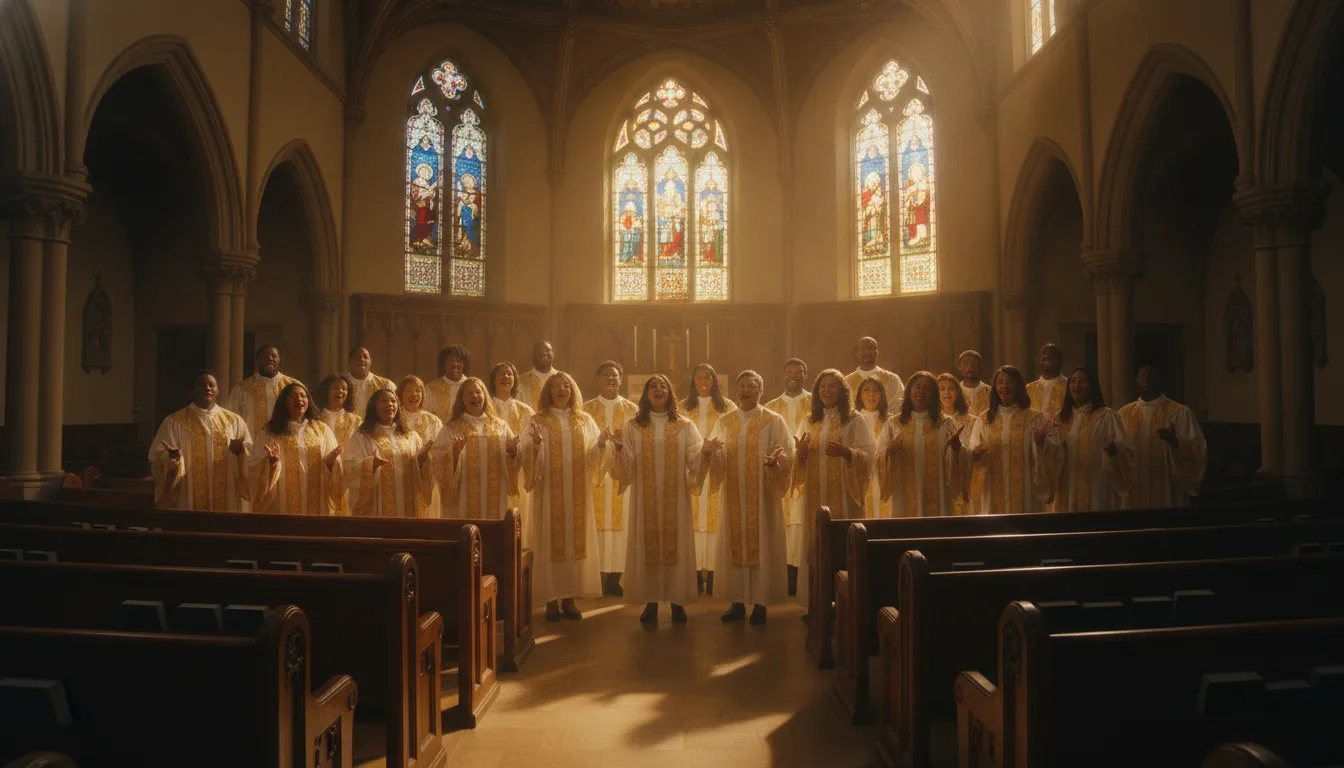
The history of gospel music is a story of faith, survival, artistry, and community. It moves from African American spirituals to church choirs, radio broadcasts, soul records, and modern worship stages. Its sound has changed across generations, but its purpose remains recognizable. Gospel gives people a way to tell the truth, carry hope, and sing together.
That history deserves care. Spirituals and gospel are related, yet they are not the same tradition. Spirituals came first. Gospel later developed through Black church life, hymnody, and new musical ideas. The Library of Congress describes African American gospel as rhythmic, spiritual music rooted in solo and responsive church singing in the American South.
Listen to The Vessel Radio for gospel, soul, praise, and inspirational music.
What is the history of gospel music?
Gospel music developed from the spiritual practices of African American communities, then grew into a distinct 20th-century genre through church singing, hymn traditions, and blues-influenced innovation. It is not one fixed sound. It is a family of styles shaped by worship, testimony, regional communities, and artists who brought sacred music into new spaces.
To understand the history of gospel music, start with the African American spiritual. The Library of Congress identifies the spiritual as the precursor to Black gospel. Spirituals had been meaningful for more than a century before gospel rose in popularity during the 1930s.
That distinction matters. Spirituals emerged under slavery and carried religious expression through communal song. Gospel later took shape as a modern church-based genre. It drew from that earlier foundation while adding new arrangements, performance practices, and urban musical influences.
The musical language that carried forward
Many elements listeners associate with gospel have deep roots in communal worship. The music invites participation. A lead voice can call. A choir or congregation can answer. A phrase can grow through repetition until the room feels like part of the performance.
- Call and response: A leader sings or speaks a phrase, then a group answers.
- Communal voices: Choirs and congregations make the music a shared act.
- Improvisation: Singers and musicians may expand a line in the moment.
- Hope and testimony: Lyrics often make room for struggle, faith, and renewal.
Those features help explain why gospel can feel immediate, even when a song is decades old. Explore The Vessel Radio when you want to hear that spirit carried into today’s listening.
How did spirituals shape the beginnings of gospel?
Spirituals gave gospel a faith-centered vocabulary of endurance, hope, response, and collective expression. They were created and shared by enslaved African Americans and their descendants. Their meanings could be devotional, emotional, and communal at the same time.
The Library of Congress notes that African American spirituals proliferated from the late eighteenth century through the abolition of legal slavery in the 1860s. It also calls the spiritual one of the largest and most significant forms of American folksong.
Listeners sometimes use the words spiritual and gospel as if they mean the same thing. They do not. Spirituals are an earlier tradition. Gospel grew from their musical and spiritual inheritance, then became a distinct genre with its own artists, choirs, publishers, recordings, and performance settings.
This lineage also explains gospel’s emotional range. A song can be mournful and joyful. It can hold grief and confidence in the same verse. That complexity is part of the music’s power.
Listen to a station built for soul and inspiration on The Vessel Radio.
Why is Chicago called the birthplace of modern gospel music?
Chicago became a center of modern gospel in the 1930s when Thomas A. Dorsey joined sacred themes with blues-informed musical language and helped organize gospel choirs. The city gave musicians, churches, publishers, and audiences a place to build a new sound together.
Thomas A. Dorsey is widely known as the Father of Gospel Music. Before his sacred work, he performed blues under the name Georgia Tom. The New Georgia Encyclopedia’s profile of Dorsey traces his move from secular blues to gospel composition and leadership.
Thomas A. Dorsey’s turning point
Dorsey did not erase the sounds he knew. He redirected musical tools into sacred settings. His work used familiar blues phrasing and rhythmic energy while centering worship and testimony. This approach gave church music a form that many listeners found fresh and direct.
The Songwriters Hall of Fame recognizes Dorsey’s lasting contribution to American songwriting. His example helped make room for choirs, soloists, and songwriters who wanted church music to speak in the musical language of their own time.
Chicago was not the only place where gospel flourished. It was an important hub because artists could connect their local church work with recording, publishing, touring, and a growing national audience. Radio later helped many gospel voices reach homes beyond their original communities.
Hear gospel-rooted programming on The Vessel Radio.
A short timeline of gospel music in America
Gospel history is easier to follow when its major chapters stay connected. Each era added something new. None of them removed the importance of the earlier tradition.
- Late eighteenth century to the 1860s: African American spirituals grew into a major American folksong tradition. They carried worship, memory, and collective endurance.
- Late nineteenth century: Protestant hymn traditions and gospel songs expanded the musical vocabulary available to churches and traveling singers.
- 1930s: Thomas A. Dorsey and Chicago church communities helped establish modern gospel as a distinct urban sacred style.
- Mid-twentieth century: Choirs, recordings, radio, and touring artists widened gospel’s audience while preserving strong church ties.
- Late twentieth century to today: Contemporary gospel blended with R&B, pop, hip-hop, and worship music, while traditional choirs remained essential.
This timeline is not a straight line from old to new. Artists and congregations often return to earlier songs and styles. A contemporary singer may borrow a choir response. A traditional choir may use a current rhythm. That conversation keeps the music alive.
It also prevents a narrow definition of gospel. The genre includes intimate solo testimony, quartet harmonies, massed choir arrangements, piano-led services, and carefully produced contemporary recordings. Different settings change the sound. Shared practices of faith, response, and community create the thread between them.
For new listeners, the best approach is to move across eras. Pair an early spiritual with a traditional choir performance. Then compare both with a contemporary gospel or worship song. The contrasts make the historical links easier to hear.
Who are the most influential gospel artists?
Thomas A. Dorsey established a modern framework, Mahalia Jackson brought gospel to wide audiences, and later artists expanded its sound for new generations. No single list can capture every crucial voice. Still, a few names offer a useful starting point for listeners exploring the genre.
Thomas A. Dorsey helped define modern gospel songwriting and choir culture. His work showed that sacred music could absorb contemporary musical language without losing its spiritual focus.
Mahalia Jackson became one of gospel’s most commanding ambassadors. Her voice carried the force of church performance to concert halls and national audiences. Learn more about her life and career through this Mahalia Jackson biography and Carnegie Hall’s traditional gospel timeline.
Shirley Caesar and James Cleveland represent later generations of church-centered gospel leadership. Their work helped keep choir traditions vital as the genre entered new recording and performance eras.
CeCe Winans, Yolanda Adams, and Kirk Franklin helped contemporary gospel connect with listeners who also grew up with R&B, hip-hop, and pop. Their careers show how gospel can evolve while staying close to its devotional center. For a broader genre overview, see Britannica’s gospel music reference.
rBeatz also documents how faith continues to shape individual artists. Read Cassandra O’Neal’s gospel journey for a present-day artist perspective.
Read Cassandra O’Neal’s story and hear how faith still informs music today.
How has gospel music shaped American music?
Gospel’s vocal intensity, call-and-response, and communal performance practices can be heard across soul, R&B, and inspirational music. It is more accurate to describe this as a continuing exchange than a simple one-way influence. Musicians moved between church, clubs, studios, and stages. They carried techniques and feeling with them.
Listen for the evidence in the voice. A singer may stretch a note, answer a phrase with a harmony, or move from quiet testimony to a full-throated peak. Those choices are not exclusive to gospel. Yet gospel made them central to a powerful American performance tradition.
This overlap is why gospel history also matters to soul listeners. It helps explain the emotional directness in music that may not be labeled religious. The connection remains especially clear when artists speak openly about faith and musical roots.
For a local example, explore Nero Tindal IV’s gospel roots or read about Ray Greene’s work across soul and faith. Both stories show how a gospel foundation can travel into varied musical lives.
Discover more artist stories and performances through rBeatz media.
Where can listeners hear gospel’s living legacy today?
Listeners can experience gospel’s living legacy by seeking programming that places gospel, soul, praise, and inspirational music in conversation. History becomes more meaningful when it leads back to listening. A classic choir recording, a contemporary worship song, and a soul performance can all reveal different parts of the same larger story.
The Vessel Radio gives listeners a place to explore that conversation. It is part of rBeatz, a Charlotte-rooted platform offering free, no-login, human-curated radio and media for a global community. The station connects gospel, soul, praise, and inspirational sounds without asking listeners to choose only one musical lane.
Artists with music that fits an rBeatz station format can also submit music to rBeatz at no cost. Submissions are reviewed for fit and merit. A submission does not guarantee airplay or a feature.
Listen live on The Vessel Radio and keep the history of gospel music in your rotation.
Frequently asked questions about gospel music
These quick answers clarify how gospel developed, why Chicago matters, and why the genre still reaches across musical boundaries. Use them as a starting point, then keep listening for the details in the voices, arrangements, and stories behind the songs.
How did gospel music begin?
Gospel developed from African American spiritual traditions, church singing, nineteenth-century hymnody, and later blues-informed innovation. The Library of Congress identifies the African American spiritual as a precursor to Black gospel. Modern gospel became especially visible during the twentieth century.
What is the birthplace of gospel music?
Many historians identify Chicago as the birthplace of modern gospel music. Thomas A. Dorsey helped create a new sacred style there during the 1930s. The city became an important center for gospel choirs, songwriting, publishing, and performance.
Who is considered the father of gospel music?
Thomas A. Dorsey is commonly called the Father of Gospel Music. His work connected sacred lyrics with blues-informed musical language. He also helped establish gospel choir practices that influenced later church and recording traditions.
Why is Mahalia Jackson important to gospel music?
Mahalia Jackson brought gospel singing to large audiences through the force and clarity of her voice. She remains a defining interpreter of the tradition. Her career helped show that gospel could command attention far beyond one church or city.
What is the difference between traditional and contemporary gospel?
Traditional gospel often emphasizes choir-led arrangements, piano or organ, and church-centered performance. Contemporary gospel may use R&B, hip-hop, pop, and modern production ideas. Both can remain rooted in worship, testimony, and communal expression.
How did gospel music influence other genres?
Gospel helped shape American performance through vocal phrasing, call-and-response, harmony, and emotional intensity. Those elements can be heard in soul, R&B, and inspirational music. The connection reflects artists moving among sacred and secular musical spaces.
Listen to gospel and inspirational music on The Vessel Radio.
The history of gospel music is still being written. A choir answers a lead voice. An artist turns testimony into song. A listener finds comfort in a familiar refrain. From spirituals to modern worship, the tradition has remained open to change without losing its communal heart.
Start listening on The Vessel Radio and explore where gospel, soul, and inspiration meet.