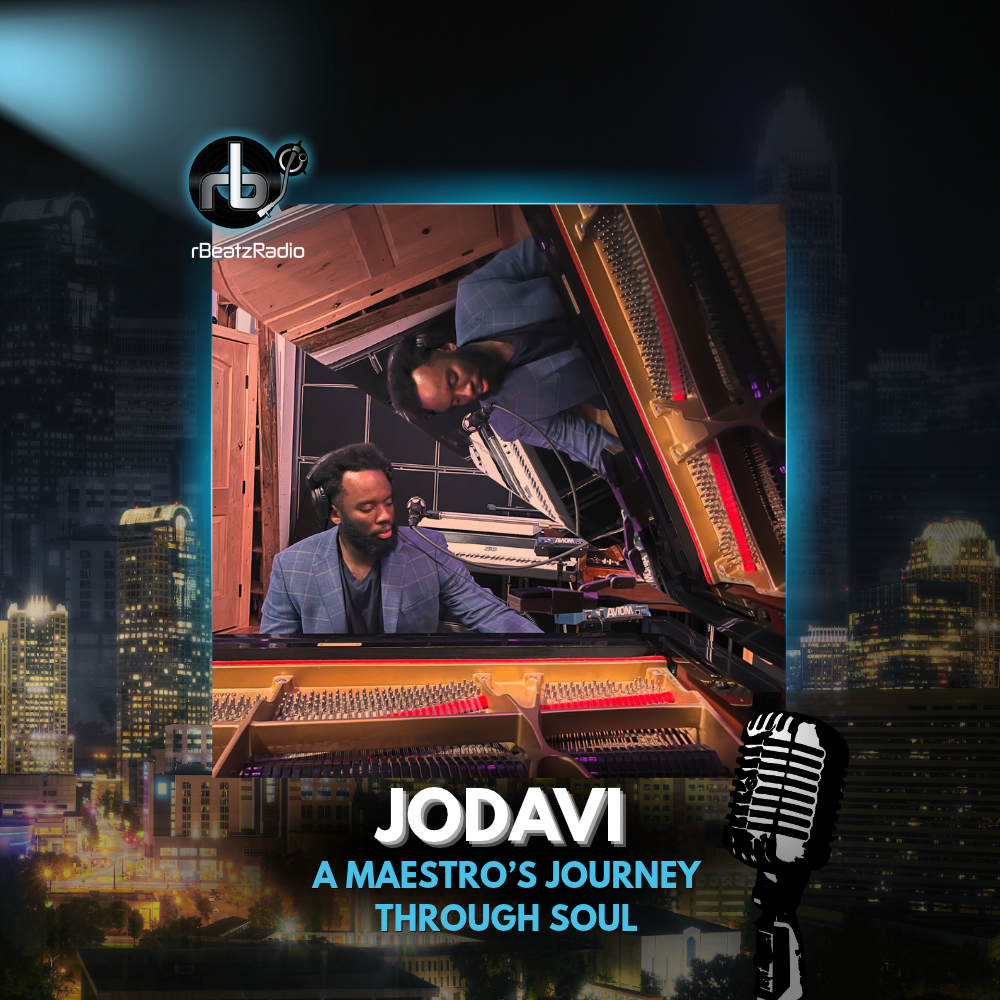
Makeda: A Symphonic Journey Through Scripture
Terry Hudson talks with JoDavi, “Mr. Maestro,” about the orchestral, gospel, R&B, reggae, funk, and Afro-Soul influences behind his Symphonic Soul sound. JoDavi also shares his latest single, “What’s Your Name?,” and the plans for “Makeda | A Symphonic Journey Through Scripture,” a live album concert planned for June 2027 in South Carolina.
Gospel, R&B, Reggae, Funk, and Afro-Soul in One Musical Palette
Jo Davi
Key Takeaways
- Embrace your own sound: Jo’s Symphonic Soul identity developed by exploring different genres instead of forcing himself into a category.
- Music is storytelling: His cinematic arrangements and lyrics are designed to create pictures, emotions, and experiences for listeners.
- Your influences can come from anywhere: Gospel, folk, bluegrass, R&B, reggae, orchestral music, and classic songwriting can all coexist.
- Live music is its own art form: Great live performances require intention, preparation, arrangement, and musicianship—not just reproducing a studio recording.
- You don’t have to limit your creativity to one audience: Artists can explore different markets and musical styles while maintaining their beliefs and integrity.
- Grief isn’t linear: It can arrive unexpectedly, even after periods of stability, and people experience it differently as they grow.
- Music can help us process difficult experiences: Songwriting gives Jo a way to express emotions that can be difficult to put into ordinary conversation.
- Keep moving forward without forgetting: Healing doesn’t mean leaving the people you love behind. It means learning how to carry their memory with you.
- Finish what matters: Jo’s continued work on Makeda reflects a commitment to completing something meaningful, even when life has changed dramatically.
- Authenticity creates connection: You don’t have to fit someone else’s expectations to create work that resonates.
Jo Davi: Blending Symphonic Soul, Faith, Film-Scoring, and Life Through Music
Some artists create music to entertain. Others create music to make you feel something, see something, or experience a story in a completely different way. In this episode of rBeatz.com’s Oui Talk Raw / Local Music Somewhere, Terry Hudson sits down with composer, songwriter, producer, arranger, and multi-genre artist Jo Davi to explore a musical journey that refuses to fit neatly into one category.
From gospel, R&B, reggae, funk, folk, bluegrass, and orchestral composition to cinematic soundscapes, Jo Davi’s music is rooted in emotion, storytelling, and the freedom to create without boundaries. But this conversation goes beyond music. It reveals a man navigating profound loss, fatherhood, faith, healing, and the determination to continue creating even when life changes in ways he never imagined.
Terry’s curiosity and appreciation for music lead to an honest, thoughtful conversation that pulls back the curtain on both the artist and the person behind the compositions.
Who Is Jo Davi? A Musical Journey That Began in Church
Jo Davi’s musical journey began in Stockton, California, where he grew up surrounded by family, church, and music. His father founded Congregation of Zion in 2004, and it was through those early church experiences that Jo began to reconnect with the piano and discover his calling as a musician.
At first, music wasn’t something he was pursuing with the intensity he would later develop. But watching a woman play piano and direct the choir during a service when his father was absent sparked something inside him. He realized he wanted to do that, too.
That moment set him on a path toward practicing, learning songs by ear, developing his skills as a worship leader, and eventually becoming a music director. With his father’s guidance, he also learned to read music, leading him toward formal studies in composition at the University of the Pacific.
His love for film scoring had already begun much earlier, inspired by Beauty and the Beast and the way music could transform a scene, create an atmosphere, and make a story unforgettable.
Growing Up With an Open Mind About Music
Jo Davi grew up in a family that welcomed a variety of musical influences. His parents allowed him and his siblings to explore different genres as long as they were willing to share the lyrics and discuss the message behind the music.
That openness exposed him to artists and sounds well beyond gospel. From his sister’s alternative rock interests to Lauryn Hill, folk, bluegrass, soul, reggae, and classic singer-songwriters, Jo learned to appreciate music based on how it made him feel rather than what genre it belonged to.
That freedom helped shape the artist he would become.
What Is Symphonic Soul? The Sound Jo Davi Calls His Own
One of the most interesting parts of the conversation is Terry’s exploration of Jo Davi’s signature sound, Symphonic Soul—a term Jo developed with his bass player to describe the unique blend of styles that define his music.
His sound can be soulful, orchestral, folk-inspired, rhythmic, cinematic, or even jazz-influenced, sometimes all within the same musical experience.
Jo doesn’t seem interested in forcing his music into a category. Instead, he follows the emotion and story of the song, allowing the arrangement to grow naturally around it.
Music That Feels Like a Film
Jo Davi describes music that feels picturesque, almost as though listeners are watching a scene unfold. His songwriting is rooted in storytelling, with lyrics and arrangements that bring a cinematic quality to the listening experience.
His goal isn’t simply to write a song that sounds good. He wants the listener to feel as though they have entered a world, a moment, or an emotional journey.
His album Zion is a strong example of that approach, incorporating orchestral arrangements and reggae influences while maintaining an immersive, film-like atmosphere.
Embracing the Sound Instead of Trying to Fit In
Jo recalls recognizing that his music was different while working with his former band, Current Personae. Songs like December Jane didn’t easily fit into one genre, drawing from alternative, jazz, soul, and other influences.
Rather than trying to make his music more conventional, he began embracing what made it unique. That realization helped shape his direction as a solo artist around 2010.
His journey is a reminder that sometimes the best thing an artist can do is stop trying to fit into someone else’s definition of what music should sound like.
The Artists and Influences That Shaped Jo Davi’s Music
Jo Davi’s musical influences are as diverse as the sounds he creates. His inspirations aren’t limited to one generation, style, or musical scene. Instead, he draws from artists who move him emotionally, challenge his perspective, or inspire him to explore new possibilities.
Tommy Sims, Stevie Wonder, Jim Croce, and the Power of Songwriting
One of Jo’s biggest influences is Tommy Sims, whose music helped open his eyes to the possibilities of being a singer-songwriter, producer, and orchestrator all at once. Tommy’s album Peace and Love left a lasting impression on Jo, showing him how an album could feel like a complete journey rather than a collection of individual songs.
He also credits his father for teaching him production and music, while Stevie Wonder, India.Arie, Jim Croce, Bill Withers, James Taylor, and other artists have helped shape his appreciation for melody, meaningful lyrics, and emotional storytelling.
Jo gravitates toward music that makes people think and feel. The genre is secondary to the message and emotion behind it.
Learning From Artists Who Create an Experience
Performances by artists like India.Arie, Anthony Hamilton, Alex Isley, and Jeremy Passion have helped Jo understand what it means to create something truly memorable onstage.
He recalls India.Arie’s performance as one of the most beautiful experiences he had witnessed, describing the way her music brought together folk, soul, harmony, and emotion.
Performances like these reinforced his desire to create shows that leave audiences feeling encouraged, inspired, and immersed in something bigger than a typical concert.
Opening for Legends and Finding Confirmation Along the Way
Jo Davi has had opportunities to perform alongside respected artists, including India.Arie and Anthony Hamilton, and share stages and experiences with Alex Isley and Jeremy Passion.
For Jo, these moments aren’t simply career accomplishments or names to add to a résumé. They are experiences that help confirm he is moving in the right direction.
He remembers Anthony Hamilton listening to his set and offering encouragement, even asking if Jo was signed at the time. Moments like that carry weight when you’re building an independent career and working to find your audience.
The Importance of Being Prepared
Terry and Jo discuss the difference between simply performing songs live and crafting a complete live experience.
Artists like Alex Isley and Jeremy Passion put in the work both in the studio and onstage. Their performances are intentional, carefully developed, and treated as their own art form.
Jo appreciates that distinction. Studio recordings and live performances aren’t interchangeable. Each has its own creative demands, and the stage offers opportunities to expand, rearrange, and bring a song to life in a new way.
That dedication to musicianship and preparation is something Jo hopes to continue building into his own live performances.
Zion — A Project Built on Emotion, Scripture, and Musical Exploration
Jo Davi’s album Zion holds a special place in his creative journey. The project emerged after a period when songwriting had become difficult and inspiration seemed to be coming in waves.
Songs began arriving at unexpected times, some inspired directly by scripture, others rooted in personal experiences or historical stories. The project gradually became a collection of musical ideas that Jo could fully develop with the help of musicians, collaborators, and studio resources.
With orchestration, reggae, soulful arrangements, and cinematic composition, Zion became a project that reflects his willingness to explore different sounds without abandoning the story at the heart of the music.
Timeless Music With Modern Arrangements
Terry points out that Zion has a timeless quality, with sounds that seem to pull from different musical decades while still feeling contemporary.
Jo explains how he loves the timbre of instruments like French horns and the nostalgic feeling they can evoke. By combining those sounds with modern chord structures, rhythms, and instrumentation, he creates arrangements that feel familiar without sounding dated.
The album’s opening track, Procession, is a great example of that approach, bringing orchestral elements together in a way that feels cinematic and evocative.
Making Music That Doesn’t Have to Fit a Label
Jo and Terry share a thoughtful conversation about the expectations sometimes placed on Christian artists and the idea that musicians should remain confined to a particular genre or market.
Jo believes music can be spiritual, meaningful, and inspired by scripture without necessarily being limited to one industry or audience. Some artists may be called to create exclusively within a particular space, but he doesn’t believe everyone has to follow the same path.
For him, music is a natural extension of his life, his faith, and his experiences. He wants to create songs that reach people, inspire reflection, and communicate something meaningful without compromising his integrity.
Christmas Don’t Be Late — Giving a Familiar Song a New Life
Jo Davi brings his creativity to the holiday season with a unique interpretation of Christmas Don’t Be Late, the familiar Alvin and the Chipmunks song.
Rather than recreating the playful original, Jo and vocalist Selena Albright reimagine it as a smooth, jazzy holiday arrangement. The idea came from a conversation about creating a Christmas project together, which eventually sparked Jo’s vision for turning the song into something entirely different.
The result takes a childhood favorite and transforms it into an adult vocal jazz experience, with a sound that Terry compares to the smooth, nostalgic atmosphere of Vince Guaraldi’s Charlie Brown music.
Collaborating With Selena Albright
Selena Albright, the daughter of legendary saxophonist Gerald Albright, brings her vocal talent to the project. Jo and Selena had previously worked together on a string arrangement and his album The Vault, making this another opportunity to collaborate.
The holiday project reflects Jo’s ability to reinterpret familiar music while retaining its emotional connection. Instead of simply covering a song, he approaches it as a creative opportunity to explore new arrangements, moods, and musical textures.
He also shares plans for upcoming performances in London, New York, and Charlotte, including a Charlotte performance at GAT3 Studios.
The Story Behind the Music — Love, Loss, and the Death of His Wife
One of the most deeply personal portions of the interview comes when Terry invites Jo to share the story of his wife, Olga, and the loss that changed his life.
In 2024, Olga began experiencing health issues that led to a lupus diagnosis and other medical concerns. She later traveled to South Africa to address family matters, but her health deteriorated during her journey back. After collapsing at an airport in New Jersey, she was hospitalized, where her condition continued to fluctuate.
After approximately 11 days in the hospital, Olga passed away on January 6, 2025.
Jo recounts the experience of being beside her in her final moments, the medical team trying to save her, and the overwhelming reality of returning home to tell their two young sons that their mother was gone.
It’s an incredibly vulnerable moment in the conversation. Jo speaks openly about grief, the responsibility of raising two boys, the support of family, and the difficult process of trying to navigate life after losing someone so central to his world.
Raising His Sons While Learning to Grieve
Jo shares that grief doesn’t unfold on a predictable timeline, particularly for children. His sons were young when their mother died, and as they grow older, their understanding of what happened continues to change.
Sometimes grief appears in unexpected moments. Jo recalls a family outing that had been filled with fun and good memories, only for his son to express sadness that his mother wasn’t there to share it.
Those moments remind him that grief is something the family continues to navigate together. He credits his parents, siblings, and community for providing support, helping with the boys, and making sure they are cared for.
The Waves of Grief, Anger, and Forgiveness
Jo describes grief as something that comes in waves. There may be stretches where life feels more manageable, routines become established, and the family begins moving forward. Then suddenly, a moment, a memory, or a feeling can bring everything back.
He shares something especially honest about visiting his wife’s grave and realizing he was still angry with her for dying. That realization eventually led him to confront the need to forgive her—a deeply emotional process that he hadn’t expected.
Rather than pretending grief is a straight path toward healing, Jo speaks about learning from the waves. They can reveal what he’s feeling, what needs attention, and what he may need to do next.
This portion of the conversation is a powerful reminder that grief doesn’t simply disappear with time. People continue to love, remember, struggle, grow, and find ways to carry that love forward.
Songs of Healing — Turning Personal Pain Into Music
Music has always been a way for Jo Davi to process emotion, and that becomes especially clear as Terry explores the songs written after Olga’s passing.
Songs such as The End of Time, Song of Healing, and the song about carrying an old man’s pain offer listeners a window into what Jo has been experiencing. These aren’t simply songs about sadness. They reflect faith, questions, anger, hope, exhaustion, and the effort to keep moving forward.
The End of Time and the Hope of Reunion
The End of Time carries the idea of hope beyond loss—the belief in reunion and the promise of seeing loved ones again.
Jo explains that the song was especially meaningful because it also caught the attention of Tommy Sims, one of his biggest musical influences. Receiving a message from someone whose music helped shape his own sound became a bittersweet milestone.
The moment connected Jo’s musical journey with his personal life in an unexpected way, making the recognition even more meaningful.
A Young Man Carrying an Old Man’s Pain
Jo shares the story behind a song written during a particularly difficult wave of grief. As he struggled with his emotions and questions about why this had happened, the phrase “You’re a young man with an old man’s pain” became part of the message that shaped the song.
The lyrics reflect the weight of experiencing something he never expected to face at his age, along with the responsibility of continuing to live, raise his children, and find a reason to keep going.
The song is raw, personal, and deeply connected to his experience of faith and grief.
Letting the Listener Find Their Own Meaning
Terry revisits Song of Healing, which earlier in the episode he interpreted as being about Jo’s own healing journey.
Jo explains that the song was actually written about his wife’s healing. But he also believes listeners should be allowed to find their own meaning in music rather than being told exactly what the artist intended.
That openness is part of his approach to songwriting. He creates from a personal place, but once the music is released, it can take on a different meaning for someone else’s life.
Makeda — A Symphonic Journey Through Scripture
Jo Davi’s next major project is Makeda: A Journey Through Scripture, a large-scale musical production that grew from a song he began writing in May 2024, before his wife passed away.
The project is inspired by the story of the Queen of Sheba visiting King Solomon, known in Ethiopian tradition as Queen Makeda. What began as a song eventually expanded into a three-movement suite with a much larger musical vision.
After returning to the unfinished piece months later, Jo found himself completing it and developing a broader project that incorporates music from Zion alongside new compositions.
From a Studio Album to a Live Orchestral Experience
As the project evolved, Jo realized he didn’t want it to simply be another studio release. He envisioned a live concert experience that could bring the music to life with a full band, approximately 40 orchestra members, 10–12 vocalists, visuals, and potentially choreography.
The production is designed to combine orchestral music, contemporary sounds, scripture, storytelling, and influences from different parts of the world.
South African, East African, and West African rhythms will blend with American musical influences from the 1970s and 1980s, while Jo will also incorporate some unreleased songs written by his father.
The Many Colors Festival and the Premiere in Fort Mill
Working alongside his best friend Randy Sandoli, Jo is developing the Many Colors Festival, with the premiere performances of Makeda planned as the final two nights of the festival.
The performances are planned for June 12 and 13 at Antioch International Church in Fort Mill, South Carolina. The production is expected to be filmed and recorded, with a documentary following the process of bringing the project together.
For Jo, the project is also connected to Olga. Since the original song began while she was still alive, completing the project carries a personal meaning and a sense of responsibility to finish something he believes she would have encouraged him to pursue.
It’s a major undertaking, but one that brings together his musical ambitions, faith, family history, and desire to create something meaningful for an audience.
Music, Faith, and the Freedom to Reach People
Throughout the interview, Terry and Jo revisit the idea that music doesn’t have to live inside a box. Their conversation touches on Christian music, the industry, radio, audiences, and the importance of being able to share your message with people who might not normally discover it.
Jo believes artists can create meaningful, spiritually grounded music without limiting themselves to a specific market. For him, songwriting is an expression of life itself—his beliefs, relationships, experiences, and the things that inspire him.
Terry relates to this perspective through his own experiences in music and the industry, reflecting on how artists have sometimes been discouraged from exploring different styles or audiences. Together, they challenge the idea that music has to be narrowly defined to be authentic.
Staying True to Your Message Without Limiting Your Audience
Jo’s approach is about authenticity. Whether he’s writing a song inspired by scripture, a personal experience, a historical story, or simply a feeling, he wants the music to communicate something real.
He doesn’t believe artists should have to compromise their beliefs to reach a wider audience, nor should they feel obligated to restrict their creativity to fit someone else’s expectations.
It’s a conversation about creative freedom, purpose, and the importance of allowing music to connect with people in its own way.
What Jo Davi’s Story Reminds Us About Resilience
Jo Davi’s story is not one of having everything figured out. It’s about continuing to move forward while carrying the experiences that have changed you.
He is a musician who has spent years developing his sound, exploring genres, collaborating with other artists, and building projects that reflect his creativity. He is also a husband who lost his wife, a father raising two young sons, and a person learning how to navigate grief while continuing to pursue the work he believes he is meant to do.
His journey shows that creativity and healing don’t necessarily happen separately. Sometimes they exist together, with music becoming a way to process emotions, preserve memories, find meaning, and connect with other people.
Terry gives Jo room to share his story without rushing through the difficult parts, and the conversation moves naturally between music, life, faith, and the future.
One of the most honest reminders Jo shares about grief is:
You can’t really control it at all. And you shouldn’t have to.
That sentiment captures the heart of this episode—not just the loss, but the permission to experience grief honestly, without expecting yourself to control every wave or have everything resolved.
A Conversation About Music, Life, and Finding Your Way Forward
Terry Hudson’s conversation with Jo Davi is a reminder that behind every artist is a story that may be far deeper than the music itself. From his childhood in Stockton and his musical influences to his distinctive Symphonic Soul sound, Jo’s journey is shaped by curiosity, faith, creativity, and a willingness to explore.
But it’s the more personal moments of the interview that leave a lasting impression. His honesty about losing Olga, raising their sons, navigating grief, and continuing to create offers a different perspective on what resilience actually looks like.
Jo isn’t pretending that everything is okay or that he has found all the answers. He’s still processing, still growing, still writing, and still finding ways to move forward.
And that may be what makes his music resonate. It’s not simply about making beautiful sounds. It’s about living through the story, allowing the emotions to be part of the music,
More Artists and Show Episodes