
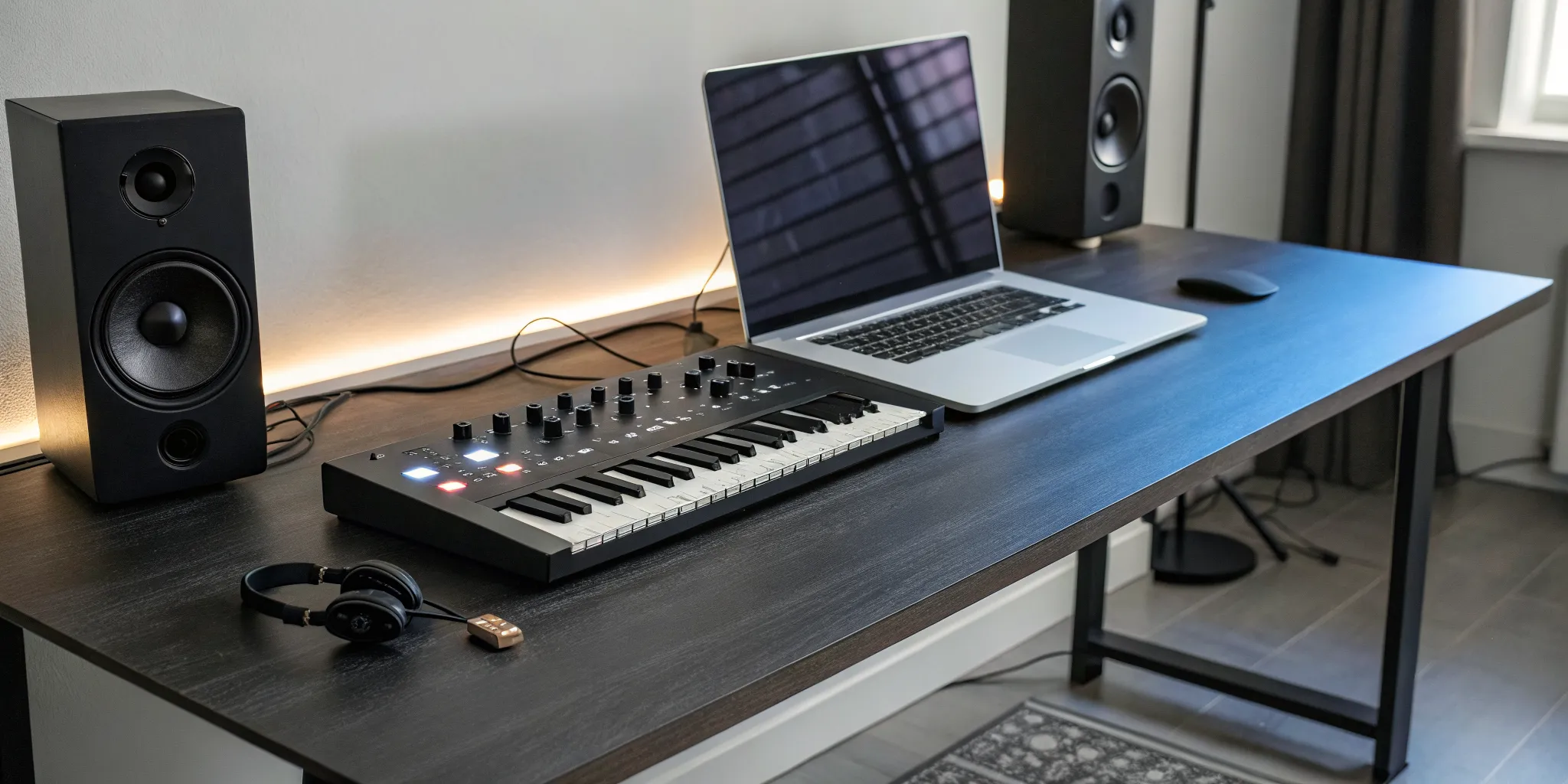
Every artist knows the frustration of a hard drive full of unfinished songs. You start with a flash of inspiration, but somewhere along the way, you get stuck—bogged down by technical hurdles, “tutorial paralysis,” or the endless search for the perfect sound. The secret to breaking this cycle isn’t a new piece of gear; it’s a better process. This guide is built to help you move from being a perfectionist to being a prolific creator. By focusing on a clear workflow, we’ll show you how the craft of music production for artists is the key to finishing more music and building a catalog you’re proud to share with the world.
Key Takeaways
- Understand the Production Workflow: Music production is a manageable process broken into four key stages: songwriting, recording, mixing, and mastering. Following this structure gives you a clear path from initial idea to finished song.
- Focus on Skill, Not on Gear: Your creativity and technical knowledge are far more important than the price tag of your equipment. Master the tools you already have, because a well-written song can be made with even a minimal setup.
- Prioritize Finishing Over Perfection: The fastest way to improve is to complete your tracks. Shift your mindset from endless tweaking to finishing your work, then use distribution services and submission platforms to get your music out into the world.
What Is Music Production and Why Does It Matter?
Think of music production as the entire journey a song takes from a simple idea in your head to a polished track ready for your listeners. Every song you’ve ever heard on the radio, streamed online, or discovered on a platform like rBeatz Radio has gone through this process. It’s a blend of creative vision and technical know-how that involves everything from writing and arranging the song to recording, mixing, and mastering the final version.
For an independent artist, understanding music production is a game-changer. It’s the skill set that allows you to translate the music you hear in your mind into a tangible, high-quality recording that can connect with an audience. Good production makes your music sound professional, cohesive, and compelling. It ensures that your vocals cut through, your bass has impact, and your melodies shine. Without it, even the most brilliant song idea can get lost in a muddy mix, failing to capture the attention it deserves. Learning the fundamentals gives you the power to shape your sound and present your art in its best possible light.
How production shapes your music career
Strong production skills give you creative control and open up new opportunities. When you can produce your own music, you’re not waiting on someone else’s schedule or budget to bring your ideas to life. This independence allows you to create more freely and consistently. A well-produced track is also more likely to catch the ear of listeners, curators, and industry professionals. It shows that you’re serious about your craft and helps your music stand out in a crowded landscape. Ultimately, great production is what makes your music ready for the world, whether you’re aiming for playlist spots or sending your tracks through a music submission portal.
Common myths that can hold you back
Don’t let common misconceptions about production stop you before you even start. One of the biggest myths is that you need expensive gear or a specific piece of software to make great music. The truth is, the digital audio workstation (DAW) you use doesn’t matter as much as how you use it. Another myth is that production can magically fix a weak song. Production is meant to enhance a great idea, not create one from scratch; solid songwriting is always the most important foundation. Finally, many people think making electronic music is easy. In reality, crafting a compelling track takes just as much skill, practice, and artistry as playing a traditional instrument. The artists you admire have spent years honing their craft, and you can too.
The Key Stages of Music Production
Think of music production as a creative assembly line. It’s the process that takes a spark of an idea and transforms it into a polished song ready for listeners. Every track you hear, whether it’s on the radio or a streaming playlist, has gone through these fundamental stages. It’s not a single, magical event but a series of deliberate steps, each one building on the last. For an independent artist, understanding this workflow is your roadmap from a simple melody in your head to a finished piece you can share with the world. This journey blends your artistic vision with technical skill, turning abstract feelings into something tangible that people can connect with.
Breaking the process down makes it feel much more manageable. Instead of staring at a mountain, you’re just looking at the first hill. Each stage has its own goal, from writing the song and recording the parts to mixing them together and adding the final professional polish. As you get more comfortable with this flow, you’ll start to see how each decision you make early on can shape the final outcome. It’s a system that provides structure to your creativity, ensuring nothing gets lost along the way. Let’s walk through the four key stages that will guide your music-making process.
Songwriting and pre-production
This is where it all begins: the blueprint for your song. Before you even think about hitting the record button, you need a solid foundation. Songwriting and pre-production are all about crafting the core of your track. This includes writing the lyrics, developing the melody, and figuring out the song’s structure, like its verses, choruses, and bridge. You’ll also map out the arrangement, deciding which instruments will play which parts. Taking the time to get this stage right saves you a ton of headaches later. It’s your chance to experiment with ideas and create a clear plan before committing to a final recording.
Recording your tracks
Once you have your song written and arranged, it’s time to bring it to life. The recording stage is all about capturing the performances. This is where you, or other musicians, will record each part of the song, from vocals and guitars to drums and synths. Whether you’re in a professional studio or a home setup, the goal is the same: to get clean, high-quality recordings of every element. This is the raw material you’ll be working with in the next stages, so focus on capturing the best possible performance and sound. When you’re done, you’ll have the assets you need to submit your music for consideration.
Mixing the elements
Mixing is where the real magic starts to happen. Think of it as being a chef with a bunch of great ingredients (your recorded tracks). Your job is to combine them all into one delicious, cohesive dish. In this stage, you’ll balance the volume levels of each track, position them in the stereo field using panning, and add effects like reverb and delay to create depth and space. The goal of mixing is to make sure every part can be heard clearly and that all the elements work together to serve the song. A good mix makes a track feel balanced, exciting, and emotionally impactful for the listener.
Mastering for release
Mastering is the final coat of polish before your song is sent out into the world. After your track is mixed, a mastering engineer (or you, with the right tools) will make final adjustments to the overall sound. This involves fine-tuning the track’s loudness, equalization, and dynamics to ensure it sounds great on any playback system, from earbuds and laptop speakers to car stereos and club sound systems. Mastering also ensures your song sounds consistent with other professional tracks, so it’s ready for distribution on platforms like rBeatz Radio. It’s the last quality-control step that prepares your music for your audience.
Your Starter Kit: Essential Gear and Software
Walking into the world of music production gear can feel like trying to read a map in a foreign language. The good news is you don’t need a room full of expensive equipment to create incredible music. Think of this as your starter kit: the foundational pieces that will give you the most creative power without breaking the bank. Your computer is the command center, but these next few items are what turn it into a studio. Let’s break down the essentials you’ll need to start recording, producing, and shaping your unique sound.
Digital Audio Workstations (DAWs)
Your Digital Audio Workstation, or DAW, is the software that acts as the heart of your studio. It’s where you’ll record audio, arrange your tracks, add effects, and mix everything together into a final song. For artists just starting, options like FL Studio and Ableton Live are fantastic because they have user-friendly interfaces and tons of built-in tools. Many DAWs offer free trials or even completely free versions, like GarageBand on Apple devices, so you can experiment and find the workflow that clicks for you. The best DAW is the one you feel most comfortable using.
Microphones and audio interfaces
To get sound from the real world into your computer, you’ll need two key pieces of hardware: a microphone and an audio interface. The microphone captures your voice or instrument, and the audio interface acts as a bridge, converting that signal into digital information your DAW can understand. An audio interface is a game-changer for recording quality, giving you a much cleaner and more professional sound than your computer’s built-in microphone jack. It provides the right connections for your mics and instruments and ensures your recordings are crisp and clear from the very beginning.
Studio monitors and headphones
You need to hear your music accurately to make good decisions, and that’s where studio monitors and headphones come in. Unlike consumer speakers that might color the sound, studio monitors provide a “flat” response, giving you a true representation of your mix. For more detailed work, a good pair of closed-back studio headphones is essential for catching subtle clicks, pops, or flaws in your recording. You don’t need to spend a fortune, but investing in a reliable pair of studio headphones will help you create mixes that sound great on any system.
What Does a Music Producer Actually Do?
So you’ve written a song you love. What’s next? This is where a music producer comes in. Think of them as the director of your musical movie. While you, the artist, provide the script and the performance, the producer helps shape the final cut, making sure every element works together to create an emotional impact. They are your creative partner, your project manager, and your objective guide, all rolled into one. Understanding their role is the first step to a great collaboration and an even better final track.
Producer vs. artist: Defining the roles
The line between artist and producer can feel blurry, especially since many artists produce their own music. But let’s clarify the classic roles. The artist is the visionary, the one with the song, the lyrics, and the core musical idea. A producer’s job is to help bring that vision to life. They guide the song’s arrangement, instrumentation, and overall sound to make sure it connects with listeners. They might suggest a different chord progression, help you refine a melody, or find the perfect synth sound. While you are the heart of the project, the producer helps build the body around it, ensuring your music lands with the power it deserves.
Where sound engineers fit in
While a producer focuses on the creative direction, a sound engineer handles the technical side of recording. Think of the producer as the architect and the engineer as the master builder. The engineer is responsible for setting up microphones, managing the recording software, and ensuring the audio is captured cleanly and professionally. They are experts in the science of sound. Later, in the mixing and mastering stages, an engineer will balance all the individual tracks. A great producer knows how to communicate their creative vision to the engineer to get the right technical results for your music submission.
How to work with your production team
A successful recording session starts long before you press record. Jumping straight into tracking without a plan can lead to a messy process and a track that lacks direction. To make the most of your time, come prepared. Have your songs well-rehearsed and bring a few reference tracks that capture the vibe you’re aiming for. Most importantly, be open to collaboration. Your producer is there to offer a fresh perspective. Listen to their ideas, experiment with new sounds, and don’t be afraid to try something different. The best music often comes from a creative partnership built on trust and clear communication.
Common Music Production Challenges (and How to Beat Them)
Every artist hits a wall at some point. One day the ideas are flowing, and the next, you’re staring at a blank project file, feeling completely stuck. These creative roadblocks are a normal part of the process, not a sign that you should quit. The key is learning to recognize these common challenges and developing strategies to work through them. Instead of letting frustration take over, you can use these moments as opportunities to grow as an artist. Let’s look at a few of the most common hurdles and how you can clear them.
Overcoming “tutorial paralysis”
Have you ever spent hours watching production tutorials only to feel less prepared to make music than when you started? That’s “tutorial paralysis,” and it’s a real momentum killer. It comes from the belief that you need to know everything before you can create anything. The best way to get past it is to shift your focus from passive learning to active creating. Try this: for every 20 minutes you spend on a tutorial, spend at least an hour applying that one new skill to a track. The goal isn’t perfection; it’s finishing. You’ll learn more by completing a flawed song than by watching a flawless tutorial.
Finding your sound, not just the trends
It’s easy to fall into the trap of chasing trends, trying to make your music sound like what’s already popular. But your unique voice is your greatest asset. The search for the “perfect” sound can be frustrating, but it’s also where your signature style is born. Instead of scrolling through presets hoping for a magic bullet, get intentional about discovery. Spend time listening to music completely outside of your go-to genres. Experiment with instruments and effects you’ve never touched before. See how other independent artists are carving out their own lanes. Collaboration is another great way to break out of a sonic rut and find new inspiration. Your sound is out there, but you have to create it, not just find it.
The gear myth: It’s not about the price tag
One of the biggest myths in music production is that you need expensive equipment to make professional-sounding tracks. The truth is, your creativity and skill matter far more than your gear’s price tag. No single DAW sounds inherently better than another; the best tools are the ones you know how to use. Focus on mastering the software and hardware you already have. Think of it less like a technical exam and more like a game. Have fun, experiment with loops, and see what you can build. When you create something you’re proud of, we want to hear it. You can always submit your music to us, no matter what gear you used to make it.
Production Techniques Every Artist Should Know
Once you have your gear and a basic grasp of your software, you can focus on the creative techniques that bring a track to life. These aren’t complicated theories; they are practical skills that producers use to make songs sound dynamic, clear, and professional. Mastering a few key techniques can make a huge difference in the quality of your finished music. Think of these as your core toolkit for turning a rough idea into a polished song that connects with listeners. By focusing on these methods, you build a solid foundation for developing your unique sound and a more efficient workflow.
Layering sounds for depth and texture
Ever spend hours searching for that one perfect synth or drum sound? Sometimes, the answer isn’t finding one sound, but creating it by layering several together. Finding the perfect sound for a track can be a frustrating process. Layering different sounds can help create a richer and more textured mix, allowing you to explore new sonic possibilities. For example, you could layer a clean, punchy kick drum with a low, booming 808 to get the best of both worlds: attack and weight. The same goes for melodies. A simple piano line can become a lush, atmospheric soundscape by layering it with a soft synth pad and a subtle, textured sample. Experiment by blending two or three sounds you like at different volumes to create something entirely new and unique to your track.
Using EQ to create space in a mix
If your tracks ever sound muddy or crowded, the problem is likely that different instruments are fighting for the same sonic space. This is where an equalizer, or EQ, becomes your best friend. Utilizing EQ effectively can help carve out space for each element in a mix, ensuring that every sound has its own place and can be heard clearly. Think of your mix as a stage. You don’t want the whole band standing in the same spot. EQ helps you move each instrument into its own little pocket of frequencies. A great starting point is to use subtractive EQ. Instead of boosting a frequency to make an instrument louder, try cutting that same frequency from a competing instrument to create room for it to shine through.
Automation, reference tracks, and taking breaks
It’s easy to feel like the more you learn, the harder it is to finish a song. The secret to finishing more music often lies in your process, not your plugins. Adopting a prolific “Maker” mindset over a romanticized “Artist” identity can make all the difference. Three powerful tools for this are automation, reference tracks, and breaks. Automation lets you program changes over time, like fading in a filter or panning a hi-hat, which adds movement and interest. Using reference tracks (songs you love the sound of) helps you compare your mix and make better decisions. Finally, taking regular breaks prevents ear fatigue and gives you a fresh perspective when you return.
How to Improve Your Production Skills
Becoming a great producer doesn’t happen overnight. It’s a skill you build through consistent practice, curiosity, and a willingness to learn. The good news is that there are clear, actionable steps you can take to sharpen your abilities, find your flow, and make music that truly connects with listeners. It’s less about finding a magic plugin and more about building smart habits.
Learn from courses, tutorials, and communities
You don’t need a music degree to make incredible tracks. Many successful producers started without knowing how to play an instrument. While free tutorials are fantastic for solving specific problems, structured lessons can teach you the fundamentals much more efficiently. Look for courses that cover the entire production process. More importantly, find a community. Sharing your work with other producers for feedback is one of the fastest ways to grow. Don’t create in a vacuum; let others in to help you spot your blind spots and celebrate your wins.
Experiment with genres and collaborate with others
If you only listen to one genre, you’re only learning from one playbook. To expand your creative toolkit, try listening to a wide variety of music. Pay attention to how a hip-hop track uses bass or how a film score builds tension. You’ll find inspiration everywhere. Better yet, collaborate with other musicians. Working with someone else introduces you to new workflows, techniques, and perspectives you’d never find on your own. It’s a shortcut to breaking old habits and discovering fresh ideas. You can find a world of diverse artists right here on rBeatz to connect with.
Move from perfectionist to prolific
Getting stuck trying to make one song perfect is a trap that catches so many artists. The secret to finishing more music is to shift your mindset from a romantic “Artist” to a productive “Maker.” Your goal should be to finish tracks, not just start them. Each completed song, even if it’s not your magnum opus, teaches you something invaluable about the entire process. Focus on creating a body of work. Once a track is done, send it out into the world. You can start by using a music submission platform to get your sound heard.
Your Music Is Finished. Now What?
You’ve poured your heart and soul into writing, recording, and producing your music. The final master is done, and it sounds incredible. Taking a moment to celebrate this huge accomplishment is a must. But once the celebration is over, that big question pops up: what comes next? Getting your music from your hard drive into the ears of listeners is the final, crucial part of the process. It’s all about getting your tracks out into the world and connecting with the people who will become your biggest fans. Let’s walk through how to make that happen.
Submitting and distributing your music
First things first, you need to get your music onto streaming platforms. The most straightforward way to do this is by using a music distribution service. These companies act as the bridge between you and major platforms like Spotify, Apple Music, and Amazon Music. Services like Ditto Music are popular with independent artists because they let you release unlimited music for an annual fee while letting you keep all of your royalties. They handle the technical side of things so you can focus on the music. For artists wanting a more hands-on approach, you can also explore setting up as your own label to form direct relationships with distributors.
Finding your audience on rBeatz
Once your music is available to stream, the real work of finding your listeners begins. This is where a community-focused platform can make all the difference. Instead of getting lost in a sea of major label artists, you can connect with an audience that is actively looking for new sounds. We built rBeatz specifically for music discovery, connecting independent artists from Charlotte and around the globe with dedicated listeners. A great first step is to submit your music directly to our team for a chance to be featured on our radio stations and playlists. We love showcasing new talent and helping you build a genuine fanbase that will follow your journey for years to come.
Related Articles
- Live Music Producer Tips | rBeatz music streaming
- What Are ASCAP, BMI, SoundExchange, SESAC, and PROs | rBeatz
- 20 Easy piano songs for beginners | rBeatz radio
Frequently Asked Questions
Do I really need expensive gear to make professional-sounding music? Absolutely not. Your creativity and your knowledge of the tools you have are far more important than a high price tag. Many incredible tracks were made using basic software and a simple setup. Focus on mastering one Digital Audio Workstation (DAW), even a free one like GarageBand, and invest in a decent pair of studio headphones so you can accurately hear what you’re doing. Your skills will always have a bigger impact on your sound than your gear.
What’s the real difference between mixing and mastering? Think of it this way: mixing is about making sure all the instruments and vocals in your song work well together. It’s the process of balancing levels, adding effects, and carving out space for each element so the song feels cohesive and clear. Mastering is the final step after the mix is complete. It’s about polishing the entire track to ensure it sounds great on any device, from earbuds to a car stereo, and that its volume is consistent with other professional songs.
I feel stuck watching tutorials but never actually creating. What’s one small step I can take to break out of this? The best way to move past this is to apply what you learn immediately, even on a small scale. Pick one single technique from the last tutorial you watched, like sidechain compression or a specific EQ trick. Then, open your DAW and create a simple 8-bar loop with the sole purpose of using that one skill. The goal isn’t to make a hit song; it’s to turn passive knowledge into active practice. Finishing a small, simple project is more valuable than just watching another video.
How do I know when my song is truly finished? I feel like I could tweak it forever. This is a classic struggle for every artist, and the truth is, a song is rarely “perfect.” It’s finished when you decide it is. A good rule of thumb is to ask yourself if the track successfully communicates its core emotion or idea. If the endless tweaks are no longer making big improvements but just small, sideways changes, it’s probably time to let it go. It is far better to complete ten good songs and learn from the process than to get stuck trying to perfect just one.
My track is done! What’s the best way to get it heard by a platform like rBeatz? First, congratulations on finishing your music! The next step is to share it with people who are eager to discover new artists. For a platform like ours, make sure your song is fully mastered and sounds as professional as you can make it. Then, head directly to our music submission page. We have a team that listens to every track that comes through because we are genuinely passionate about finding and featuring new talent from our community.