
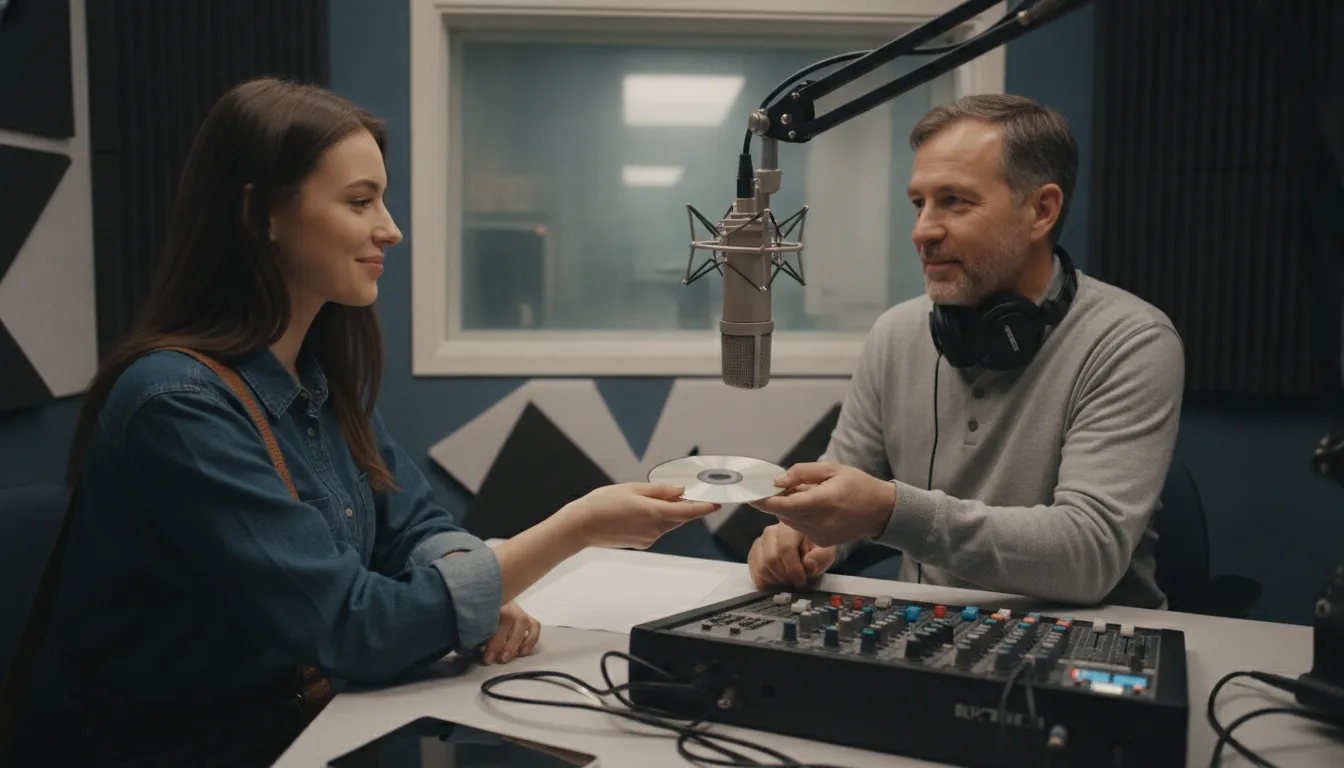
Radio can still put an independent artist in front of attentive listeners, but a strong submission starts with fit, not a mass email. The best opportunities come from stations and shows that already support your genre, audience, and sound.
To submit music to radio stations for free airplay consideration, choose genre-compatible outlets, follow each station’s submission rules, and send a clear, professional pitch. Legitimate stations do not charge artists for airplay consideration, and submission never guarantees a spin.
That approach protects your time and respects the people programming each show. It also helps you distinguish genuine artist support from services that sell exposure. rBeatz offers free, merit-based submissions reviewed for station and genre fit, with no payment required to listen or submit.
Send your music for free consideration
Before choosing where to send a track, it helps to understand what radio can offer that algorithmic discovery often cannot: a human connection between a song, a programmer, and a listener.
Why Radio Airplay Still Matters for Independent Artists
Radio creates a different kind of listening relationship. A host, programmer, or music director chooses a song because it fits a station’s sound and deserves a place in the conversation. That human decision can give an independent artist more than a passive stream. It can place the music beside trusted voices, local culture, and listeners who are actively paying attention.
That culture remains substantial. The U.S. radio broadcasting industry employed 52,680 workers in May 2024, including broadcast announcers and radio DJs, according to the U.S. Bureau of Labor Statistics. The number reflects a working ecosystem of people who present music, build programs, and connect audiences with sounds they may not encounter elsewhere.
Human curation gives a song context
Algorithmic playlists can help listeners move quickly from one track to another. Radio offers a more personal path. A host may introduce an artist, explain why a song stood out, or place it within a wider genre and community. Those moments give listeners a reason to remember the artist, not just the track title.
For an independent musician, that context matters. A new listener may hear a song during a specialty show, follow the artist after hearing an introduction, or share the discovery with someone who values the same scene. Airplay does not replace strong music, consistent releases, or direct audience engagement. It can open a meaningful door to all three.
Independent artists belong in radio culture
Radio has long made room for emerging voices, local scenes, and music that falls outside the biggest commercial lanes. Independent artists bring fresh perspectives to that culture. Their songs can reflect a city, a subgenre, or a creative community before those sounds reach a wider audience.
That is why genre fit matters when you submit music to radio stations. The goal is not to send the same track everywhere. It is to find a real connection between the song, the station’s format, and the listeners who tune in. A focused submission respects the station’s work and gives the music its strongest opportunity to be heard by the right audience.
One platform can create several discovery paths
rBeatz supports this artist-first approach through more than seven genre-specific stations, including rBeatz Radio, Oui Global Radio, 25/8/366 Global Radio, The Vessel Radio, ROQ Charlotte, USA Heroes Radio, and Bonfire Radio. Together, these stations connect artists with audiences beyond one neighborhood while keeping discovery rooted in human curation.
For artists, the value is not a promise of airplay. It is access to a community where music is considered on its fit and merit. For listeners, it is another way to discover independent talent through rBeatz Radio and the wider rBeatz network.
What Do Radio Stations Look For When You Submit Music?
Program directors are listening for a practical match between your song and the station’s audience. That starts with format fit. Before you submit, identify stations and shows that already support your genre, sound, and audience. This approach saves time for you and for the program director reviewing the music. A strong song sent to the wrong format is still an unlikely fit.
Genre labels can help, but listen beyond the label. Spend time with the station’s recent programming and note the artists, tempos, production styles, and themes that appear regularly. A rock station, for example, may have a specific preference for alternative, classic, hard rock, or local releases. The closer your song aligns with a station’s actual programming, the more useful your submission becomes.
Clean, finished production
Stations need audio that is ready for listeners. Submit a finished master with clear vocals, balanced instruments, and no obvious clipping, distortion, or unfinished edits. The song does not need to sound expensive or imitate a major-label release. It should sound intentional, complete, and consistent with the quality of the music you want audiences to hear.
Use a high-quality file unless the station requests something else. MP3 files at 192kbps or 320kbps, along with WAV files, are standard requirements cited for many stations. Check the station’s stated audio requirements before uploading, since each outlet can set its own preferences.
Respect for the station’s process
Read the submission page before sending anything. Some stations request one song, a particular file type, a short artist biography, or specific contact details. Others limit submissions by format, location, release type, or song length. These rules are not paperwork for its own sake. They help volunteer programmers and busy staff sort music efficiently.
Research specific shows, follow the posted guidelines precisely, and contact show hosts directly when that option is provided. A concise message should identify the song, artist, genre, and reason the track fits that show’s audience. Avoid sending a mass pitch that ignores the station’s programming. A single polite follow-up can be reasonable after the station’s stated review window, but repeated messages do not improve your chances.
Legitimate stations evaluate music on fit and merit, not on whether an artist can pay for consideration. rBeatz keeps its music-submission process free and artist-focused. If your music fits one of its formats, you can submit music to radio stations without treating payment as a requirement for review.
How to Submit Music to Radio Stations the Right Way
A strong submission respects the station’s audience, workflow, and stated rules. Research comes first, because genre fit helps save time for you and the program director.
Use this process to present your music clearly without overwhelming the people reviewing it.
- Research the station and format. Listen before contacting anyone. Identify the station’s genre focus, recurring shows, local-music programming, and likely decision-maker. Research specific shows and contact hosts when the station invites direct outreach. Songstuff recommends matching your genre to a compatible format and following each station’s guidelines precisely: college radio submission guidance.
- Prepare a focused artist package. Include a concise bio, high-quality audio, brief cover notes, and working links to your artist pages or release information. Use MP3 files at 192 or 320 kbps, or WAV files, when the station accepts those formats. Make the song title, artist name, genre, and contact details easy to find. Keep your notes relevant to the station and the specific show.
- Follow the exact submission rules. Read the station’s current instructions before sending anything. Requirements vary by outlet. KXT 91.7 asks artists to send one song because it receives many submissions: KXT submission rules. Shady Pines Radio requests original songs that run five minutes or less, submitted directly by the creator: Shady Pines submission requirements. Treat these details as requirements, not suggestions.
- Send only what the station requests. Do not attach an entire album when the form asks for one track. Avoid large unsolicited files, repeated links, and long life stories. If a station requests a streaming link, provide that link. If it requests a specific file type or cover note, follow that format. A clean submission makes review easier and shows that you can work professionally.
- Follow up once, politely. Allow reasonable time for review before checking in. A brief message can confirm that your submission arrived and restate the song title. Songstuff notes that one polite follow-up is acceptable, while spamming radio staff is discouraged: follow-up etiquette for radio submissions. If there is no response, move on respectfully and keep building better station-fit opportunities.
Following the process improves your presentation, but it cannot guarantee airplay. KXT states that submitting music does not guarantee that it will be played: review KXT’s expectations. The goal is a relevant, easy-to-review submission that gives the right station a fair reason to listen.
Where Can Independent Artists Find Stations That Take Submissions?
The best station for your release may not be the largest commercial outlet in your area. College, community, noncommercial, and internet stations often create room for emerging artists and distinctive genres. College radio is frequently student-run and known for covering a wide range of music. Making it a useful place to research when your sound does not fit a narrow mainstream format.
Start with college and community radio
Search for stations connected to universities, local arts organizations, and community media groups. Use phrases such as “college radio music submission,” “community radio local music,” or the name of your city plus “music submissions.” Then visit each station’s official website and look for pages labeled Music Submissions. Local Music, Contact, or Programming.
Do not assume that every station accepts music in the same way. WVUA 90.7 FM publishes a specific policy regarding music submissions and programmer access, which shows why artists should read the station’s instructions before sending anything. Stockton University’s WLFR 91.7 FM also maintains a dedicated process for local new music submissions. These pages can tell you who may submit, which formats are accepted, and where the material should go.
Look beyond traditional campus stations
Community and noncommercial stations can be strong matches for independent music because their programming may be organized around local culture, specialty shows, or underserved genres. Internet radio stations are another practical path, especially when their format clearly aligns with your sound. Make a shortlist by listening to several shows, checking the station’s genre descriptions, and identifying hosts or music directors who already support artists in your lane.
Genre fit should guide your research. A station that regularly plays your style is more relevant than a famous station with no clear connection to your audience. Research specific shows, follow the published guidelines precisely, and contact the appropriate host or programmer rather than sending the same message everywhere.
rBeatz offers another free option for artists seeking curated radio exposure. Its network includes 7+ genre-specific stations, including rBeatz Radio, Oui Global, 25/8/366, The Vessel, ROQ Charlotte, USA Heroes, and Bonfire. Artists can review the music submission process without subscription or login fees. Submissions are considered on merit and fit, so sending music is an opportunity for review, not a promise of airplay.
What File Formats and Materials Do Stations Require?
Most stations want a clean, high-quality audio file that programmers can download, review, and add to their broadcast workflow. High-quality MP3 files at 192kbps or 320kbps, along with WAV files, are standard requirements for many stations. Confirm the station’s published specifications before sending anything.
| Format | Typical use | Quality | When preferred |
|---|---|---|---|
| WAV | Broadcast-ready archive | Uncompressed | When the station requests maximum fidelity |
| MP3 320kbps | High-quality digital delivery | Compressed, very high | When WAV is not required |
| MP3 192kbps | Standard digital submission | Compressed, solid | When listed in the station guidelines |
| AAC | Platform-specific delivery | Compressed, efficient | Only when the station explicitly accepts it |
Do not assume that a larger file is always better. A station may have upload limits, preferred metadata, or a required delivery method. Follow those instructions exactly. Sending the requested format shows that you respect the station’s process and makes review easier.
Prepare a concise artist information package
Audio is only part of a useful submission. Include a short artist bio that explains your sound, location, and current release. Keep it factual and easy for a host or programmer to scan.
A one-sheet can provide additional context without overwhelming the recipient. Include the release title, track name, genre, notable collaborators, relevant credits, and a brief story behind the song. Avoid unsupported claims about chart positions or guaranteed audience response.
Attach clean cover art if requested. Use a high-resolution image with a simple filename, such as artist-title-cover.jpg. Also provide current social profiles and streaming links. These help a station verify your identity and explore more of your work.
Before you submit music to radio stations, check whether the recipient wants one song, a private streaming link, a download, or a complete press package. Requirements differ by station and show. Send exactly what the guidelines request, then keep a record of what you delivered.
What Are Realistic Expectations for Getting Airplay?
Submitting a song is an opportunity to be heard, not a promise that a station will play it. Every radio outlet has limited programming space, its own audience, and a particular sound. A thoughtful review may end with a no, even when the music is strong. KXT makes this expectation clear: submitting music does not guarantee airplay. Its guidance is a useful reminder that consideration and selection are different stages.
That selectivity protects the listening experience. Programmers need music that fits a station’s format, production standards, and current programming needs. Artists can improve their chances by researching the station, following its instructions, and sending music that genuinely belongs in that environment. A no from one station does not necessarily mean the song has no potential elsewhere. It may simply be a mismatch in genre, timing, or audience.
Free submission should be the baseline
Artists should also be clear about what legitimate consideration does not require. Reputable stations do not charge a fee just to review a song for possible airplay. As artist submission guidance explains, legitimate stations never charge for airplay consideration. Paying for a review does not turn a submission into a guaranteed spin, and a platform that presents payment as a condition of consideration deserves careful scrutiny.
rBeatz keeps music submission completely free and merit-based. There is no submission fee for artists seeking consideration, and payment does not determine whether music fits a station. That model gives independent artists a fairer starting point, especially when other platforms charge artists to submit. The practical goal is not to sell certainty. It is to create a genuine path for music that fits the station and connects with listeners.
Think beyond one spin
Airplay can be valuable, but exposure does not have to stop at a single broadcast. rBeatz operates more than seven genre-specific stations. Including rBeatz Radio, Oui Global, 25/8/366, The Vessel, ROQ Charlotte, USA Heroes, and Bonfire. That range gives suitable music more than one possible context for reaching audiences around the world. Artists can also explore related opportunities across the platform, including podcasts and multimedia features, when those formats match the work.
A productive mindset is simple: submit carefully, respect the review process, and keep building. Do not expect every submission to be selected. Do expect a free, honest opportunity to put the music in front of human curators and listeners. If the song is not chosen, use the experience to refine your station research and keep looking for the right audience.
Learn more about the airplay expectations KXT shares with submitting artists, then explore rBeatz Radio to understand the listening environment.
Send your music for free consideration
Frequently Asked Questions
How do you submit music to radio stations for airplay?
Start by finding stations and shows that match your genre. Then follow each outlet’s submission rules, send the requested song and materials, and contact the appropriate music director or host. A focused, complete submission is more useful than sending the same message everywhere.
Can independent artists submit music to radio stations for free?
Yes. Many college, community, and independent stations accept submissions without a fee when the music fits their format. Legitimate airplay consideration should not require payment. Selection still depends on the station’s review, programming needs, and artistic fit.
What file format should I use when submitting music?
Prepare a high-quality MP3 at 192 or 320 kbps, or a WAV file, unless the station specifies another format. SongStuff identifies these as standard requirements for many stations: submission guidance for college radio.
Should I follow up after sending a song to a station?
Follow up once after a reasonable period if the station allows it. Keep the message brief and polite, and do not repeatedly contact staff. Researching the show and addressing the right host can make your follow-up more relevant than sending a generic reminder.
Does submitting a song guarantee airplay?
No. Submission creates an opportunity for consideration, not a promise of rotation. KXT states that music submissions do not guarantee airplay: KXT submission guidelines. Treat each submission as a professional introduction and keep building relationships with suitable stations.
Ready to Submit Your Music to rBeatz?
If your music fits a station format, the next step is simple: share it for review by a platform built around independent artists and music discovery. There is no submission fee, and consideration is not a promise of airplay. Submit your music to rBeatz for free airplay consideration and let the team review whether your release suits its stations.