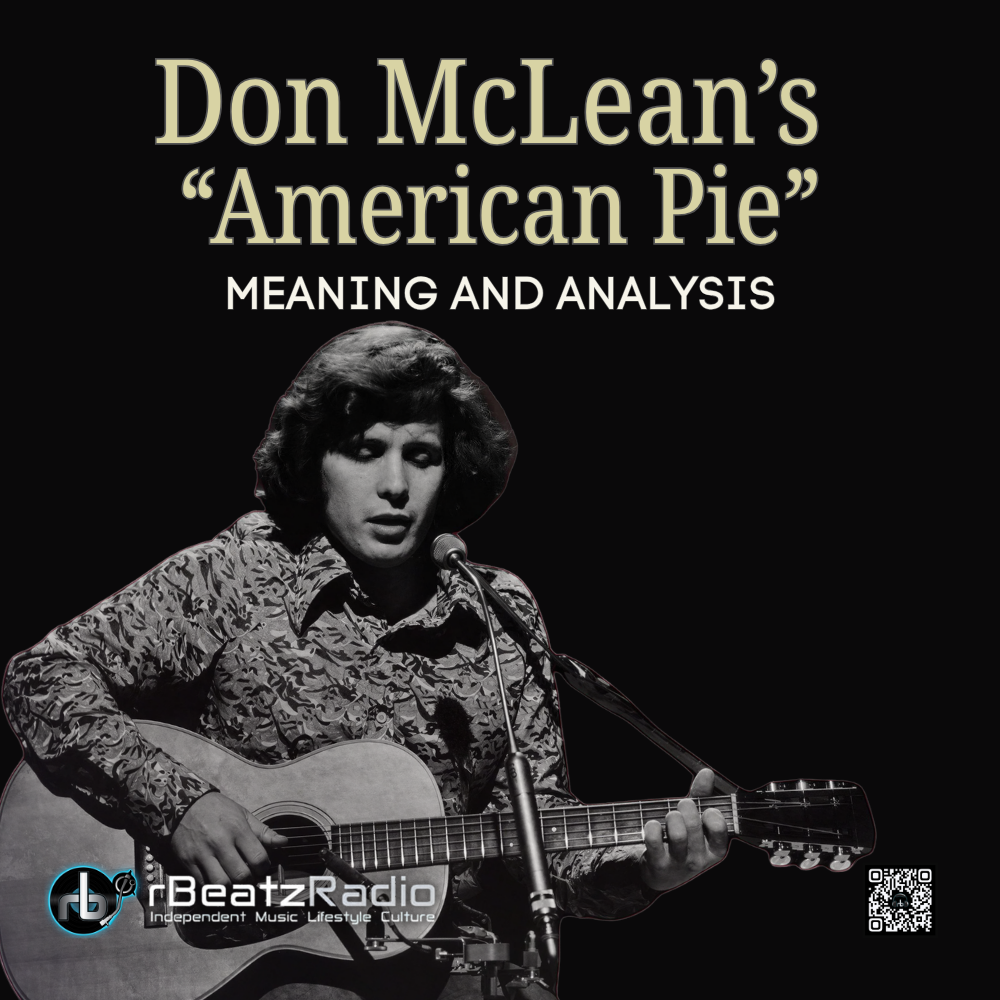
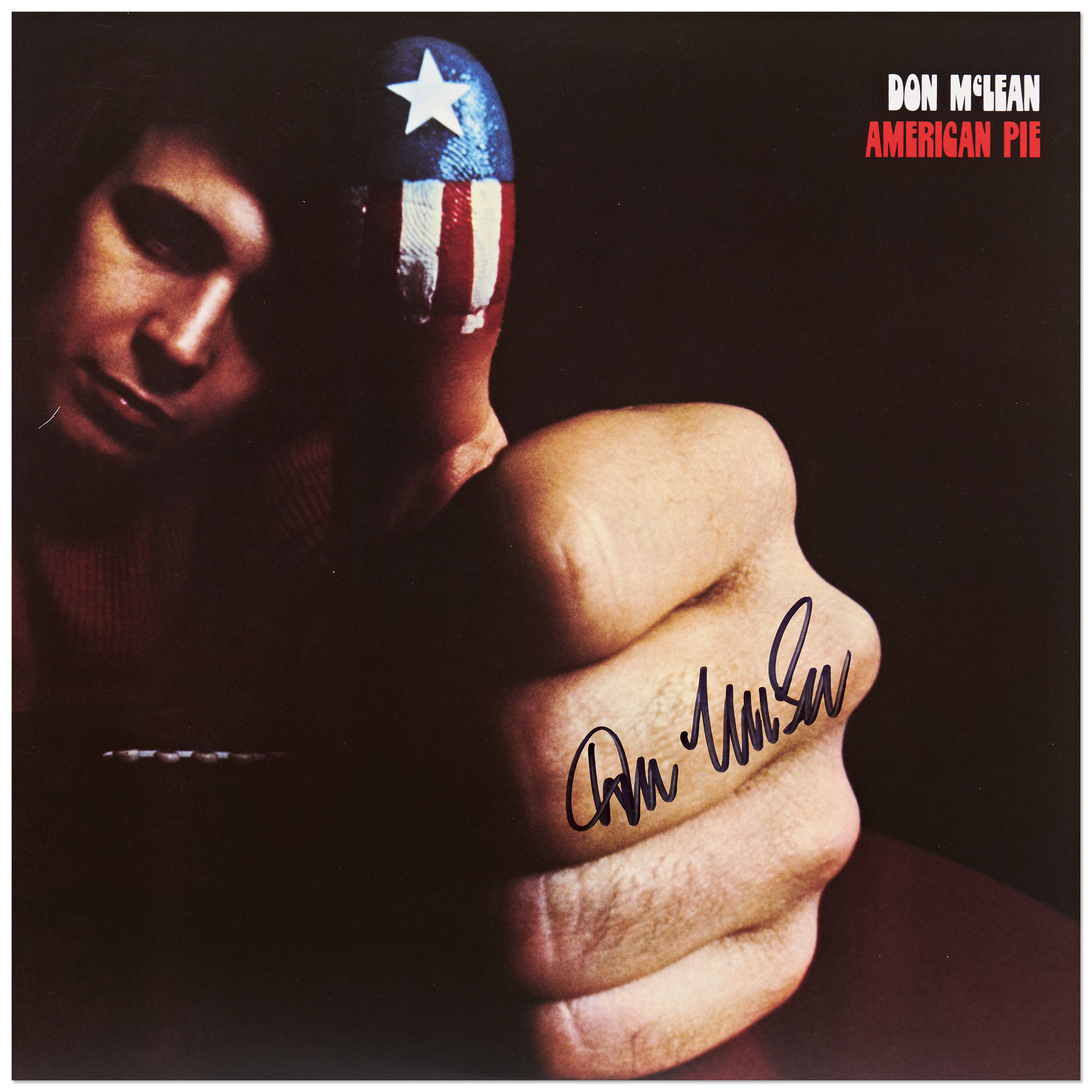
Few songs invite as much interpretation as Don McLean’s “American Pie.” Since its release in 1971, listeners have tried to decode its references to Buddy Holly, Bob Dylan, the Beatles, the Rolling Stones, politics, religion, and the upheavals of the 1960s. The lyrics mix real history with personal memories and symbols, making a neat, line-by-line explanation almost impossible.
“American Pie” tells the story of how American music and culture lost some of their youthful innocence. The song uses the deaths of Buddy Holly, Ritchie Valens, and J.P. “The Big Bopper” Richardson in 1959 as its starting point, then follows the major social and musical changes that defined the decade that came after.
McLean has confirmed some references but has deliberately left many others open. The Library of Congress describes the song as partly autobiographical and partly a story of America moving from the idealized 1950s toward the troubled 1960s.
Key Takeaways
- “American Pie” connects McLean’s childhood memories with America’s changing musical and cultural life.
- “The day the music died” refers to the February 3, 1959, plane crash that killed Buddy Holly, Ritchie Valens, and the Big Bopper.
- Buddy Holly’s death starts the story, but the song is much bigger than a tribute to Holly.
- The jester, king, queen, and other figures are often linked to famous musicians, but several of these readings remain interpretations.
- “American Pie” was not the name of Buddy Holly’s plane. McLean’s own website calls that story an urban legend and says he created the phrase himself.
- McLean has described the song as an allegory about America and the American dream, while leaving room for listeners to form their own readings.
“American Pie” Lyrics Meaning, Verse by Verse
Trying to understand American Pie’s lyrics requires some caution. McLean’s words contain clear historical references, but not every image has a confirmed identity. Some readings are strongly supported by context. Others are popular theories that have never been confirmed by McLean.
Buddy Holly and the Loss of Innocence
The opening is one of the clearest parts of the song.
A long long time ago
I can still remember
How that music used to make me smile
And I knew that if I had one chance
That I could make those people dance
And maybe they’d be happy for awhile
McLean describes himself as a young person surrounded by music before learning about the death of a major musical figure.
But February made me shiver
With every paper I’d deliver
Bad news on the doorstep
I couldn’t take one more step
I can’t remember if I cried
When I read about his widowed bride
But something touched me deep inside
The day the music died
The newspaper imagery is autobiographical. McLean really was a paperboy when he learned of Holly’s death.
That gives the opening a simple emotional progression: music brings happiness, news brings death, and childhood innocence begins to disappear.
Buddy Holly is, therefore, more than a person in the song. He represents a musical generation that McLean associates with his youth. Holly helped establish the sound and structure of early rock and roll, and his influence extended well beyond his short career.
The death of Holly, Valens, and the Big Bopper became the historical doorway into McLean’s larger story.
“Bye-Bye, Miss American Pie”
The chorus is where American Pie’s meaning gets broader.
Bye bye miss American pie
Drove my Chevy to the levee
But the levee was dry
And good old boys were drinking whiskey and rye
Singing
This will be the day that I die
This will be the day that I die
“Miss American Pie” is generally understood as a symbolic image of America. McLean’s own explanation supports that reading. His website says the phrase concerns America and rejects the old claim that American Pie was the name of Holly’s aircraft.
The Chevy, the dry levee, the whiskey and rye, and the reference to dying all contribute to an image of an older America. There’s movement, freedom, music, friendship, and a sense of ordinary life.
Then comes the farewell.
The phrase “bye-bye” changes the emotional temperature. Something has been lost, and the narrator knows it cannot simply be recovered.
The plane myth deserves special attention because it has been repeated for decades. Buddy Holly did not own a plane called American Pie. He and the other musicians were traveling on a chartered aircraft, and McLean says he invented the phrase himself.
So, anyone searching for the meaning of American Pie’s lyrics should separate that popular story from the documented history.
The “Book of Love” and 1950s America
The next images bring us deeper into the world of the 1950s.
Did you write the book of love
And do you have faith in God above
If the Bible tells you so
Now do you believe in rock and roll?
Can music save your mortal soul?
And can you teach me how to dance real slow?
The references suggest romance, teenage culture, school dances, cars, early rock and roll, rhythm and blues, religion, and the social values of postwar America. This was a period when popular music was becoming central to youth identity.
The song does not present this world as completely perfect. That matters. McLean has specifically rejected the idea that “American Pie” is simply a nostalgia song. His official explanation describes it as a story that changes along with America.
The nostalgia is real, but it is only one ingredient. McLean is also interested in what happens when the world remembered from childhood can no longer survive unchanged.
The Jester, the King, and Queen: Bob Dylan and Changing Rock Music
When the jester sang for the king and queen
In a coat he borrowed from James Dean
And a voice that came from you and me
Oh, and while the king was looking down
The jester stole his thorny crown
The courtroom was adjourned
No verdict was returned
The jester is widely interpreted as Bob Dylan. The connection makes sense within the song’s musical timeline. Dylan represented a new kind of songwriter and performer, bringing folk influences, political ideas, and a more literary approach into popular music.
Still, “the jester is Bob Dylan” should not be presented as a confirmed fact.
The king is often associated with Elvis Presley or with the older rock and roll establishment. The queen has produced even more theories. James Dean imagery also appears in this section, adding another symbol of youthful rebellion and an earlier generation of cultural heroes.
The precise identities matter less than the transition they create.
The old musical order is being challenged. New performers are taking control. The innocent teenage music culture of the 1950s is giving way to something more political, ambitious, experimental, and sometimes disturbing.
The Beatles, the Byrds, and the Counterculture
The middle of “American Pie” is filled with references to the music of the 1960s.
Helter skelter in a summer swelter
The birds flew off with a fallout shelter
Eight miles high and falling fast
The imagery is often connected to the Beatles, especially through references associated with “Helter Skelter” and the psychedelic culture surrounding the later Beatles. “Eight Miles High” is commonly linked to the Byrds. Other images recall the Beatles’ “Sgt. Pepper” period and the broader counterculture.
Again, the useful question is not simply, “Who does this line represent?”
The better question is, “What happened to the music?”
The answer is that rock had changed dramatically. Early rock and roll had developed into a much wider culture. Artists were experimenting with recording techniques, drugs, politics, longer compositions, new sounds, and new ideas about what popular music could accomplish.
That change was exciting. It was also part of the larger cultural upheaval that McLean was describing.
The distance between Buddy Holly and late 1960s rock is therefore central to the song. The music did not just get more sophisticated. It became connected to a society questioning its institutions and values.
Altamont and the Dark End of the 1960s
The later sections are commonly associated with the Altamont Free Concert in December 1969.
Oh, and as I watched him on the stage
My hands were clenched in fists of rage
No angel born in Hell
Could break that Satan’s spell
The supposed-to-be-peaceful musical event featured the Rolling Stones and other popular bands. It took place at Altamont Speedway in California. The Hells Angels (No angel born in Hell) were used as security, and violence broke out during the concert. Meredith Hunter, an 18-year-old audience member, was one of those killed during the chaos. The event has since turned into a symbol of the darker side of the counterculture.
This is one of the strongest historical readings of the later part of the song. But it should still be described as an interpretation unless McLean has explicitly confirmed a particular line.
Altamont provides a powerful endpoint for the story.
The song starts with the idealism of youth and early rock music. It passes through experimentation and rebellion. It eventually arrives at violence and disillusionment.
That progression is what makes American Pie’s lyrics more than a collection of musical references.
When the Music No Longer Saves Us
The final section feels different from the energetic musical references that come before it.
I met a girl who sang the blues
And I asked her for some happy news
But she just smiled and turned away
I went down to the sacred store
Where I’d heard the music years before
But the man there said the music wouldn’t play
The music seems to have lost its power. Faith has been shaken. Heroes have disappeared. The sense of community that once surrounded music has broken down.
This is the emotional conclusion of the song.
McLean began with a boy discovering that one of his musical heroes was dead. He ends with a much larger sense of loss. The question is no longer only what happened to Buddy Holly. It’s what happened to America and the music that Holly came to represent.
Who Are the People in “American Pie”?
Many listeners have spent decades trying to identify every character in the song. Some interpretations are persuasive, while others are much less certain.
Reference | Common Interpretation | Confirmed? |
The Jester | Bob Dylan | Widely interpreted |
The King | Elvis Presley or the older rock and roll establishment | Debated |
The Queen | A musical or cultural figure | Debated |
The Quartet | The Beatles | Common interpretation |
Jack Flash | The Rolling Stones or Mick Jagger | Strong musical allusion |
The girl who sang the blues | Often interpreted as Janis Joplin | Unconfirmed |
The important point is that McLean did not provide an official cast list.
This makes the distinction between evidence and speculation especially important. A connection can be historically convincing without being something McLean personally confirmed.
American Pie’s meaning is clearer when these figures are viewed as parts of a larger progression. They show how American music changed across a turbulent decade.
What Does “American Pie” Say About America?
“American Pie” is not simply a puzzle about famous musicians. It is a coming-of-age story that places one person’s memories against a country undergoing transformation.
The song moves from the optimism associated with the 1950s into the conflicts of the 1960s. The backdrop includes the assassination of John F. Kennedy, the Vietnam War, civil rights struggles, political division, counterculture, and changing attitudes toward authority.
Music reflects these changes.
Early rock and roll was closely tied to youth culture. By the late 1960s, popular music turned into a vehicle for protest, experimentation, identity, and political expression. The Library of Congress describes “American Pie” as a collage of popular culture and common history spanning roughly 1959 to 1969, with both celebration and mourning built into it.
McLean’s personal story runs alongside this national story. His childhood ends as America’s postwar confidence starts to fracture.
That is why American Pie’s meaning is larger than any single reference. The song is about memory, but it is also about what happens when the world remembered from childhood collides with adulthood.
Why Has Don McLean Never Fully Explained “American Pie”?
Part of the fascination with “American Pie” comes from McLean’s refusal to provide a complete decoding.
He has discussed its broad themes. He has also confirmed important details, including its autobiographical opening and its connection to America. But he has not supplied a definitive explanation for every character, phrase, or image. McLean said that he wanted to write about America and had an idea that music and politics moved forward in parallel.
The original manuscript added another layer to the mystery. In 2015, Christie’s sold McLean’s working manuscript and drafts for $1.2 million. The material contained revisions and deleted sections, giving researchers an unusual look at how the song developed.
But even the manuscript did not turn the song into a simple code that could be solved.
That distinction matters. There’s a difference between what McLean has confirmed and what generations of listeners have inferred.
Why “American Pie” Still Matters
“American Pie” begins with the death of Buddy Holly, but it gradually transforms into something much larger. It’s about growing up, losing musical heroes, watching cultural values change, and seeing an idealized version of America give way to a more complicated reality.
The song’s historical references help tell that story, but they do not completely define it. Bob Dylan, the Beatles, the Rolling Stones, Janis Joplin, Kennedy, Vietnam, and Altamont can all be part of the picture without reducing the song to a simple list of names.
That’s also why American Pie’s lyrics continue to attract new listeners. The song gives people enough historical material to investigate, but enough ambiguity to leave room for personal interpretation.
McLean has described “American Pie” as an American dream and an allegory. Its meaning can, therefore, change as listeners bring their own experiences to it.
There may never be one definitive answer to American Pie’s meaning. But that’s not a flaw. It’s one of the reasons the song has lasted through the years.