
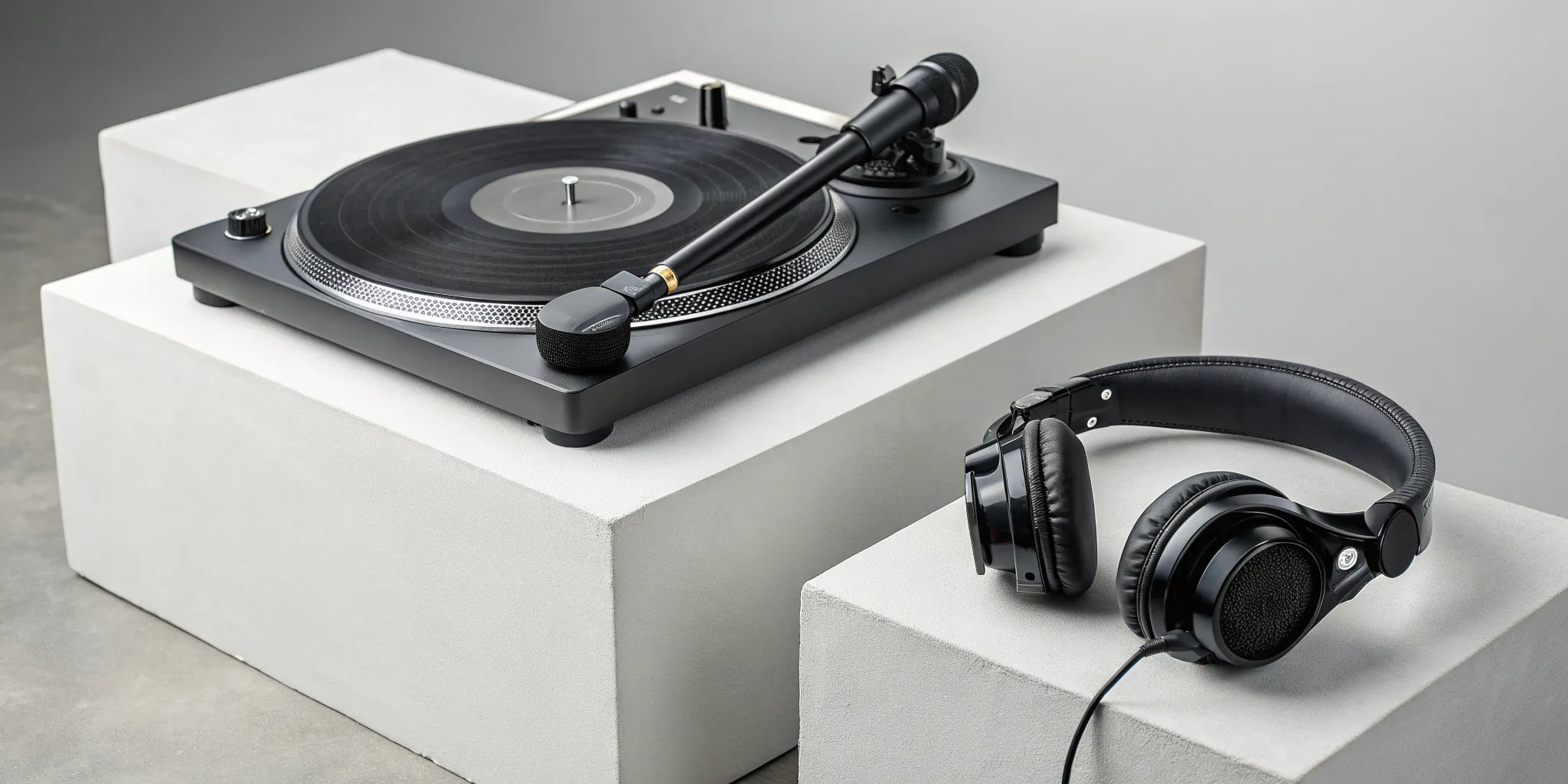
To really understand hip hop, you have to go back to its starting point: the Bronx in the 1970s. This wasn’t just any place or time. It was a unique environment where social and cultural forces collided, sparking a revolution. Hip hop wasn’t born in a fancy recording studio; it was born on the streets, at lively block parties where DJs learned to loop instrumental breaks to keep the crowd moving. This innovation, born from necessity and a desire for connection, laid the groundwork for an entirely new art form. This is the story of how the resilient spirit of a community created the foundation for hip hop music and a culture that would eventually take over the world.
Key Takeaways
- Hip hop is a complete culture, not just a music genre: It was built on four distinct art forms working together, including rapping (MCing), beat-making (DJing), street dance (breaking), and visual art (graffiti).
- The sound of hip hop is defined by constant evolution: Its identity is built on reinvention, growing from the sample-heavy beats of Boom Bap to the diverse sounds of modern Trap and melodic rap.
- It serves as a powerful voice for change: From its beginning, artists have used the platform to tell authentic stories, address social injustice, and shape mainstream culture far beyond the music charts.
What is Hip Hop, Really?
When you hear the term “hip hop,” your mind probably jumps straight to rap music. And you’re not wrong, but that’s only part of the story. Hip hop is much bigger than a single genre; it’s a rich, vibrant culture that started in New York City during the 1970s. It was born from the creativity of African-American and Caribbean immigrant communities in the Bronx who were looking for a way to express themselves and build community.
While rap is the most famous musical element, hip hop is a complete cultural ecosystem. It’s a lifestyle, an art form, and a powerful voice for social commentary. Understanding this distinction is the first step to truly appreciating its impact. Think of rap as the poetry of hip hop, while the culture itself is the entire world that poetry lives in. From the way people dress to the art on the walls, its influence is everywhere.
The Core Elements of the Genre
At its heart, hip hop music is built on a few key sonic elements. The most recognizable is rapping, a rhythmic and rhyming vocal style that sits somewhere between speaking and singing. Alongside the rapper, or MC (Master of Ceremonies), is the DJ (Disc Jockey). The DJ is the original architect of the sound, using turntables and mixers to create a continuous loop of beats. Techniques like scratching, where a record is moved back and forth to create a percussive sound, and beatboxing, which uses the mouth to mimic drum machines, are also foundational to the music. These components come together to create the unmistakable sound that has powered dance floors and inspired artists for decades.
More Than Music: Hip Hop as a Cultural Movement
From its earliest days, hip hop has been a platform for storytelling and social commentary. It grew out of lively block parties in New York, where DJs would isolate and extend the instrumental breaks of popular songs, creating a new canvas for dancers and MCs. This environment gave a voice to people who often felt overlooked, allowing them to speak on issues like poverty, racial injustice, and police brutality. The term itself was popularized in the late ’70s, and pioneers like Afrika Bambaataa helped shape it into a positive force through his Universal Zulu Nation, which promoted messages of peace and unity. It’s a culture built on turning struggle into art and creating something beautiful from limited resources, a spirit you can still hear on our live radio streams today.
Where It All Began: 1970s New York
To really get hip-hop, we have to travel back to its starting point: the Bronx in the 1970s. This wasn’t just any place or time. It was a unique environment where social and cultural forces collided, sparking a revolution. Out of the creativity of its communities, a new art form was born that would eventually take over the world. Hip-hop is a story of innovation born from necessity, and its roots are deeply planted in the vibrant and resilient neighborhoods of New York City.
The Social Roots of the South Bronx
Hip-hop wasn’t born in a fancy recording studio; it was born on the streets. Its origins are in the predominantly African-American and Caribbean immigrant communities of the South Bronx. During the 1970s, these neighborhoods faced serious economic hardship, but they were also incredibly rich with culture and a powerful sense of community. This environment created the perfect conditions for a new artistic movement to take hold. Young people, looking for an outlet and a voice, began creating their own forms of expression through music, dance, and art. Hip-hop became their way of telling their stories and building something positive from the ground up.
The Rise of Block Parties and DJ Innovation
The earliest sounds of hip-hop echoed through the Bronx at lively block parties. These community gatherings were the original stage for the genre, where DJs became the main attraction. Instead of just playing songs from start to finish, pioneering DJs focused on the best parts: the instrumental breaks. These were the percussive, high-energy sections of funk and soul records that made everyone want to dance. Using two turntables, they learned to extend these instrumental breaks indefinitely, creating a continuous loop of pure rhythm. This innovation was the musical foundation of hip-hop, providing the sonic canvas for dancers and, eventually, rappers.
Meet the Pioneers: DJ Kool Herc and Afrika Bambaataa
Every movement has its pioneers, and for hip-hop, two names are absolutely essential: DJ Kool Herc and Afrika Bambaataa. Often called the “father of hip-hop,” DJ Kool Herc was the innovator who first used two copies of the same record to loop the breakbeat. While Herc laid the sonic groundwork, Afrika Bambaataa helped shape hip-hop’s cultural identity. He founded the Universal Zulu Nation, a collective that promoted peace, unity, and community empowerment. Bambaataa helped frame hip-hop as a positive force, giving it a social conscience and defining it as a culture with a purpose beyond just the music.
What Are the Four Pillars of Hip Hop Culture?
When we talk about hip hop, it’s easy to think it’s just about the music. But it’s so much more than that. Hip hop is a cultural movement built on four foundational pillars: MCing, DJing, breaking, and graffiti art. These elements grew together in the Bronx, each one influencing and amplifying the others. They provided a powerful outlet for creativity, communication, and community for young people who felt overlooked. Understanding these pillars is key to appreciating the full scope and impact of hip hop.
Each element represents a different form of expression. MCing is the voice, DJing is the sound, breaking is the movement, and graffiti is the visual art. Together, they tell a complete story of innovation and resilience. While the music has traveled across the world and evolved into countless subgenres, these four pillars remain the bedrock of the culture. You can still see their influence in the work of today’s emerging artists, who continue to build on this incredible legacy.
MCing (Rapping)
MCing, short for Master of Ceremonies, is the vocal heartbeat of hip hop. It’s the art of rhythmic speech, or rapping, where an artist delivers rhymes and clever wordplay over a beat. More than just rhyming words, MCing is a powerful form of storytelling. Early rappers used it to talk about their lives, their neighborhoods, and the social issues they faced, turning personal experience into public poetry. It’s a direct line of communication between the artist and the listener. For many, it’s the most recognizable element of hip hop and a craft that requires immense skill, timing, and lyrical creativity.
DJing and Turntablism
Before the MC, there was the DJ. DJing is the foundation of hip hop’s sound. Pioneers discovered that the most danceable part of a funk or soul record was the “break,” a short, percussion-heavy section. They started using two turntables to loop these breaks, creating a continuous, high-energy beat for people to dance to. This evolved into turntablism, where the turntable becomes an instrument. DJs began manipulating records by scratching, beat juggling, and mixing to create entirely new sounds. You can hear the legacy of this innovation in the mixes on rBeatz Radio today.
Breaking (Breakdancing)
Breaking is the physical expression of hip hop. It’s a dynamic and acrobatic style of street dance that erupted in response to the beats DJs were creating. Dancers, known as b-boys and b-girls, would hit the floor during the instrumental breaks to showcase their best moves. Combining intricate footwork (toprock), spinning (power moves), and stylized poses (freezes), breaking became a form of friendly competition. Dance battles allowed crews to compete with creativity and athleticism, channeling their energy into art. It’s a visually stunning pillar that has since grown into a global phenomenon.
Graffiti Art
Graffiti is the visual language of hip hop culture. It began with young artists using spray paint to write their names, or “tags,” on subway cars and city walls, a way of making their presence known in a sprawling urban landscape. This soon evolved into complex and vibrant murals, known as “pieces,” featuring stylized lettering, bold colors, and intricate characters. Far from random vandalism, graffiti is a deliberate art form used for self-expression, social commentary, and claiming public space. It gave a visual identity to the movement, ensuring hip hop was not just heard, but also seen.
A Guide to Hip Hop’s Evolving Subgenres
Hip hop has never been just one thing. From its earliest days, the genre has been a living, breathing art form, constantly changing to reflect new voices, regions, and creative ideas. Think of it less as a single category and more as a massive family tree with deep roots and countless branches. Each subgenre tells a different story, using unique sounds and lyrical approaches to capture a specific moment or feeling.
Understanding these different styles is key to appreciating the full scope of hip hop’s artistry. Whether you’re a fan looking to explore new sounds or an artist trying to find your place, getting to know the sonic landscape is essential. From the foundational beats of New York to the experimental sounds of today, each subgenre offers a distinct perspective on the culture. You can hear this evolution across the diverse playlists on rBeatz Radio, where classic tracks and modern hits share the airwaves.
The Foundations: Old School and Boom Bap
When people talk about classic hip hop, they’re often referring to Boom Bap. This is the sound that defined the genre’s golden age, born on the East Coast and centered in New York City. The name itself mimics the sound: a hard-hitting kick drum (“boom”) followed by a crisp snare (“bap”). Boom Bap production is built around gritty, percussive drum breaks, often sampled from old funk and soul records.
Lyrically, the focus was on complex wordplay, clever rhymes, and storytelling. Artists used their words to paint vivid pictures of their lives and communities. This style laid the groundwork for lyrical mastery in hip hop, proving that the MC was just as important as the DJ. It’s a raw, unfiltered sound that remains influential for artists who value lyricism above all else.
A New Voice: Gangsta Rap and Conscious Hip Hop
As hip hop grew in the late 1980s and early 90s, it began to split into distinct philosophical camps. On one side was Gangsta Rap, which offered a raw and often controversial look at the realities of street life, poverty, and crime. Artists used their music as a form of journalism, reporting on the systemic issues plaguing their communities.
At the same time, Conscious Hip Hop emerged as a powerful vehicle for social and political commentary. Instead of just documenting problems, these artists aimed to educate and inspire change. They tackled topics like racial injustice, inequality, and history with intellectual rigor and passion. While their methods were different, both subgenres used hip hop as a platform to give a voice to marginalized communities and force listeners to pay attention to uncomfortable truths.
The Modern Sound: Trap and Melodic Styles
If you’ve listened to the radio anytime in the last decade, you’ve heard Trap music. Originating in the South, Trap has become one of the most dominant sounds in modern music. It’s defined by its signature production: deep, booming 808 bass, rapid-fire hi-hats, and cinematic synth melodies. The sound is dark, atmospheric, and perfect for the club.
Flowing from Trap’s influence, Melodic Rap has also taken center stage. This style blurs the lines between rapping and singing, with artists using auto-tuned melodies to create catchy, emotionally resonant hooks. It’s a hybrid approach that has broadened hip hop’s appeal, blending it seamlessly with pop and R&B. You can find many up-and-coming artists on rBeatz who are putting their own spin on these contemporary sounds.
Pushing Boundaries: Alternative and Experimental Hip Hop
For every mainstream trend, there’s a counter-movement of artists who refuse to be boxed in. Alternative and Experimental Hip Hop is where the genre’s most innovative and unconventional ideas come to life. This subgenre is less about a specific sound and more about a mindset of pushing creative limits. You’ll find abstract lyrics, unusual production techniques, and influences from genres far outside of traditional hip hop, like jazz, rock, and electronic music.
This is the space for artists who prioritize personal expression over commercial formulas. It’s a reminder that hip hop has no rules, and its boundaries are constantly being redrawn by fearless creators. If you’re an artist making music that defies easy categorization, platforms that value unique sounds are your best bet for finding an audience. Consider a music submission to a platform that champions new and diverse voices.
How Has Hip Hop Evolved Through the Decades?
Hip hop has never been a genre to stand still. From its earliest days at Bronx block parties to its current status as a global phenomenon, it has constantly reinvented itself. Each decade brought new sounds, new voices, and new stories to the forefront, reflecting the changing social and cultural landscapes. Following hip hop’s journey is like watching a living art form grow, adapt, and consistently redefine the cutting edge of music. Let’s look at how the genre has transformed over the years.
The 1980s: Breaking into the Mainstream
The 80s were when hip hop stepped out of the neighborhood and onto the world stage. After The Sugarhill Gang’s “Rapper’s Delight” hit the airwaves in 1979, the genre exploded. Early on, pioneers like Afrika Bambaataa framed hip hop as a positive force for community building. As the decade progressed, the music evolved from upbeat party anthems to more complex social commentary. Artists began using their lyrics to talk about life in their communities, laying the groundwork for the powerful storytelling that would come to define the genre. This was the decade that proved hip hop was more than a fad; it was a legitimate artistic movement with something important to say.
The 1990s: The Golden Age and Regional Sounds
Often called the “Golden Age,” the 90s were a period of incredible creativity and diversification. The sound became richer, with artists like A Tribe Called Quest and Public Enemy exploring themes of Afrocentrism and political consciousness. But the biggest shift was the rise of regional sounds. The West Coast came crashing into the mainstream with gangsta rap and G-funk, challenging the long-held dominance of New York artists. This coastal rivalry fueled competition and innovation, resulting in some of the most iconic albums of all time. The 90s proved that hip hop wasn’t a single sound but a collection of distinct, regional voices, a topic often explored in rBeatz Podcasts.
The 2000s: Commercial Success and Shifting Production
In the 2000s, hip hop didn’t just top the charts; it became the charts. This was the “Bling Era,” where the genre’s influence was felt across pop culture, from fashion to film. The sound became more polished, melodic, and ready for the club. During this time, Southern hip hop, particularly the emerging sound of trap music from Atlanta, began its ascent to mainstream dominance. Producers became as famous as the rappers themselves, crafting futuristic beats that blended hip hop with pop and R&B. Artists became global brands, proving that hip hop was a commercial and cultural powerhouse with a worldwide reach, much like the music featured on 25/8/366 Global Radio.
Today: The Streaming Era and Global Domination
Today, hip hop is officially the most popular music genre in the world. The rise of streaming has completely changed the game, allowing for instant global distribution and giving rise to a new generation of internet-native stars. Trap music has become a foundational sound in modern pop, while subgenres like melodic rap have blurred the lines between rapping and singing. Hip hop is more diverse than ever, with thriving scenes in countries across the globe, each adding their unique cultural flavor. For new artists today, the possibilities are endless, and there’s a global audience waiting to discover the next evolution of the sound.
What Social Issues Does Hip Hop Address?
Hip hop has always been a powerful medium for social commentary. From its earliest days at block parties in the Bronx, the genre has been a platform for storytelling, protest, and truth-telling. It’s a reflection of the world its creators live in, and for decades, artists have used their lyrics and beats to tackle complex issues head-on. Far from being just entertainment, hip hop serves as a vital cultural force that documents struggles, challenges injustice, and imagines a different future. It’s a living archive of social history, told from the ground up.
At its core, hip hop has always been about sharing ideas and commenting on society. It provides a stage for conversations that are often missing from mainstream news and culture. Artists explore everything from systemic inequality and economic hardship to personal struggles with mental health, offering perspectives that are raw, honest, and deeply human. By listening to the stories within the music, we can gain a deeper understanding of the social and political landscapes that shape our world. Many of the artists we feature use their music to carry on this tradition, sharing their unique experiences and points of view with a global audience.
Giving a Voice to Marginalized Communities
One of hip hop’s most important roles is giving a voice to people who feel left out or ignored by the mainstream. The genre provides a powerful platform for artists to share their unfiltered experiences and perspectives, creating a direct line of communication between their communities and the rest of the world. It’s a space where stories of struggle, resilience, and hope can be told without censorship. By amplifying these narratives, hip hop challenges stereotypes and fosters a greater sense of empathy and understanding, ensuring that every voice has a chance to be heard.
Confronting Racial Inequality
From its inception, hip hop has been a tool for confronting racial injustice. Born in the minority neighborhoods of New York City, the genre has consistently addressed issues of systemic racism, discrimination, and police violence. Artists have never shied away from calling out inequality, using their lyrics as a form of protest and education. From Grandmaster Flash’s “The Message” to Childish Gambino’s “This Is America,” hip hop has created a powerful and enduring soundtrack for the fight for civil rights. You can hear many of these important conversations happening in the music and discussions on our podcasts.
Shining a Light on Economic Disparity
Hip hop has always been deeply connected to the economic realities of the communities it comes from. Artists frequently use their music to shine a light on issues like poverty, the wealth gap, and the lack of opportunity. The lyrics often paint a vivid picture of the daily struggles people face, from making ends meet to navigating systems that seem designed to hold them back. By telling these stories, artists not only document the harsh realities of economic disparity but also critique the structures that create it. This commentary remains a central theme, keeping the conversation about financial inequality at the forefront of popular culture.
Championing Mental Health and Authenticity
In recent years, many hip hop artists have started to lead important conversations around mental health. Breaking down long-held stigmas, they are using their platforms to speak openly about their own struggles with anxiety, depression, and trauma. This vulnerability has added a new layer of depth to the genre’s social commentary. As one critic noted, some artists treat their work like a “spiritual confession… weaving personal trauma with systemic critique in a way that feels intentional, layered, and unflinchingly honest.” This move toward authenticity helps listeners feel less alone and encourages a more open dialogue about mental well-being, which you can hear from many new artists on rBeatz Radio.
Inside the Sound: Hip Hop Production Techniques
The sound of hip hop is a living, breathing thing, built from the ground up with creativity and resourcefulness. From the very beginning, producers and MCs have been sonic architects, using the tools available to them to construct entirely new worlds of sound. It’s a genre defined by its innovative spirit, where a snippet of an old soul record can become the backbone of a modern anthem, and a clever turn of phrase can tell a story that resonates across generations. Understanding hip hop production is about appreciating this artistry.
At its core, the sound is a powerful combination of three key elements: the artful reinterpretation of existing music through sampling, the intricate skill of lyrical delivery, and the constant evolution driven by new technology. Each component plays a vital role in the genre’s identity. By looking at how beats are made, how rhymes are constructed, and how technology continues to shape the sound, we can get a clearer picture of what makes hip hop so dynamic. The diverse artists featured on rBeatz showcase this incredible range, each bringing their unique approach to the craft.
The Art of Sampling and Beat Making
Sampling is one of hip hop’s foundational pillars. It’s the art of taking a small piece of audio from an existing song, like a drum break, a melody, or a vocal line, and repurposing it to create a brand new beat. This technique is more than just copying; it’s a creative conversation with music history. Producers dig through crates of old vinyl or digital archives to find hidden gems, then chop, loop, and transform them into something completely original. This practice not only pays homage to the music of the past but also gives a track a unique texture and soul. You can hear this rich history in the archives curated by DJ WORLD BEATZ.
Mastering Lyrical Complexity and Wordplay
While the beat sets the mood, the MC gives the track its voice and message. Great hip hop lyricism is a masterclass in language, blending rhythm, rhyme, and storytelling. It goes far beyond simple A-B rhymes. Artists use complex rhyme schemes, metaphors, and clever wordplay to paint vivid pictures and convey deep meaning. Some styles, particularly those born on the East Coast, are known for their dense, multi-layered lyrics that demand close listening. The MC’s flow, or the cadence and rhythm of their delivery, is just as important as the words themselves, turning the human voice into a percussive instrument. You can often find deep dives into artists’ work in our Read section.
How Technology Shapes the Hip Hop Sound
Technology has always been a catalyst for change in hip hop. The arrival of digital production tools completely transformed the genre, making it possible for artists to experiment in ways their predecessors couldn’t. This shift gave rise to alternative hip hop, which often blends experimental sounds with introspective lyrics. More recently, trap music has become a dominant force, defined by its digital DNA: deep, booming 808 bass, rapid-fire hi-hats, and atmospheric synth melodies. This evolution, powered by accessible software, has allowed a new generation of producers to create professional-quality tracks from their bedrooms and share them with the world on stations like 25/8/366 Global Radio.
How Has Hip Hop Influenced Mainstream Culture?
Hip hop’s influence reaches far beyond your headphones. It’s a cultural force that has reshaped music, fashion, and even the way we talk. What started in the Bronx has become a global phenomenon, setting trends and driving conversations for decades. The genre’s impact isn’t just about chart-topping hits; it’s about a fundamental shift in how art is made, shared, and monetized. It has provided a blueprint for how to build a brand from the ground up, turning artists into moguls and street style into high fashion.
From groundbreaking musical collaborations that defy genre labels to brand partnerships that redefined the relationship between artists and corporations, hip hop has consistently been at the forefront of cultural innovation. Its spirit of authenticity and storytelling has resonated across the world, making it one of the most powerful and enduring movements of our time. You can hear this legacy in the diverse sounds of the artists we feature on rBeatz, who continue to push creative boundaries. The industry itself has been transformed, with hip hop’s entrepreneurial spirit inspiring new models for music distribution and artist independence. This ripple effect is seen everywhere, from the pop charts to the runway, proving that hip hop is more than a genre, it’s a mindset.
Blurring Genre Lines with Collaborations
Hip hop has always been a master of the remix, not just in its production but in its approach to collaboration. Artists have consistently reached across genre aisles, creating sounds that are entirely new. Think of Lauryn Hill’s masterpiece, The Miseducation of Lauryn Hill, which didn’t just mix hip hop with R&B, soul, and reggae; it wove them together to create a new emotional language. This tradition of blending styles has made hip hop a central hub for musical innovation. Today, it’s completely normal for a rapper to feature on a pop anthem or a country track, a practice that many iconic rappers who changed the game helped normalize.
Shaping Fashion, Language, and Lifestyle
Long before “influencer” was a job title, hip hop artists were setting global trends. The culture’s impact on fashion is undeniable, turning everyday streetwear into coveted high fashion. A landmark moment was when Run D.M.C. released their hit “My Adidas,” which led to the first-ever endorsement deal for a rap group. This partnership showed the world the commercial power of hip hop and its authentic connection to its audience. From sneaker culture and baggy jeans to modern luxury streetwear, many of today’s biggest fashion trends have roots in hip hop. These pioneering hip hop acts did more than make music; they created a lifestyle.
Transforming the Music Industry
Hip hop didn’t just find a place in the music industry; it rewrote the rules. The rise of gangsta rap and G-funk in the late ’80s and early ’90s is a perfect example. This movement brought West Coast hip hop to the forefront, challenging the East Coast’s dominance and proving that there wasn’t just one way for hip hop to sound. This regional competition fueled incredible creativity and expanded the genre’s commercial reach. This evolution is one of the most influential types of hip hop explained in the genre’s history. Beyond the sound, artists and executives also pioneered independent label models, giving them more creative and financial control than ever before.
Why Does Hip Hop Continue to Resonate Globally?
From block parties in the Bronx to topping charts in Tokyo, hip hop has become a true global force. Its power isn’t just in its beats or rhymes, but in its incredible ability to adapt, evolve, and connect with people everywhere. The genre speaks a universal language of struggle, triumph, and authenticity, allowing it to be remixed and reinterpreted by different cultures while still holding onto its core identity. It’s a living, breathing art form that reflects the world around it, which is why it remains so relevant.
Hip hop offers a framework for storytelling that anyone can use, whether they’re talking about life in Charlotte or anywhere else on the map. It’s a culture built on innovation, from the way it’s made to the stories it tells. This constant reinvention keeps it fresh and exciting, drawing in new generations of fans and creators who see their own experiences mirrored in the music. It’s more than just a genre; it’s a worldwide conversation that everyone is invited to join.
A Platform for Emerging Artists
One of hip hop’s greatest strengths is its accessibility. You don’t need a massive studio or a record label to start making music and sharing your story. The genre has always been a launchpad for new talent, and its subgenres are constantly evolving. For example, trap music is now a mainstream force that continues to change and create space for new sounds and artists. This constant growth means there’s always room for a fresh perspective. For independent artists looking to get their start, platforms like rBeatz offer a direct path to submit your music and find an audience that’s hungry for the next big thing.
Building Community and Cultural Connection
At its heart, hip hop has always been about community. It gives a voice to people who feel left out, shining a light on important social issues and shared experiences. This foundation of authentic storytelling creates a powerful bond between artists and listeners. When you hear a rapper talk about struggles you’ve faced or dreams you’ve had, you feel seen and understood. This shared connection builds a strong, loyal community around the music. It’s a culture that invites participation, making fans feel like they are part of something bigger than themselves. You can see this connection in the diverse lineup of artists who find a home on our stations.
A Space for Creative Freedom and Innovation
Hip hop has very few rules, which is why it’s such a hotbed for creativity. Artists are constantly pushing the envelope, blending genres, and experimenting with new sounds. Alternative hip hop, for instance, often features more introspective lyrics and experimental production, showing just how flexible the genre can be. Trailblazers like Missy Elliott made space for creativity without compromise, proving that you don’t have to fit a certain mold to succeed. Her influence is a reminder that authenticity and innovation are what truly matter. This spirit of creative freedom is what keeps hip hop at the forefront of music culture, inspiring artists to be themselves and make the music they want to make.
Frequently Asked Questions
What’s the main difference between “hip hop” and “rap”? Think of it this way: hip hop is the entire culture, and rap is one of its most famous forms of expression. Hip hop is the house, which includes the art on the walls (graffiti), the dancing in the living room (breaking), and the person controlling the music (the DJ). Rap, or MCing, is the poetry being spoken over that music. While rap is often the first thing people associate with the genre, it’s just one piece of a much larger, vibrant cultural movement.
Are the four pillars (MCing, DJing, breaking, graffiti) still important in hip hop today? Absolutely. While the music has evolved and traveled the world, these four elements remain the culture’s foundation. You might not see all four together as often as you would have at a 1970s block party, but their spirit is alive and well. Modern producers still build on the innovations of early DJs, lyricism is still a respected craft, breaking has become a global competitive sport, and graffiti’s influence is all over modern art and design. They are the DNA of the culture.
I’m an artist, but my music doesn’t fit into a neat category. Is there still a place for me in hip hop? Yes, one hundred percent. Hip hop has always been about pushing boundaries and creating new sounds. Subgenres like alternative and experimental hip hop exist specifically for artists who defy easy labels. The genre’s history is filled with innovators who blended different styles to create something fresh. Your unique sound is a strength, not a weakness, and it’s part of the tradition of keeping the culture moving forward.
Why is sampling such a big deal in hip hop production? Sampling is more than just reusing a piece of an old song; it’s a creative art form that’s fundamental to the genre’s sound. Early producers, working with limited resources, used samples to build entirely new soundscapes from fragments of funk, soul, and jazz records. It’s a way of having a conversation with music history, reinterpreting the past to create something for the future. This technique gives the music a rich, layered texture that is difficult to replicate any other way.
How does hip hop address social issues without just being preachy? Hip hop’s power comes from its commitment to authentic storytelling. Instead of delivering a lecture, artists share their personal experiences, painting a vivid picture of their world. They use their lyrics to report on what they see in their communities, from racial injustice to economic struggles. This approach makes the commentary feel personal and urgent rather than abstract. It connects with listeners on a human level, inviting them to see the world from a different perspective.