
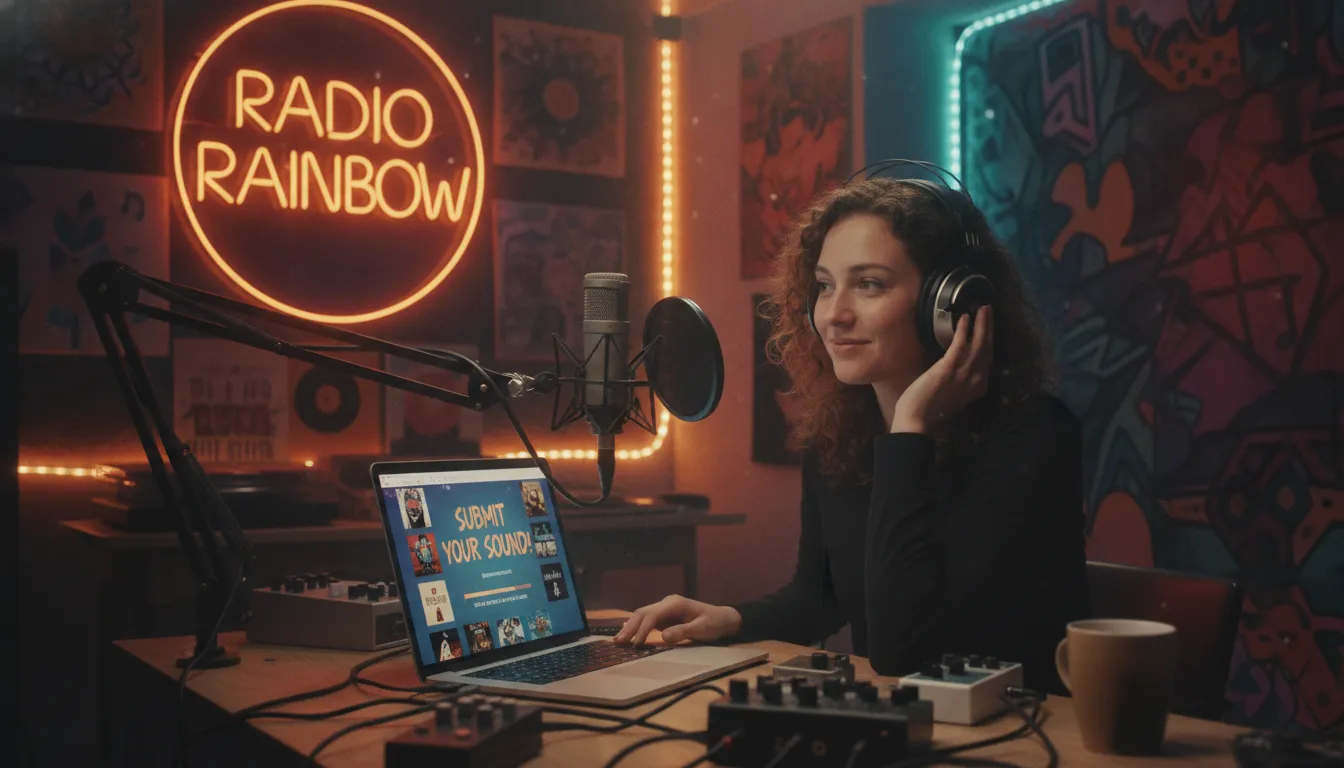
Every independent artist knows the struggle of getting music heard in a sea of new releases. Algorithmic playlists favor established names, leaving emerging talent buried. But internet radio offers a different path — one where human curators listen to your actual music and decide whether it fits. Submit your music to internet radio today and get your tracks in front of real people who care about discovering fresh talent.
To submit music to internet radio, find stations that match your genre, prepare high-quality files with proper metadata, write a personal pitch, and follow each station’s submission guidelines. Platforms like rBeatz offer free, merit-based reviews without subscription fees or rights demands.
Finding the right stations can seem like hard work for a new artist. But the effort of pitching your songs directly translates to real exposure. This guide walks you through every step of the process.
Why Should You Submit Your Music to Internet Radio Stations?
The choice to submit music to internet radio can transform an independent artist’s career. While large streaming platforms rely on automated systems that prioritize established acts, internet radio stations employ real people to evaluate your work. This human-driven approach means your track gets a fair assessment based on sound quality, genre fit, and artistic merit — not on algorithm signals.
Human Curation Versus Algorithmic Gatekeeping
Major streaming services use collaborative filtering and engagement metrics to populate playlists. This system inherently favors tracks that already have momentum, making it difficult for new artists to break through. When you pitch your music to a human-curated radio station, a real person listens to your work. That curator evaluates your song on its actual qualities — production value, arrangement, and how it fits their station’s sound.
This human check serves as a quality signal. Airplay on a curated station tells listeners, venues, and industry professionals that your music meets a professional standard. Research from Berklee College of Music confirms that streaming exposure can convert casual listeners into dedicated fans, and internet radio accelerates that process through personal curation.
Global Reach Without Geographic Limits
Terrestrial radio stations are constrained by broadcast range, typically covering a single city or metropolitan area. Internet radio removes those boundaries entirely. Your song can reach a listener in a Tokyo cafe and a driver in rural Montana simultaneously. This global distribution is especially valuable for niche genres that may not have a concentrated local audience.
Internet radio also provides actionable listener data. Many platforms offer analytics showing where your music is being streamed, which segments resonate, and how long people listen. This intelligence helps you target tour planning, advertising spend, and social media efforts with precision — data traditional radio simply cannot provide.
Build Your Audience Without Upfront Costs
Major distribution services charge annual fees ranging from $20 to $50 simply to host your catalog. In contrast, you can submit your music to rBeatz at no cost. There are no submission fees, no subscription requirements, and no demands to transfer your rights. Every dollar you save stays in your budget for gear, studio time, or promotion.
Getting airplay also builds third-party credibility. When a station adds your track to its rotation, it signals to promoters, booking agents, and collaborators that your work is radio-ready. That endorsement carries weight far beyond the initial stream.
How Do You Prepare Your Music for Radio Submission?
You get one chance to make a strong first impression with a radio curator. Before you submit your music to an internet radio platform, your tracks need to be professionally ready. This means focusing on both the audio quality and the accompanying data.
Polish Your Mix and Master
Curators listen for tracks that match the sonic standard of their station. Your mix should be balanced across all frequency ranges, and your master should achieve competitive loudness without distortion. Professional mastering ensures your song sounds as clear and powerful as the tracks playing before and after it. A poorly mixed track — even with a great composition — will likely be passed over.
Consider hiring a professional mastering engineer or using a reputable online service. The investment of $50 to $150 per track can dramatically improve your chances of getting added to a station’s rotation.
Organize Your Metadata and Press Kit
Radio curators need to know exactly who you are and what your song is called. Proper metadata prevents your track from getting lost in their library. Before submitting, ensure your audio files contain embedded tags with your artist name, song title, genre, release year, and ISRC code if available. A file named “final_mix_v3.wav” tells a curator nothing useful.
You should also prepare a simple press kit containing:
- Mastered audio files at 320kbps MP3 or WAV format
- Complete metadata tags embedded in each file
- Artist biography covering your background, genre, and notable achievements
- Professional photos for promotional use by the station
- Links to your social media and streaming profiles
Making a curator’s job easy increases the likelihood of repeated play for your future releases.

How to Find the Right Internet Radio Stations for Your Genre
Choosing stations that match your sound is critical when you want to get airplay on independent radio. Sending your track to every station you find is less effective than targeting a few well-matched outlets. A smaller, engaged audience that genuinely loves your genre is worth more than thousands of passive listeners.
Study Station Playlists and Formats
Before submitting, listen to each station’s programming for at least an hour. Note the artists they play, the genre blocks they program, and the overall vibe of their on-air presentation. If the station regularly features artists whose sound and production quality match yours, it is a strong candidate. Many internet radio stations also publish playlists on their websites or social media channels, making this research straightforward.
For example, rBeatz operates seven distinct stations serving different genres. ROQ Charlotte focuses on classic rock with a local North Carolina identity, while Oui Global Radio programs hip-hop, R&B, and Latin crossover. Matching your music to the correct station format dramatically improves your chances of acceptance.
Focus on Niche and Specialty Stations
Niche stations provide better engagement and more airtime for independent artists than general-market outlets. A station dedicated to a specific subgenre will play your track more frequently and in front of listeners who are actively seeking that sound. This targeted approach often leads to stronger fan connections and higher conversion rates for streaming, follows, and merchandise sales.
rBeatz’s station portfolio exemplifies this strategy — from Bonfire Radio (country rap) to The Vessel Radio (gospel) to 25/8/366 Global Radio (pop variety). Each station serves a distinct audience with specific musical preferences.
Can You Submit Music to Internet Radio for Free?
Yes. Many internet radio stations accept submissions at no cost, relying on curatorial selection rather than payment to choose their programming. The key question is whether the station evaluates music based on merit or payment.
Free Submission Platforms Versus Paid Services
Paid services like Groover and One Submit charge fees per song or per curator, typically around $4 per submission. These services often provide feedback from industry professionals, which can be valuable for artists who want structured critiques of their work. However, the costs accumulate quickly when submitting to multiple stations, and payment does not guarantee airplay.
Free submission platforms like rBeatz evaluate every track on its musical merits. The review process is based entirely on production quality, genre fit, and artistic quality. This model removes financial barriers and ensures that good music — not a large promotional budget — determines what gets played.
| Service Type | Cost | Primary Benefit | Best For |
|---|---|---|---|
| Paid (Groover, One Submit) | $4+ per submission | Structured feedback from curators | Artists seeking detailed critique |
| Free (rBeatz) | $0 | Merit-based airplay on curated stations | Artists focused on building audience |
How to Evaluate a Station’s Submission Model
Before submitting, read the station’s FAQ and submission guidelines carefully. Look for language about rights ownership, exclusive agreements, and promotional requirements. Reputable stations like rBeatz do not require exclusive rights — you retain full ownership of your music and are free to submit to other stations simultaneously. Be cautious of platforms that demand long-term exclusive licensing as a condition of airplay.
What Is the Step-by-Step Process to Submit Music to Internet Radio?
The actual submission process is straightforward when you approach it methodically. Here is the workflow that gives you the best chance of getting added to radio rotation:
- Research compatible stations. Identify three to five stations whose playlists and audience align with your genre. Listen to enough programming to confirm the match.
- Read each station’s submission guidelines. Every platform has specific requirements for file format, pitch content, and submission method. Follow them precisely.
- Prepare your submission package. Assemble your mastered track, metadata, bio, photos, and streaming links in one organized folder.
- Write a concise, personalized pitch. Introduce yourself, explain why your music fits their station, and reference something specific about their programming. Generic form letters are easily spotted and ignored.
- Submit through the station’s preferred channel. Some stations accept direct file uploads; others prefer links to SoundCloud or Spotify. Submit your music to rBeatz through their simple online form.
- Follow up professionally. If you have not heard back after two to three weeks, send a brief, polite follow-up. Do not send multiple follow-ups or demand a response.
Tips to Increase Your Chances of Getting Airplay
Getting your track added to a station’s rotation requires more than good audio. The artists who succeed approach submission as a relationship-building exercise rather than a one-time transaction.
Craft a Personal, Specific Pitch
Generic submission emails get deleted. Curators receive dozens of pitches daily and can immediately spot form letters. Research each station before reaching out. Mention a specific show, host, or segment that aligns with your music. Reference a recent playlist or artist feature they published. This attention to detail signals that you respect their curatorial work and are not simply spraying submissions across every available outlet.
Your pitch should include your bio, a link to your track, and a clear statement of why your music fits their format. Keep it under 150 words. Curators value brevity and clarity.
Follow Each Station’s Submission Rules Exactly
Every station has its own submission protocol. Some require a specific subject line format in the email. Others only accept submissions through their website form. Some want a direct download link; others prefer a streaming profile URL. Following these instructions to the letter demonstrates professionalism and respect for the curator’s workflow.
If a station specifies that they only accept WAV files, do not send an MP3. If they ask for a 100-word bio, do not send a 500-word autobiography. The submission process itself is the first test of whether you can follow directions.
Time Your Submission Strategically
Send your track two to three weeks before a planned release or album launch. This gives curators time to listen, evaluate, and schedule your track into their rotation so that airplay coincides with your release date. A well-timed submission can generate momentum on the exact day fans can stream or purchase your music.
After submitting, track your results. Note which stations responded, which added your track, and which remained silent. Over time, this data reveals patterns about which outlets are most receptive to your genre and approach.
Consider exploring other rBeatz blog resources for additional guidance, including how radio stations choose songs, music production tips for independent artists, and guidance on music licensing. These articles complement the submission process by helping you understand the broader industry landscape.
Frequently Asked Questions
Do I need to pay to submit music to internet radio stations?
Do I lose my music rights when I submit to internet radio?
What file format should I use when submitting music to internet radio?
How long does it take to hear back after submitting music to an internet radio station?
Can I submit my music to multiple internet radio stations at the same time?
Ready to Submit Your Music and Start Getting Airplay?
Internet radio remains one of the most accessible and effective channels for independent artists to build an audience without the gatekeeping of algorithmic platforms or the expense of traditional promotion. The path is clear: prepare professional recordings, research stations that match your sound, craft personal pitches, and submit through the proper channels.
Platforms like rBeatz make this process even easier by offering free, merit-based review across seven genre-specific stations. There are no fees, no rights grabs, and no subscription requirements — just your music and a fair listen from real curators. Submit your music to rBeatz today and take the next step in your independent music career.