
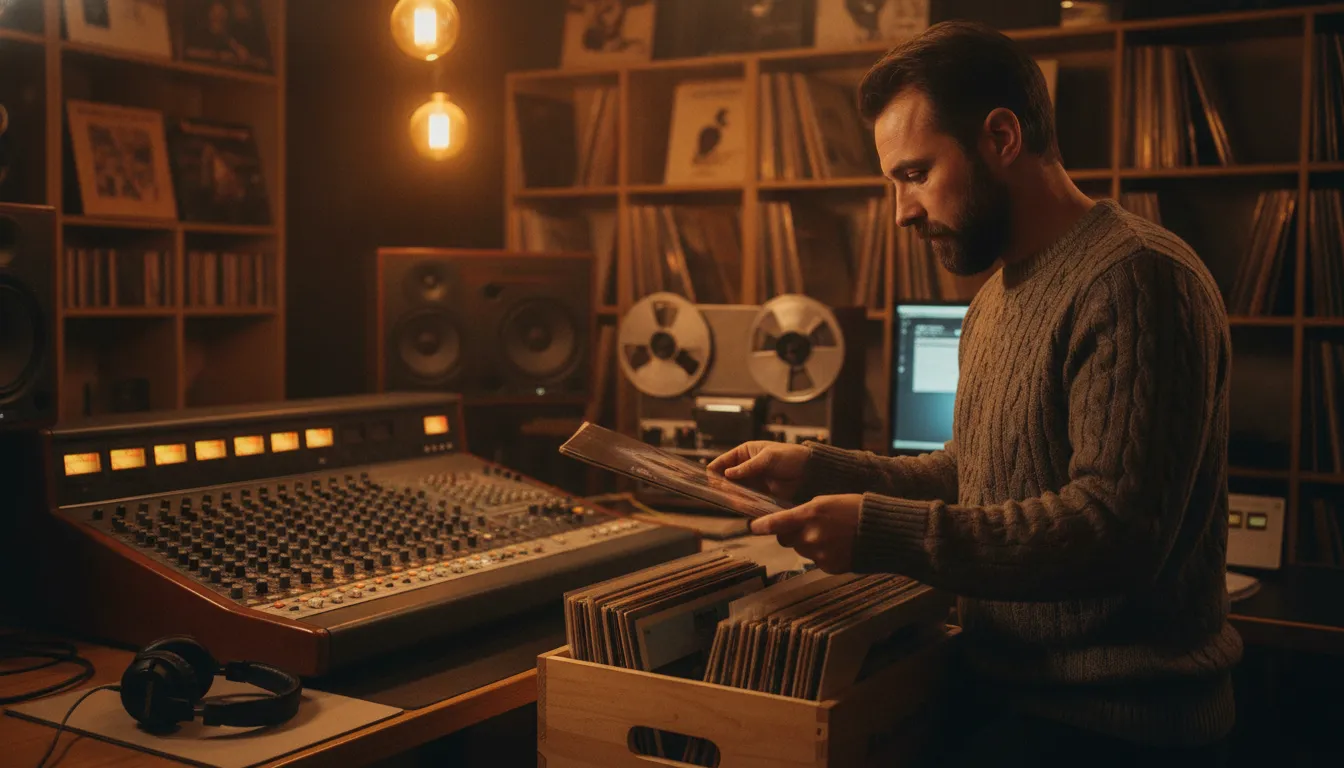
A playlist can be perfectly tailored and still leave you wondering who, if anyone, is on the other side of the music. That tension helps explain why listeners are reconsidering how they discover songs. As streaming has shifted from free-form DJs toward recommendation systems, convenience has grown. But the experience can feel personalized yet impersonal, a contrast documented in research on algorithmic curation.
Experience real human curated radio on rBeatz → Tune in free, no login required, and hear the difference a real DJ makes.
Human curated radio restores the sense of direction, surprise, and shared listening that automated playlists often miss. Instead of repeating signals from your past behavior, a DJ or music director connects songs by mood, story, scene, or instinct, giving unfamiliar artists a genuine chance to reach you.
That does not make every algorithm useless. It does show why a trusted human perspective remains valuable when endless choice starts to feel like more of the same. The limits of recommendation become clearest when a playlist keeps circling the preferences it already knows.
Why Do Algorithmic Playlists Plateau?
Algorithmic playlists plateau because they optimize for familiarity over discovery. By studying past listening habits and recommending similar tracks, these systems create a feedback loop that narrows the range of music a listener encounters instead of expanding it.
Algorithmic playlists are excellent at predicting what you have already shown a willingness to hear. They study signals such as demographics and past listening habits, then use those patterns to recommend the next track. That convenience can become a limitation when the system keeps optimizing for familiarity instead of discovery. Research highlighted by the University of Virginia describes how these predictions can produce repetitive, homogenized recommendations across streaming services. Read the source.
The result is a listening loop. A preference for one sound leads to more of that sound, which creates more data confirming the same preference. Over time, the playlist may feel highly accurate while quietly narrowing the range of artists, scenes, and styles you encounter. This is the echo chamber effect in music discovery: the system reflects your established taste so consistently that it gives fewer reasons to move beyond it.
Academic research on music streaming satisfaction has examined how the interaction between algorithmic suggestions and human-curated playlists affects listener experience. Studies from Texas Christian University confirm that while algorithms are powerful tools for scale, they are not inherently better at producing satisfying discovery than a well-chosen human selection.
- Prediction loop: The system serves more of what you already like, reinforcing existing taste rather than expanding it.
- Narrowing range: Familiarity optimization means less exposure to genres, scenes, or eras outside your listening profile.
- No intentionality: An algorithm cannot decide to challenge a listener or introduce a curveball for artistic reasons.
What Makes Human Curated Radio Different?
Human curated radio creates a listening journey with shape, pace, and purpose. A DJ can place an unfamiliar song beside a familiar one and explain why it belongs, turning passive listening into an active experience of discovery.
A strong station does more than place compatible songs next to one another. It creates a listening journey with shape, pace, tension, and release. The next track may fit the mood, challenge it, or open a door to a scene the listener has not explored before. That sense of direction is one reason live global stations can feel as though someone is guiding the room, rather than simply responding to a listening history. Apple Music Radio is one example of this live, human-led approach.
The difference between an algorithm and a human curator is not about accuracy. Both can pick songs a listener might enjoy. The difference is about voice. A human programmer can explain why a track belongs, share a story about discovering it, and let that personality shape the listener’s relationship with the music. That personal dimension is what makes human curated radio feel distinct from the cleaner, quieter experience of an automated feed. Independent radio stations describe their channels as curated by music lovers rather than algorithms, emphasizing the personal feel that attracts listeners who are tired of robotic sequencing. Music discovery can thrive when curators bring real taste and context to each selection.
Listeners often describe the shift toward algorithmic curation as personalized but impersonal, a phrase echoed in research on listener experiences with music streaming services. The convenience is real. What is missing is the room, the conversation, and the feeling that someone with genuine taste made a choice on your behalf.
How Do DJs and Music Directors Curate With Purpose?
DJs and music directors weigh energy, context, and narrative when selecting tracks. They build sets with a deliberate arc, connecting songs through mood and story rather than similarity scores, which creates a listening experience that feels intentional and human.
A DJ is not simply choosing the next track. They are shaping a journey. An experienced music director weighs the energy in the room, the relationship between two songs, the story behind an artist, and the possibility that a listener is ready to hear something unexpected. Many independent internet radio stations describe their programming as music hand-picked by DJs and music directors, a useful example of expertise becoming part of the listening experience.
That judgment gives human curated radio a different kind of value. Algorithms are efficient at finding patterns in listening history, but a person can respond to context that is not present in a data profile. A host might connect a new release to an artist’s influences, introduce a premiere, or let an interview change how the audience hears the song. Live radio examples such as Apple Music 1 show how interviews, premieres, and artist conversations can turn a track into part of a larger exchange (AppleMagazine).
| Dimension | Human Curation | Algorithmic Curation |
|---|---|---|
| Selection basis | Experience, taste, format knowledge, and a sense of the moment. | Listening history, similarity signals, and predicted behavior. |
| Emotional connection | A host can share a personal connection and give the music a point of view. | Recommendations can feel personalized while remaining impersonal. |
| Serendipity | Editors can take a thoughtful risk and introduce an artist outside familiar habits. | Pattern matching often favors tracks that resemble what came before. |
| Context | Interviews, premieres, stories, and transitions help listeners understand why a song matters. | Track order and labels may offer little narrative or cultural context. |
| Risk profile | Curators can challenge expectations, while using judgment to keep the sequence coherent. | Systems tend to optimize for predictable engagement and broad similarity. |
The human approach is not valuable because every choice is automatically perfect. Its strength is accountability and intention. DJs can explain a decision, notice when a format needs to breathe, and build personality through conversation. Research and reporting on free-form radio describe hosts talking about their personal connections to the music, an element that strictly automated channels cannot reproduce in the same way (University of Virginia). The result is less like receiving a playlist and more like entering a room where someone cares about what plays next.
Why Do Algorithms Miss the Unexpected?
Algorithms miss the unexpected because they are trained to predict what you already like. A human curator can intentionally choose a track that does not fit your listening history, creating the kind of surprise that leads to genuine discovery.
The most memorable music discovery often begins with a small loss of control. You press play without knowing whether the next track will fit your established taste, and that uncertainty creates room for surprise. A recommendation engine can be remarkably useful, but it is usually trained to make a confident prediction about what you already enjoy. Human programming can make a different choice: place an unfamiliar song beside a familiar one and trust the listener to follow the connection.
Free-form radio pushes further in this direction. Student-run stations that operate without genre mandates play an eclectic, non-standardized mix because there is no algorithmic requirement to stay within a predictable range. Hosts at stations like WXTJ, a completely student-run free-form station founded in 2013, describe their programming as intentionally haphazard, a design choice that fosters discovery rather than limiting it (University of Virginia). That approach stands as the essential contrast to top-40 formats and automated playlists alike.
This does not mean algorithmic tools have no role in serendipity. Spotify’s Discover Weekly remains a powerful example of data-assisted discovery. But even its strongest playlists are generated from patterns of what listeners already do, while a human curator can pick something that does not resemble past behavior at all. The difference is between looking backward and looking outward.
How Does rBeatz Preserve the Human Element in Digital Radio?
rBeatz keeps human curators at the center of music discovery by programming live radio stations with real DJs, offering free no-login access, and building a community-supported platform where independent artists reach audiences through curated features rather than algorithms.
rBeatz shows what digital radio can feel like when people, not prediction systems, remain at the center of music discovery. Founded in Charlotte and now reaching listeners around the world, the platform has spent 12 years connecting audiences with independent music through thoughtful programming, live radio, podcasts, video, and artist interviews.
Instead of asking listeners to keep refining the same familiar preferences, rBeatz creates room for discovery guided by taste, context, and genuine enthusiasm for the music. Explore the full online radio experience to see how each station offers a distinct lane for exploration.
A Charlotte foundation with a global perspective
rBeatz carries the character of its Charlotte roots while making space for voices and sounds from far beyond North Carolina. Its community-supported model is artist-first: emerging and independent artists can connect with audiences through radio, podcasts, video, interviews, and curated features. The result is more than a stream of tracks. It is a living music community where the people behind the music remain visible.
The platform’s range reflects that mission. Listeners can move between rBeatz Radio, ROQ Charlotte, Oui Global Radio, 25/8/366 Global Radio, The Vessel Radio, USA Heroes Radio, and Bonfire Radio. Each station offers a distinct lane for exploration, giving listeners meaningful choices without reducing every experience to the same personalized feed.
Discovery without barriers
Human curation works best when people can access it immediately. rBeatz removes common friction from the listening experience: there is no login, no subscription fee, and no advertising interrupting the music. Listeners can arrive, choose a station, and start exploring. That zero-friction approach is especially valuable for anyone tired of recommendation fatigue or platform processes that make casual discovery feel like work.
For a closer look at platforms that put independent artists and authentic programming first, explore these best independent radio stations. You can also learn more about human-curated radio for indie music and why a real programming perspective can change the way new artists reach listeners.
Where artists and listeners meet
The human element is strongest when discovery works both ways. Listeners receive music selected with care, while artists gain a path to audiences who are actively looking beyond the most familiar names. Because rBeatz is community-supported and artist-first, the relationship is built around participation and shared enthusiasm rather than a promise that every submission will receive airplay. That balance helps preserve trust, personality, and the sense that every new song has a story behind it.
If you are an independent artist looking for a real listening audience, learn how to promote your music independently through platforms that value human curation over algorithmic reach.
Explore rBeatz stations live right now → No sign-up, no ads, just real DJs playing music they believe in.

What Is the Future of Music Discovery?
The future of music discovery blends algorithmic reach with human judgment. Technology handles the logistics of access and scale, while DJs, music directors, and curators provide the context, personality, and surprise that make discovery meaningful.
The next era of music discovery will not be a choice between technology and taste. It will combine the reach of digital platforms with the judgment of people who understand why a song matters. Algorithms can sort enormous catalogs, surface patterns, and make listening available wherever someone has an internet connection. They are useful for handling the logistics of discovery. They cannot, by themselves, decide which unexpected track deserves a moment, explain its story, or sense when a listener needs something unfamiliar.
Even at the scale of 100 million songs, Apple Music has said that human curation has always been central to its service. That recognition matters. A larger catalog does not automatically create a better listening journey. It creates more possibilities, which makes context and thoughtful selection even more valuable. Human editors, DJs, and music directors can connect songs through mood, history, scene, and feeling rather than relying only on what a listener played before. Apple Music’s account of its radio strategy reflects that continuing role for human judgment.
Technology handles reach, while people create meaning
Digital access has already expanded what radio can be. Modern radio can retain live hosts and distinctive programming while reaching listeners far beyond a local signal. Apple’s modern radio lineup blends human-hosted formats with digital distribution to broaden its programming and reach. The result is not old radio copied onto a screen. It is a more flexible form of broadcasting, where a shared live experience can meet listeners wherever they are.
That blended model gives human curation room to grow. A DJ can introduce an emerging artist, place a new release beside an unexpected influence, or guide a listener through a set with a clear emotional arc. Technology makes that moment easier to access, replay, and share. The human being still makes it meaningful.
- Scale + soul: Algorithms distribute music widely; curators give it meaning and context.
- Intentional discovery: Human curators can challenge listeners with tracks that algorithms would filter out.
- Community connection: Live radio with real hosts builds a sense of shared experience that passive listening cannot replicate.
Why the human touch will become more valuable
As more of daily life becomes automated, people may value signals of genuine attention more, not less. Listeners want recommendations, but they also want a point of view. They want to feel that someone selected a song because it belongs in this moment, not simply because a system predicted a probable click. That is the lasting promise of human curated radio: discovery with personality, context, and room for surprise.
The strongest future will therefore be algorithm and curation working together. Machines can widen the doorway. Human hosts and music communities can invite listeners inside.
Frequently Asked Questions
What is the difference between human-curated radio and an algorithmic playlist?
Human-curated radio reflects a person’s judgment, taste, timing, and knowledge of the music. A DJ can connect songs by mood, story, scene, or cultural context, then change direction when the moment calls for it. An algorithm typically predicts what may fit based on listening history and related user signals, which can make discovery feel personalized but impersonal.
What does free-form radio mean?
Free-form radio gives DJs room to move beyond a fixed rotation or narrow genre mandate. The playlist can be eclectic, surprising, and shaped by the host’s perspective rather than limited to the safest familiar choices. Strong free-form programming uses expertise to create a listening journey, with unexpected tracks chosen for a reason.
Can human-curated radio help me discover independent artists?
Yes. A DJ or music director can consider a song’s character, potential audience, and fit within a broader show, even when the artist has little listening history. Human selection can make room for emerging voices, deeper cuts, and music that does not resemble your past favorites closely enough to trigger an automated recommendation. At rBeatz, independent artists can submit music for review, but selection is based on fit and merit, not a promise of airplay.
Is human-curated radio free to listen to?
Many digital stations offer free access, but the details vary by platform. rBeatz provides no-login access to human-curated radio, so listeners can tune in without creating an account or paying a subscription fee. Its Charlotte roots and global reach bring together live streams, artist-focused programming, podcasts, and other music discovery experiences in one community-supported platform. Check out the free FM radio online experience to see how accessible human-curated radio can be.
Why is human curation better than algorithms?
Human curation is not always better in every scenario, but it excels at creating surprise, context, and emotional connection. Algorithms optimize for what a listener has already shown they like, while human curators can introduce something unfamiliar and explain why it matters. The best music discovery experience uses both: algorithms for breadth and human judgment for depth and meaning.
For a deeper look into how different stations approach programming, read about the best classic rock radio stations that balance deep-cut curation with listener accessibility.
Experience Human Curated Radio at rBeatz
Ready to hear what real music curation sounds like? Step away from the algorithm and into a listening experience shaped by DJs, music directors, and a community that values meaningful discovery. Start listening live on rBeatz and explore radio that puts people and personality back at the center of the music.