Confluence Fest, creative identity, and what’s ahead
Brio. joins Terry Hudson for a thoughtful conversation about growth, identity, and making art with purpose. From Charlotte roots to Brooklyn perspective, he opens up about the message behind Arm’s Reach, the role creative direction plays in his work, and what this next season of music is building toward.
Charlotte to Brooklyn: how place shaped the artist
Brio
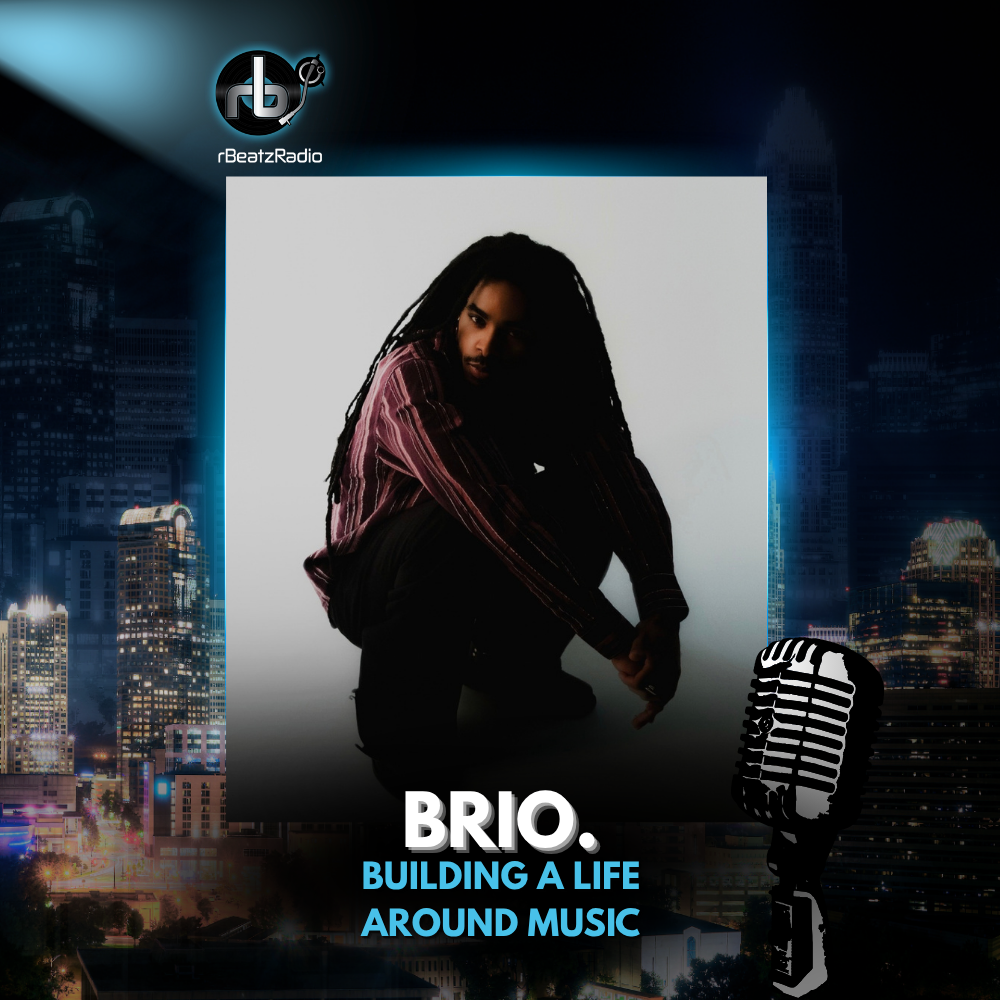
Brio. is a Charlotte-born, Brooklyn-based artist producer, and creative whose soulful approach to hip-hop transforms personal reflection into a call for collective elevation. Blending Southern music ideals with spiritual inquiry and razor-sharp storytelling, his work explores identity, resilience, and the limitless possibilities of Black imagination. More than making songs, Brio. is building a world where music becomes a catalyst for belief, community, and lasting cultural impact.
Key Takeaways
Here are some of the biggest lessons from this episode of Oui Talk Raw / Local Music Somewhere:
- Your roots can travel with you. Exploring new cities and cultures can expand your perspective without requiring you to abandon where you came from.
- Build a world around your music. Visuals, design, storytelling, and creative direction can help audiences connect with the bigger picture behind a song.
- Learn the skills that empower you. Accessible production and design tools give independent artists more ways to experiment and bring their ideas to life.
- Independence doesn’t mean isolation. Recognize your strengths, collaborate with talented people, and ask for help when you need it.
- Make your creative investments strategically. Build your foundation, understand your audience, and make decisions that fit your goals and resources.
- Give your work more than one opportunity to be discovered. Thoughtful variations of videos, clips, and behind-the-scenes content can help extend a project’s reach.
- Study the people who inspire you. Learn from their techniques, understand their influences, and develop those lessons into your own style.
- Practice patiently. Mastery comes through experimentation, repetition, reflection, and a willingness to improve.
- Build relationships, not just contacts. Conferences and music events are opportunities to learn, connect, and develop lasting industry relationships.
- Keep moving toward what matters to you. Brio’s Arms Reach (granny said) reminds listeners that progress may require effort, but possibility is worth pursuing.
Brio on Oui Talk Raw: Building a Musical World, Honoring His Roots, and Keeping Dreams Within Arms Reach
What happens when an artist takes the lessons of home, the inspiration of a new city, and years of creative exploration and turns them into a sound that is entirely his own? On this episode of Local Music Somewhere, Terry Hudson sits down with Brio, a Charlotte native now based in Brooklyn, New York, for a thoughtful, funny, and inspiring conversation about music, entrepreneurship, creative independence, and the work it takes to bring an artistic vision to life.
With his latest release, Arms Reach (granny said), Brio shares more than music. He offers a glimpse into his memories, his relationship with his late grandmother, his evolving identity as an artist, and his belief that opportunity is often closer than we think. Along the way, Terry brings his experience in the music industry into the conversation, challenging artists to think beyond their next song and consider the bigger picture of building a sustainable creative career.
From Charlotte’s evolving music scene to Brooklyn’s influence on his artistry, this episode explores what it means to grow without losing touch with where you came from.
From Charlotte to Brooklyn: How New Experiences Shape an Artist
Brio’s journey began on Charlotte’s Northside, where he grew up, attended school, and developed his early connections to music. After graduating from high school, he moved to Atlanta and attended SAE, immersing himself in a city with a strong hip-hop culture. He later returned to Charlotte in 2015, continuing to develop as a music artist and producer.
By 2017 and 2018, Brio was beginning to better understand his sound and the direction he wanted to pursue. His eventual move to Brooklyn wasn’t necessarily about rejecting Charlotte. Instead, it was about discovering what else was possible for him creatively.
His connection to New York also had personal roots. His father is from the city, and his longtime friend and creative collaborator Kirk Collins had already moved there. When Brio first visited New York in 2019, he connected with its energy and pace. A subsequent trip for Fashion Week helped reinforce the feeling that it was time to explore a different environment.
Living in Brooklyn expanded his perspective. New people, different cultures, new experiences, and the constant movement of the city exposed him to possibilities he might not have encountered at home. But perhaps the most important discovery was that those experiences didn’t replace who he was. They helped him recognize more of what was already inside him.
As Terry points out, artists seeking national or international careers need to draw inspiration from more than their immediate surroundings. Travel, film, art, museums, and other cultures can all contribute to a richer creative perspective.
For Brio, the move was about giving himself the space to grow, experiment, and become more fully himself.
Building a Creative World Beyond the Music
Brio is more than a recording artist and producer. His creative interests extend into graphic design, fashion, modeling, visual storytelling, and creative direction. These aren’t simply side projects; they are connected parts of how he expresses himself.
He taught himself Photoshop while growing up and began creating cover art for his own music, along with flyers and artwork for people in his circle. Over time, those early interests developed into a more intentional business vision.
Around 2020 and 2021, Brio began laying the groundwork for NBD Incorporated, short for No Bad Days. What started as a personal philosophy became the foundation for a design studio with ambitions to expand into a broader creative agency.
For Brio, the name reflects a conscious choice to appreciate the opportunity to wake up each day and make something of it, even when circumstances aren’t ideal.
His approach also connects to a larger concept discussed throughout the episode: world building. Rather than treating a song as an isolated release, Brio sees the opportunity to shape the entire experience around his music, from its visual identity to the stories and ideas communicated through his content.
He explained how technology gives independent artists more control over that process. An artist can now create music, design cover art, and share ideas using tools that are more accessible than ever.
That doesn’t mean every artist must become an expert in every creative discipline. It means understanding their vision well enough to guide it.
Independence doesn’t mean doing everything alone
Terry and Brio explore a challenge many independent musicians face: the pressure to become performers, entrepreneurs, designers, marketers, video producers, and content creators all at once.
Brio recognizes that flexibility is important in today’s music industry, but he also cautions against allowing the responsibilities of entrepreneurship to become overwhelming.
His advice is to recognize what comes naturally, develop those strengths, and build relationships with people whose skills complement your own. He enjoys exploring marketing data, analyzing performance, and figuring out what resonates with an audience. For other tasks, he understands the value of working with talented collaborators.
Terry adds an important business perspective: creative partnerships require investment, and artists need to understand the costs involved in building a career. Working with the right producer, creative director, or other professional can be worthwhile when the investment aligns with the artist’s resources and goals.
The broader lesson is that independence is about taking ownership of your direction, not insisting on doing everything yourself.
Arms Reach (granny said): The Personal Story Behind Brio’s Music
One of the most meaningful parts of the conversation centers on Brio’s release Arms Reach (granny said).
Although the song was written approximately two years before its release, its message grew out of experiences that remained deeply personal to him. Brio was listening to Memphis-influenced music, including Isaiah Rashad and Three 6 Mafia, when the initial inspiration began to take shape. Around the same period, he was grieving the loss of his grandmother.
Her words and encouragement stayed with him.
The song connects memories of growing up in Charlotte with the lessons passed down by his grandmother and other elders. Brio recalls youthful experiences with friends, relationships, and the realities of growing up, while contrasting those memories with the guidance that continued to shape his decisions.
The title carries a message of possibility: opportunities may be within reach, but recognizing them doesn’t mean the journey will be effortless. Sometimes people have to work through obstacles, make difficult choices, and keep moving forward.
Brio describes the song as a reminder to remain resilient, trust yourself, and recognize the gifts that are available to you.
One of the song’s central lines captures the message directly:
“Remember what grandma said Son you know you blessed”
The sentiment is especially powerful because it connects personal grief with gratitude and forward motion. Brio isn’t simply remembering his grandmother; he’s carrying her encouragement into the decisions he makes today.
Turning memories into music that moves people to action
Brio wants listeners to experience more than a collection of beats and lyrics. He hopes the music transports them into the world that inspired it: the neighborhood, the warmth of summer evenings, the sounds of the night, and the memories of being young in Charlotte.
He also wants the listening experience to leave people motivated to do something. That might mean creating art, dancing, reaching out to someone, relaxing, or taking the first step toward a goal.
For Brio, music can be both reflective and energizing. It can help people recognize feelings they haven’t quite found the words to express, while encouraging them to take action.
That balance between looking inward and moving forward is an important part of his artistic identity.
Independent Music Production: Making More With the Tools Available
Brio produced Arms Reach (granny said) himself, recording it at home in Brooklyn. The song’s development was also a reminder that creativity doesn’t always follow a predictable schedule. He wrote the record before fully hearing the beat that would eventually accompany it. Later, during a period of intensive recording, the verse and production came together naturally.
For Terry, this is an opportunity to discuss how dramatically music production has changed.
Artists once needed access to expensive studios and professional production teams to create recordings at a competitive level. Terry recalls situations in which new artists were encouraged to spend substantial amounts of money on projects before they had established an audience or performed their first concert.
Accessible home recording tools have changed that equation. Independent musicians can now develop songs, refine their sound, and begin sharing their work without immediately taking on the same financial commitments.
Brio’s experience reflects that shift. Having spent years learning production, he has developed the skills to create music on his own while retaining the flexibility to collaborate with others when appropriate.
The conversation isn’t an argument against professional studios or experienced producers. Rather, it highlights the value of developing a foundation before making larger investments.
Artists can use accessible tools to experiment, learn what works, and build momentum. As their needs evolve, they can make more informed decisions about where to invest their time and money.
Why creative versatility matters in today’s music business
The discussion also touches on video production, graphic design, artificial intelligence tools, and the growing demand for content.
Terry encourages artists to understand the opportunities available to them, particularly when they can use technology to create and distribute work more efficiently. Brio agrees that artists must be flexible, but he emphasizes the importance of patience and building a supportive creative community.
The goal isn’t to chase every new tool or trend. It’s to use the resources that make sense for your vision, your skills, and the audience you’re trying to reach.
Music Videos, Social Media, and the Art of Telling a Story
Brio’s creative world extends well beyond the audio. Terry highlights the visual work surrounding Brio’s music, including the imaginative scenes and short-film sensibility of his videos.
One collaboration that receives particular attention involves filmmaker DeRaymond, known as At First Kind. The two have developed a strong working relationship built on their shared creative instincts. Brio brings his background in graphic design and visual treatments, while DeRaymond contributes his directing expertise.
Their work on the visuals for Arms Reach (granny said) also demonstrates how a single musical idea can be presented through different formats. Brio discusses the two-part video concept and the use of multiple visualizers and behind-the-scenes material to build interest around the music.
Why posting a song or video once may not be enough
Terry makes a practical point about social media: creating something meaningful is only part of the job. Artists also need to give people opportunities to discover it.
A song or video shared once may not reach everyone who would appreciate it. Different versions, clips, visual approaches, and behind-the-scenes moments can help the same project connect with different people at different times.
Brio understands this and describes his intention to maintain momentum rather than becoming overly focused on immediate results.
He connects that approach to the discipline associated with Kobe Bryant’s work ethic: continue practicing, keep taking the shots, and focus on the effort required to improve.
The idea is not to produce content simply for the sake of being visible. It’s to find thoughtful ways to extend the life of a creative project and help its message reach more listeners.
Discipline, Patience, and the Long Road to Mastery
A recurring theme throughout the episode is the difference between wanting to be good at something and putting in the time required to develop real skill.
Terry talks about studying influential performers and how artists such as James Brown and Michael Jackson developed distinctive styles by learning from those who came before them. He encourages emerging musicians to research their influences, identify what resonates with them, and then develop those elements into something personal.
Brio shares his own experience of watching beat-making videos, learning production techniques, teaching himself Photoshop, and gradually moving from GarageBand to Logic. He describes being a student of the craft long before he could fully understand everything he was watching.
Over time, techniques that once seemed complicated became familiar through repetition and practice.
This is where the conversation becomes especially useful for developing artists. Inspiration can open the door, but consistent effort helps turn that inspiration into ability.
Brio explains the value of getting deeply immersed in a subject, exploring its history, experimenting with different approaches, and allowing unexpected discoveries to influence your work.
He and Terry also recognize the importance of slowing down. The goal isn’t simply to spend hours working; it’s to spend those hours learning deliberately, improving technique, and building confidence one step at a time.
Brio sums up his approach with a simple reminder:
“Lay that brick a day.”
It’s an idea that applies to more than music. Whether someone is developing a creative business, learning a technical skill, or working toward a personal goal, consistent progress can build something meaningful over time.
Charlotte’s Growing Music Scene and the Value of Confluence
Brio’s return to Charlotte for the inaugural Confluence Music Festival carries personal significance. He describes the visit as a homecoming, noting that it had been approximately three years since his last performance in the city.
He was scheduled to perform at Petra’s Bar alongside other artists, including Lord Jamonte Agbon and Benjamin Burden. The show offered an opportunity to share music released throughout the year and introduce audiences to the direction his sound was taking.
For Brio, the performance was about reconnecting with the city, uplifting the energy, and sharing the stage with other creatives.
The conversation also explores how Charlotte’s music community has evolved. Both Terry and Brio recognize the importance of creating more opportunities for artists to meet, collaborate, learn, and connect with people across the industry.
Why music conferences can be valuable for independent artists
Brio highlights the importance of Confluence as a place where emerging musicians can engage directly with people working in different areas of the business, including industry organizations and music professionals.
These experiences offer more than the possibility of an immediate deal. Artists can learn about subjects such as registering their music, understand different parts of the industry, ask questions, and begin building relationships.
Brio encourages younger and emerging artists to take the initiative to enter these spaces and learn from the people in them.
Networking, as the discussion makes clear, isn’t simply about handing someone a demo and expecting an instant opportunity. It’s about building a circle of relationships, learning the etiquette of the business, and allowing connections to develop over time.
Terry also emphasizes that Charlotte’s music ecosystem continues to develop. The city’s progress depends on people who invest in the community, create opportunities, and help emerging artists understand how to navigate the industry.
For Brio, being able to return and witness that evolution makes the homecoming especially meaningful.
What’s Next for Brio? Exploring The Week Before
While Arms Reach (granny said) reflects memories, family influence, and perseverance, Brio is also preparing to share another side of himself through his upcoming project, The Week Before.
He describes the project as an opportunity to present a more personal and revealing perspective on his identity. His given name, Ismael, means “God hears,” and he wants the new music to communicate more of who he is as he continues building his creative world.
The project also reflects his interest in moving beyond a single genre. Brio describes a sound that brings together alternative soul, R&B, funk, hip-hop, and elements of his sampling background.
The title originated from the idea of the week before turning 27, a milestone that prompted reflection on life, personal growth, and the significance of being able to pursue one’s goals.
Rather than rushing the release, Brio chose to continue developing the project and build the world around it. That decision aligns with the broader philosophy running through the episode: take time to understand what you’re creating, make intentional choices, and allow the work to represent who you’re becoming.
The next chapter isn’t simply about releasing more music. It’s about offering listeners a deeper understanding of the person behind it.
Listen to Brio and Follow His Creative Journey
Brio’s conversation with Terry Hudson offers a look at an artist who approaches music as both a personal expression and a broader creative enterprise. His work brings together production, visual storytelling, entrepreneurship, and reflections on family and identity.
Through Arms Reach (granny said), he honors the lessons of his grandmother while encouraging listeners to recognize their own opportunities. Through his work in design and creative direction, he demonstrates how artists can take greater ownership of their stories. And through his continued development, he shows the value of remaining curious, patient, and committed to the craft.
To discover Brio’s music and visual work, follow him on social media and streaming platforms under BrioIsLife. You can also explore his videos on YouTube and follow the evolution of his upcoming project, The Week Before.
For emerging artists, the episode offers a reminder that building a career isn’t about waiting until everything is perfect. It’s about learning, creating, connecting, and continuing to take the next step.
And for listeners, it’s an invitation to experience the music not just as a finished product, but as a window into the life, memories, and creative vision of the artist behind it.
More Artists and Show Episodes