
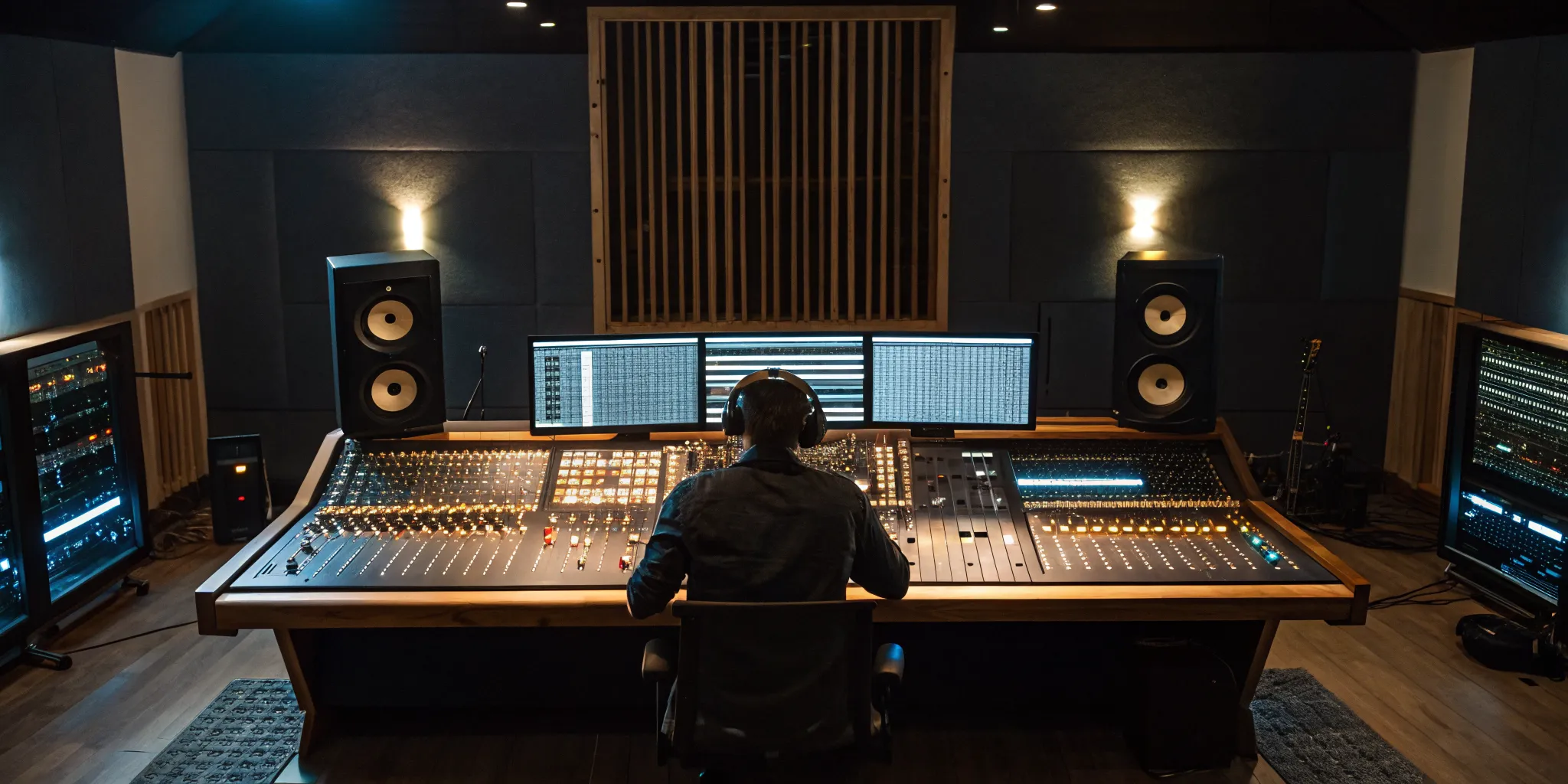
Ever create a track that sounds incredible in your studio headphones but falls apart in the car or on a friend’s Bluetooth speaker? It’s a frustratingly common problem for independent artists. A great song deserves to sound its best everywhere, and that consistency doesn’t happen by accident. It’s the result of a careful, technical process. This is where online mixing and mastering comes in. It’s the key to making your music sound balanced, clear, and powerful across all playback systems, giving it the competitive edge it needs to stand out on any playlist, including right here on rBeatz.
Key Takeaways
- Understand the Difference Between Mixing and Mastering: Mixing is the creative process of blending all your individual tracks into one cohesive song, while mastering is the final technical step that ensures your song sounds polished and consistent on every platform.
- Choose the Right Path for Your Project: You can hire a professional engineer for their expert ear and tailored feedback, use an AI tool for a fast and affordable option, or master the track yourself for complete creative control and a valuable learning experience.
- Prepare Your Mix for a Professional Finish: The quality of your final master depends on your preparation. Always provide a clean mix with plenty of headroom and communicate your vision with specific notes and reference tracks to guide the process.
What is Online Mixing and Mastering?
You’ve poured your heart into writing, recording, and arranging your music. Now, it’s time for the final step that turns your raw tracks into a polished, professional song ready for the world to hear. That’s where online mixing and mastering come in. Think of it as the post-production phase for your music, all handled remotely through the internet. These services connect you with audio engineers or AI-powered tools that can make your music sound its absolute best, no matter where you are.
The main goal is to transform your recordings into compelling, chart-ready songs that can stand out on any playlist. Platforms like Major Mixing offer professional services to get your tracks radio-ready, while other online tools allow you to collaborate with producers and engineers from across the globe. Whether you’re aiming for a spot on an rBeatz playlist or preparing for a major release, online mixing and mastering is the essential final touch that ensures your music makes an impact and sounds great on every speaker.
Mixing vs. Mastering: What’s the Difference?
It’s easy to get these two terms mixed up, but they are distinct and equally important stages. Think of it this way: mixing is about the ingredients inside the song, while mastering is about the final presentation.
Mixing is the process of blending all the individual instrument and vocal tracks together. An engineer will adjust levels, panning, and EQ to make sure the drums punch, the vocals sit perfectly on top, and every element has its own space to shine. It’s about creating a cohesive, balanced song from all its parts. As one engineer put it, mixing is about giving each element “a space, level and depth.”
Mastering is the very last step. It takes the final mixed track and gives it a final polish, ensuring it sounds loud, clear, and consistent across all playback systems, from earbuds to car stereos. This is where the song is optimized for streaming platforms and prepared for distribution.
Why Your Music Deserves a Professional Polish
After spending countless hours on your track, you’re too close to it to hear it objectively. A professional mastering engineer provides a fresh, expert set of ears. They can identify and fix subtle issues in the mix that you might have missed. More importantly, a human mastering engineer listens critically to your music, understands its genre and mood, and makes creative decisions that align with your artistic vision.
This isn’t just about making your song louder. A great engineer knows how to add impact and clarity without sacrificing the dynamics that give your music life. They have the right equipment and acoustically treated room to ensure your track translates perfectly everywhere. This professional polish is what separates an amateur recording from a track that’s ready to be featured alongside today’s top artists.
Three Ways to Get Your Music Mixed and Mastered Online
Once your track is recorded, you have three main paths to get that final, polished sound. You can hire a professional engineer, use an automated AI tool, or do it yourself with software. The right choice for you really comes down to your budget, your timeline, and how hands-on you want to be with the final stages of your music. Each option has its own strengths, so let’s look at what they offer.
Work With a Professional Engineer
Working with a professional engineer is like hiring a dedicated expert for your sound. This person brings years of experience and a trained ear to your project. A human mastering engineer listens critically to your music, considers its genre and mood, and makes informed decisions tailored to your vision. This collaborative approach means you get a final product that’s not just technically sound but also artistically aligned with your goals. It’s the most personalized option, ensuring your music is ready for radio play and streaming platforms. While it can be the most expensive route, the investment often pays off in quality and industry expertise.
Use an AI Mastering Tool
If you need a fast and affordable option, AI mastering is a great solution. These online services use algorithms to analyze your track and apply mastering settings automatically. You can get a finished track in minutes, which is perfect for demos, social media content, or artists working on a tight budget. Nearly every AI mastering service offers a free trial, and you should absolutely take advantage of it. This lets you upload a track and hear the results before you pay. While it may not offer the same nuance as a human engineer, the technology has improved a lot, making it a solid choice for many independent artists.
Do It Yourself with Software
For the hands-on creator, mastering your own music can be a rewarding experience. For DIY producers and mixers, the goal isn’t to replicate the precision of a high-end mastering studio but to focus on the essentials: tonal balance, dynamics, and loudness. Using plugins within your Digital Audio Workstation (DAW), you have complete creative control. You can apply gentle compression to control the overall dynamics of your mix, helping to glue the elements together. This path requires more time and a willingness to learn, but it’s a fantastic way to develop your skills and achieve a sound that’s truly your own before you submit your music.
Where to Get Your Tracks Mixed and Mastered Online
So, where do you actually go to get that final polish on your music? The good news is, you have more options than ever before, catering to every budget and workflow. Finding the right fit depends on your project’s needs, your timeline, and how much you want to invest. You can work one-on-one with a seasoned professional, use a lightning-fast AI tool, or even find a service that combines the best of both worlds.
The key is to understand what each type of service offers. A professional engineer brings years of experience and a creative ear, making personalized adjustments to bring your vision to life. AI services offer speed and affordability, which can be perfect for demos or quick turnarounds. Then there are hybrid models that use technology for the heavy lifting but have a real person perform the final quality check. We’ll break down each of these paths so you can make a confident choice for your next release.
rBeatz’s Professional Audio Services
Here at rBeatz, we’re all about helping artists put their best foot forward. Our community is built on discovering and sharing incredible new music, and we know that a professional finish makes all the difference. We connect artists with the resources they need to get their tracks ready for the spotlight. Think of it as having a team in your corner that understands the journey from the first demo to the final master. When you’re ready to get your music heard, our music submission process is your first step toward connecting with a global audience that’s hungry for new sounds.
Other Professional Mixing Platforms
Beyond our community, the internet is home to many platforms dedicated to connecting artists with freelance audio engineers. These online services are often more affordable than booking time at a traditional studio, mostly because the engineers have lower overhead costs. You can browse portfolios, listen to before-and-after samples, and find someone whose style matches your genre. This approach gives you access to a global talent pool, so you can find the perfect engineer for your sound, whether they’re across town or across the world. It’s a great way to get professional quality while maintaining flexibility.
AI-Powered Mastering Tools
AI mastering has become a popular option, especially for artists who need a quick and affordable solution. These services use algorithms to analyze your track and apply mastering settings automatically. While the technology is impressive, it’s worth asking if AI mastering is as good as human mastering. A human engineer listens with creative intent, understanding the genre, mood, and emotional arc of your song. AI can get you a loud, clean master, but it may lack the nuanced touch that makes a track truly stand out. Nearly every service offers a free trial, so you can always test them out for yourself.
Hybrid Services: The Best of Both Worlds
If you’re looking for a balance between AI’s speed and a human’s expertise, hybrid services are an excellent choice. These platforms typically use AI to create an initial master, which is then reviewed and tweaked by a professional audio engineer. This process ensures your track gets a final, personalized touch from a trained ear. An experienced engineer has tricks for achieving things like perceived loudness and dynamic punch that an algorithm might miss. This approach can be a cost-effective way to get a high-quality master without the price tag of a fully manual service, giving you the best of both worlds.
How Do Online Mixing and Mastering Services Work?
Working with an online audio engineer might seem a bit mysterious, but the process is surprisingly straightforward. While every service has its own unique workflow, most follow a similar three-step path: you send your files, you give feedback, and you get a polished track ready for release. The key to making it all work smoothly is clear communication. You’re not just handing over your music; you’re collaborating with an expert to bring your artistic vision to life.
Think of it like hiring a graphic designer for your cover art. You provide the raw materials and the creative direction, they use their skills to create the final product, and you work together to make sure it’s perfect. Whether you’re submitting your track to a professional engineer or getting it ready for airplay on one of our rBeatz radio stations, understanding this process will help you get the best possible sound. Let’s walk through exactly what you can expect.
Step 1: Prepare and Upload Your Tracks
First things first, you need to get your files ready. For mixing, this means exporting each individual instrument and vocal track (often called “stems”) from your recording session. For mastering, you’ll export your final stereo mix. Make sure these are high-quality, uncompressed files like WAV or AIFF, with no clipping or effects on the master output. Once your files are exported, you’ll upload them to the service’s platform. This is also your chance to provide notes and reference tracks. Don’t be shy here. Effective communication is crucial, so explain what you love about your rough mix and what you feel is missing.
Step 2: Review and Request Revisions
After the engineer works their magic, they’ll send you the first version of the mix or master. Now it’s your turn to listen carefully, on different speakers and headphones if possible. Take notes on what you hear. Does the vocal sit right? Is the bass powerful enough? Provide clear, specific feedback. Instead of saying “it needs more energy,” try “can we make the snare drum pop a bit more in the chorus?” Most services include a set number of revisions. It’s a good idea to choose a communication method and stick to it to avoid confusion and keep the project moving forward efficiently.
Step 3: Get Your Final Mastered Files
Once you’re completely happy with the track and give your final approval, the engineer will deliver the finished files. You’ll typically receive multiple versions, such as a high-resolution WAV file for streaming platforms and a high-quality MP3 for easy sharing. This is also the time to confirm that the final loudness meets your expectations. While it’s tempting to ask for the loudest track on the block, remember that a dynamic, impactful master is often better than a squashed one. Don’t be afraid to communicate your desired sound to your engineer. With your final files in hand, you’re officially ready to share your music with the world.
How to Choose the Right Audio Service
Choosing an audio service is a lot like picking a producer or a session musician. It’s a partnership, and you need to find the right fit for your music and your workflow. With so many options available, from freelance engineers on freelance marketplaces to sophisticated AI platforms, it’s easy to feel overwhelmed. The key is to look past the sales pitch and focus on a few core factors that will directly impact your final track.
Think about what matters most to you. Are you on a tight deadline? Is there a specific sound you’re trying to achieve? Are you looking for a collaborative partner or just a quick, final polish? Answering these questions will help you narrow down your options. Taking the time to do your research upfront will save you from potential headaches and ensure your music gets the professional treatment it deserves. Let’s break down exactly what you should be looking for.
Check Their Portfolio and Audio Quality
Before you commit to any service, the first thing you should do is listen to their work. An engineer’s portfolio is their resume, and it’s the best indicator of what they can do for your music. Listen carefully to their before-and-after samples on a good pair of headphones or studio monitors. Do their mixes sound clear, balanced, and dynamic? Does the quality align with the professional tracks you admire?
When you find work you like, try to pinpoint what stands out. Is it the punchy drums, the clear vocals, or the overall width of the track? Having specific examples helps you communicate your vision effectively. You can say, “I love how the bass sits in this track from your portfolio,” which gives the engineer a clear target to aim for with your song.
Understand Turnaround Times and Revisions
The logistics of the service are just as important as the sound. Every engineer and platform operates on a different timeline, so you need to find one that matches your schedule. Some AI services can deliver a master in minutes, while an in-demand human engineer might take a few weeks. Be realistic about your deadlines and find a service that can meet them without rushing.
Equally important is the revision process. What happens if you’re not completely happy with the first version? Ask how many rounds of revisions are included in the price and what the process is for submitting feedback. Clear, open communication channels are crucial. A professional service will have a straightforward system for feedback to ensure you get the exact sound you’re looking for.
Find an Expert in Your Genre
Music is not one-size-fits-all, and neither is mixing and mastering. An engineer who specializes in heavy metal will have a different approach than one who primarily works with R&B artists. Look for a service or an engineer with a proven track record in your genre. They’ll understand the nuances, conventions, and sonic expectations that come with your style of music, from the low-end theory in hip-hop to the vocal clarity in folk.
A great way to find the right person is to look up who mixed and mastered songs by artists you admire. You can often find this information in the song credits on streaming platforms or by doing a quick search online. Finding someone who already gets your sound means you’ll spend less time explaining your vision and more time getting a great result.
Read Reviews and Check for Consistency
A portfolio shows you an engineer’s best work, but reviews tell you what it’s like to actually work with them. Look for testimonials and reviews from other independent artists. While you can check the service’s website, also search for feedback on third-party sites like Reddit or other music production forums for more candid opinions.
Pay attention to consistency. Are clients consistently praising the engineer’s communication, professionalism, and ability to bring their vision to life? One or two mediocre reviews aren’t necessarily a red flag, but a pattern of complaints about missed deadlines or poor communication should be. You’re looking for a reliable partner who will treat your music with care, and other artists’ experiences are a great guide. You can even find great engineers on platforms like SoundBetter that have built-in review systems.
How Much Do Online Audio Services Cost?
The cost of online mixing and mastering can range from completely free to several hundred dollars per song. The good news is that online services are almost always more affordable than booking time at a physical studio, thanks to lower overhead costs. Understanding the different pricing models and the factors that affect the final price will help you find a solution that fits your budget and brings your creative vision to life. Let’s break down what you can expect to pay.
Per-Track vs. Subscription Pricing
Most professional engineers charge on a per-track basis. You’ll pay a flat fee for each song you need mixed or mastered, which is a straightforward approach for releasing a single or an EP. Some engineers offer bundle deals for albums, which can save you money in the long run. On the other hand, many AI-powered platforms use a subscription model. For a monthly or annual fee, you can master an unlimited number of tracks. This is a great option if you’re consistently producing new music and want to keep costs predictable before you move on to music submission.
What Factors Influence the Price?
If you’re working with a human engineer, the price tag isn’t arbitrary. Several key factors influence the cost of their services. The complexity of your project is a major one; a dense track with 50-plus stems will require more time and effort than a simple acoustic song. The experience of the engineer also plays a huge role. A seasoned professional with a long list of credits will naturally charge more than someone newer to the field. Finally, the specific services you need will affect the price. A simple master is less expensive than a full mixdown that includes vocal tuning and creative effects.
Comparing Costs: Pro Engineers vs. AI Tools
When it comes to cost, there’s a clear difference between hiring a pro and using an algorithm. A professional engineer offers a personalized, expert touch, but it comes at a higher price. In contrast, AI mastering is a very cost-effective solution, but it may not have the same nuanced understanding as a human ear. Many artists find success using AI for demos or early releases. Nearly every AI mastering service offers a free trial, so you can test the quality for yourself. Ultimately, the best choice depends on your budget and the specific goals you have for your track.
Free and Budget-Friendly Options
Not every artist has a major label budget, and that’s completely fine. You can still get a professional-sounding track without spending a fortune. Whether you’re working on a demo, a track for social media, or your first official release, there are plenty of high-quality, low-cost options available. These tools and techniques can help you get your music ready for listeners and platforms like rBeatz Radio while you build your career. The key is knowing where to look and how to use what you find.
Free Online Mastering Tools
If you need a polished sound fast, free online mastering tools are a fantastic starting point. Many of these platforms use AI to analyze your track and apply mastering settings that make it sound loud, clear, and ready for streaming services. A popular option is BandLab Mastering, which is incredibly easy to use. You just upload your track, choose a style, and let the AI do its work. These tools are perfect for getting quick masters for demos you want to submit to platforms or for creating clips for your social media channels. They give your music a professional sheen without requiring any technical know-how or software installation.
Affordable DIY Software and Plugins
For artists who want more hands-on control, diving into DIY mastering with affordable software and plugins is the way to go. The goal here isn’t to perfectly replicate a high-end studio but to focus on the fundamentals: achieving good tonal balance, controlling dynamics, and hitting the right loudness for distribution. You can use gentle compression to even out the track’s dynamics and a limiter to increase the overall volume without causing distortion. Some producers also use a harmonic enhancer, or an “exciter,” to add a bit of energy and sparkle to the mix. There are many great DIY techniques you can learn to get solid results right from your home studio.
When to Choose a Budget-Friendly Option
Budget-friendly options are ideal when you’re in the early stages of a project or creating content that doesn’t require a top-tier studio finish. Think demos, SoundCloud releases, or tracks for your artist portfolio. While these tools are powerful, it’s important to use them wisely. One of the most common misconceptions is that louder is always better. Pushing a master to be excessively loud can actually crush the dynamics and make it sound worse. By focusing on subtlety, understanding loudness standards, and trusting your ears, you can create a master that sounds polished and professional without spending a dime.
DIY vs. Professional Services: Which is Better?
Deciding between mastering your music yourself and hiring a professional engineer can feel like a major crossroads for any artist. There’s no single right answer, but understanding the trade-offs can make the choice much clearer. The best path for you depends on your budget, your timeline, your current skill set, and ultimately, your vision for the final track. It’s a personal decision that balances your resources with your ambitions.
Think of it less as a question of which is “better” and more about which is the right fit for your specific project. Are you working on a demo to share with your band, or are you preparing a single for a global release? Are you a seasoned producer who loves getting into the technical details, or would you rather hand off the final polish to an expert so you can start writing your next song? Both paths have their merits. Going DIY can be an incredible learning experience, while working with a pro can give your music the competitive edge it needs to stand out. Let’s break down the key differences in quality, time commitment, and creative control to help you figure out which route to take.
The Difference in Quality and Expertise
A professional mastering engineer offers something software can’t: a trained, objective human ear. They listen critically to your music, considering its genre, mood, and your artistic vision to make tailored adjustments. They have experience working in acoustically treated rooms on high-end equipment, allowing them to hear nuances you might miss in a home studio. While you know your song inside and out, a pro provides a fresh perspective, catching mix issues you’ve grown accustomed to. Remember, mastering a bad mix will mostly just highlight its flaws, so an expert can also provide valuable feedback before the final polish.
The Time and Effort Required
Going the DIY route means you’re in the driver’s seat, but it also means you’re responsible for the entire journey. The goal isn’t necessarily to replicate a high-end studio but to focus on the essentials: achieving a good tonal balance, controlling dynamics, and hitting the right loudness for streaming platforms. This requires a significant time investment, not just in the mastering session itself but in learning the tools and techniques. You’ll also need to check your master on multiple playback systems, from your car stereo to cheap earbuds, to ensure it translates well everywhere. Hiring a pro saves you that time and effort, letting you focus on what you do best: creating music.
Creative Control vs. A Polished Sound
Doing it yourself gives you complete creative control. You can experiment and tweak every detail until it matches the sound in your head perfectly. However, that attachment can sometimes be a disadvantage. A professional engineer brings objectivity. They aren’t emotionally tied to the track, so they can make decisions that best serve the song and help it compete commercially. The most crucial tool in mastering is the ear of the person doing the job. While you maintain control by providing feedback and reference tracks, trusting a professional’s ear can often lead to a more polished and impactful final product, ready for you to submit to platforms like rBeatz.
Common Mistakes to Avoid
Getting your music polished online is a huge step, but a few common missteps can hold your track back from its full potential. Knowing what to watch for will save you time, money, and frustration. By sidestepping these errors, you ensure the final product is something you’re truly proud to share with the world, maybe even on one of our rBeatz radio stations.
Don’t Expect Mastering to Fix a Bad Mix
This is the golden rule of audio production: mastering is the final coat of polish, not a miracle cure for a flawed mix. If your kick drum is buried or your vocals are harsh, mastering will only amplify those problems. It’s designed to enhance a great mix by adjusting overall loudness, stereo width, and tonal balance for different playback systems. Think of it this way: you wouldn’t put a high-gloss finish on a poorly built table. Before you even think about mastering, make sure your mix is solid and sounds exactly how you want it to.
Not All Online Services Are Created Equal
The internet is packed with options, from seasoned professionals working remotely to fully automated AI platforms. It’s easy to assume they all do the same thing, but the quality can vary dramatically. A professional engineer brings years of experience, a critical ear, and the ability to understand your creative vision, while some AI tools can produce generic results. The key is to do your homework. Don’t just go for the cheapest or fastest option. Vet your audio engineer by listening to their portfolio, reading reviews, and making sure their style aligns with your music.
Don’t Skip Track Prep
Handing over messy files to an engineer is like asking a chef to cook with unprepared ingredients. Proper track preparation is crucial for getting the best results. This means exporting your files correctly, leaving enough headroom (not pushing levels into the red), and removing any limiters from your master bus. You should also provide a high-quality audio file, like a WAV, not an MP3. Taking the time to prepare your tracks for mastering ensures the engineer has a clean, dynamic foundation to work with. It’s a simple step that makes a huge difference.
Prepare Your Music for the Best Results
Whether you’re working with a seasoned engineer or a sophisticated AI, the quality of your final master depends heavily on the quality of the files you provide. Sending over a well-prepared mix is the single best thing you can do to get a polished, professional sound. It’s not about making it perfect on your own; it’s about giving your track a strong foundation so the mastering process can truly make it shine. Taking a little extra time at this stage saves a lot of back-and-forth later and helps the engineer or AI tool understand your artistic direction. Think of it as setting your music up for success from the very beginning. A clean, organized, and well-communicated project is the first step toward a final product you’ll be proud to submit to platforms like rBeatz.
Nail Your Track Prep and Export Settings
Before you send anything off, give your mix a final check. For DIY producers, the goal isn’t to achieve a perfect master but to focus on the essentials: tonal balance, dynamics, and loudness. Make sure there’s no clipping on your master fader and that you’ve left enough headroom for the mastering engineer to work their magic. A good rule of thumb is to have your peaks around -6dB. Most importantly, listen to your mix on different systems. Check it on your studio monitors, your laptop speakers, in your car, and on a pair of cheap earbuds. This helps you catch any major issues and ensures your track will translate well across all kinds of listening environments.
Choose the Right Reference Tracks
How do you know what “good” sounds like for your genre? By using reference tracks. These are commercially released songs that you admire for their sound quality and overall vibe. Choosing a few reference tracks is crucial for understanding the typical loudness levels and tonal balance for your style of music. When you send these to an engineer, they act as a sonic benchmark and a guide for your project. Pick songs that have a similar instrumentation and energy to your own. This gives the engineer a clear target to aim for and helps bridge the gap between the sound in your head and the final mastered version.
Clearly Communicate Your Vision
Clear communication is everything, especially when you’re working with someone remotely. Don’t just send your files and hope for the best. Write a note explaining your vision for the track. Point out what you like about your current mix and what you feel is missing. Use your reference tracks to provide specific examples, like “I love the punchy kick drum in this song” or “I’m aiming for the vocal clarity in this track.” It’s also smart to ask the engineer how they prefer to communicate. Keeping all your conversations on one platform, like email or a project management tool, prevents important feedback from getting lost and ensures the whole process runs smoothly.
Related Articles
- Music Producers Presented by Internet Radio rBeatz
- Jason Jet of Grindhaus Studios Live on LocalMusicSomewhere
- Live Music Producer Tips | rBeatz music streaming
- Innovating Music Education | Bold Music | George Ramsay
Frequently Asked Questions
What’s more important, the mix or the master? Think of it this way: a great mix is the foundation of your song. It’s where all the individual elements are balanced and blended to create a cohesive whole. Mastering is the final polish that makes that great mix shine on every speaker. You can’t have a great master without a great mix first. If your mix has issues, mastering will only make them more obvious, so always focus on getting the mix right before moving on to the final step.
How do I know if my mix is ready for mastering? Your mix is ready when you feel confident that all the instruments and vocals sound balanced and clear, just the way you want them. A good test is to listen to your track on different systems, like your car stereo, laptop speakers, and earbuds. If it sounds consistently good everywhere and you’re not hearing any major problems, you’re likely ready. Also, make sure you’ve exported the file with plenty of headroom (no clipping or red lights) so the engineer has room to work.
Is it worth paying for a professional engineer for my first release? This really depends on your goals for the song. If you’re releasing a single that you want to pitch to playlists, radio stations, or blogs, investing in a professional engineer can give your track a competitive edge. Their experience and objective ears can make a significant difference. However, if you’re just starting out or working on a demo, a high-quality AI tool or even a careful DIY master can be a fantastic, budget-friendly way to get a polished sound.
What exactly is a ‘reference track’ and how do I choose one? A reference track is a professionally released song in your genre that you admire for its sound quality. It serves as a sonic benchmark for your own project. When choosing one, pick a song that has a similar vibe, instrumentation, and energy to yours. This gives your engineer a clear target for things like overall loudness, bass response, and vocal clarity, helping them understand the exact sound you’re aiming for.
What happens if I’m not happy with the first version I get back from an engineer? This is a normal part of the collaborative process, so don’t worry. Nearly every professional service includes a certain number of revisions in their price. The key is to provide clear and specific feedback. Instead of saying something vague like “it needs more punch,” try to pinpoint what you’re hearing, for example, “Could we make the snare drum a little sharper?” Good communication helps the engineer understand your vision and make the right adjustments to get the track exactly where you want it.