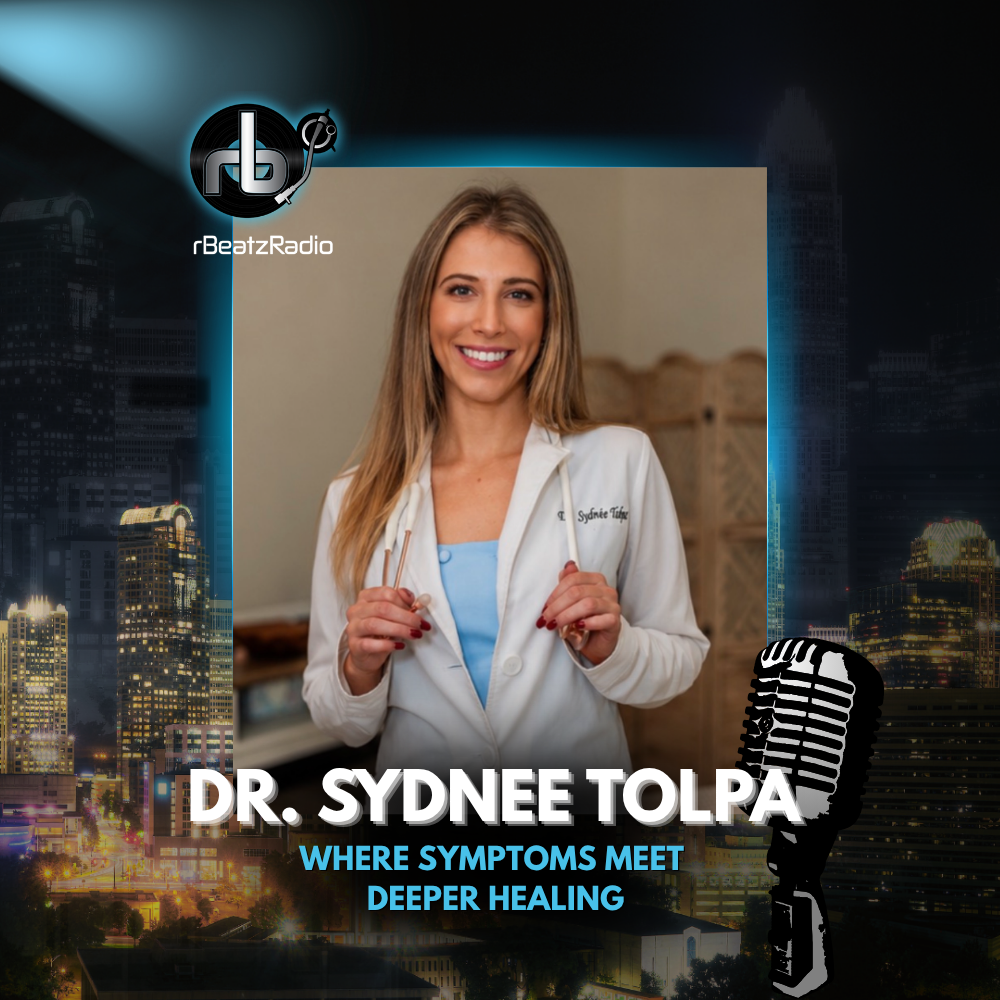
The story behind Tolpa Holistic Health
Helping women, athletes, and chronic pain patients heal from the root
Dr. Sydnee Tolpa
Key Takeaways
- Look beyond the symptom. Dr. Tolpa repeatedly emphasizes that the place where you feel pain isn’t always the place where the underlying imbalance begins.
- Stress can have physical consequences. Emotional and life circumstances can be an important part of understanding what a patient is experiencing.
- Whole-person care is central to Dr. Tolpa’s philosophy. Chiropractic work, acupuncture, dry needling, nutrition, functional medicine, exercise, and other approaches can complement one another.
- Holistic care doesn’t have to mean ignoring conventional medicine. Dr. Tolpa discusses situations where patients may need a combination of approaches and appropriate medical monitoring.
- Finding the root cause takes time. Several of the patient stories Dr. Tolpa shares involve longer-term investigation and lifestyle changes rather than instant solutions.
- Education matters. A major part of Dr. Tolpa’s role is helping patients understand their bodies and why different approaches may be recommended.
- Self-care is an ongoing investment. For Dr. Tolpa, holistic health is ultimately about building a lifestyle around caring for yourself rather than simply chasing symptoms.
Dr. Sydnee Tolpa on Holistic Health, Root Causes, and Caring for the Whole Person
On this episode of Oui Talk Raw, Jennifer Busco welcomes Dr. Sydnee Tolpa, founder of Tolpa Holistic Health, into the rBeatz Radio VIP Suite for a conversation that goes far beyond chiropractic care.
Jennifer’s connection to Dr. Tolpa is personal—she describes herself as a member of the practice and a walking testimony to her work—which gives the conversation an easy, genuine energy from the start. Together, they explore what it really means to look at the whole person, how stress can show up physically, why pain isn’t always coming from the place that hurts, and how Dr. Tolpa combines chiropractic care, acupuncture, dry needling, functional medicine, nutrition, and other holistic approaches.
Dr. Tolpa also shares the very personal path that led her into this work, beginning with her own digestive issues as a child and eventually discovering a completely different approach to healthcare while shadowing a chiropractor.
Dr. Sydnee Tolpa’s Journey Into Holistic Health
Dr. Tolpa explains that she initially thought she wanted to become a medical doctor, but she didn’t feel like she had found the right place for herself within traditional healthcare. That changed when she was around 20 and shadowed a chiropractor.
What caught her attention wasn’t simply the physical adjustments. She saw patients talking about how their lives had changed and noticed that nutrition, supplements, and lifestyle changes were part of the conversation too. That broader approach resonated with her.
As she continued through chiropractic school, Dr. Tolpa realized that simply aligning someone’s spine wasn’t enough for the kind of practice she wanted to create. She pursued additional training in areas including dry needling and acupuncture because she wanted to address muscles, energetic systems, and the larger picture of a patient’s health.
From a tiny salon suite to a growing practice
One of the most revealing stories from the conversation is how Tolpa Holistic Health actually began.
Rather than launching into a traditional medical office, Dr. Tolpa cold-called a salon loft suite and asked whether she could rent space. She began seeing patients in a tiny shared suite, bringing her massage table and supplies in and out each day.
That small beginning eventually grew into a larger individual suite, then a five-room Ballantyne location, and ultimately a second location. Today, her practice includes other practitioners such as acupuncturists, massage therapists, and physical therapists whose specialties complement her own.
How Stress Can Show Up in the Body
Jennifer and Dr. Tolpa spend considerable time talking about the relationship between stress, emotions, and physical symptoms.
Dr. Tolpa says the conversation about stress comes up with patients constantly. Someone may walk into her office concerned about fatigue, sleep, hormonal changes, painful cycles, or other symptoms, only to discover that major life circumstances may also be part of the bigger picture.
Her approach is not simply to look at one symptom in isolation. She talks about building rapport with patients and understanding what is happening in their lives before attempting to address deeper personal or emotional factors.
She also explains how acupuncture can be used as part of a strategy for calming the nervous system and discusses acupressure, including the location of the Pericardium 6 point that she says can be used for nausea, dizziness, and calming.
Functional medicine and finding the root cause
Jennifer asks Dr. Tolpa to explain functional medicine in everyday terms, and Dr. Tolpa describes it as an approach that looks more deeply at the individual through specialty laboratory testing, lifestyle, nutrition, and other factors.
She discusses specialty hormone testing, including DUTCH panels, and explains why timing and individual circumstances can matter when interpreting those tests. The conversation also touches on how hormonal birth control and certain IUDs can affect testing.
That idea of getting beyond the obvious symptom becomes one of the themes running throughout the entire episode.
Your Pain May Not Be Coming From Where It Hurts
One of Jennifer’s most personal moments comes when she talks about going to Dr. Tolpa for low-back pain and being told that the issue was actually connected to her cervical spine.
Dr. Tolpa explains that pain does not necessarily identify the true source of a problem. Muscle restrictions, fascial patterns, foot mechanics, posture, strength imbalances, and other compensations can all contribute to what someone ultimately experiences as pain somewhere else in the body.
“Pain does not always mean damage.”
That philosophy helps explain why Dr. Tolpa wants a full hour with new patients instead of reducing an appointment to a quick adjustment. She describes that first visit as an opportunity to understand the patient’s history, nervous system, stress, physical patterns, and overall story rather than simply treating the area that hurts.
Real-Life Patient Stories and the Long Game of Wellness
Dr. Tolpa’s passion for digestive health is especially clear when she shares the story of a patient with severe intestinal inflammation and ultimately diagnosed Crohn’s disease.
She describes a lengthy process involving food allergies, lifestyle changes, detox protocols, and functional approaches. According to Dr. Tolpa, the patient’s condition took about a year to stabilize, although she says the patient began feeling significantly better within a few months.
For Dr. Tolpa, the important part of the story wasn’t simply symptom relief—it was seeing someone go from struggling to function and worrying about everyday life to being able to travel, eat, socialize, and enjoy life again.
Wellness isn’t always a quick fix
The conversation also gets candid about the reality of maintaining health. Some patients want long-term wellness care, while others have chronic problems complicated by lifestyle, finances, stress, or difficulty making changes.
Jennifer brings up an older patient who continues to see a chiropractor regularly and credits that care with helping him remain active and continue working on cars.
The larger point is clear: caring for your body can be an ongoing investment rather than something you only think about when something hurts.
Integrating Holistic and Conventional Care
One of the more important parts of this conversation is Dr. Tolpa’s discussion of when holistic care should be combined with conventional medicine.
While she talks about nutrition and natural approaches, she also gives an example of significantly elevated blood pressure and explains that some situations require conventional intervention rather than simply trying supplements or herbs.
That same philosophy comes through in her discussion of cancer care. Dr. Tolpa says she is most comfortable when cancer patients are also being monitored by oncology while working with a functional provider. She describes an integrative approach in which conventional and complementary care can exist together, with appropriate monitoring.
The conversation is ultimately less about choosing one side and more about understanding that different forms of care can have different roles.
Fertility, Pregnancy, and Supporting Women Through Every Stage
Dr. Tolpa also specializes in fertility and pregnancy care, an area she says is especially meaningful because fertility struggles can affect women in very different ways.
She discusses acupuncture, hormonal balance, fertility support, and her work with women who are also seeing fertility specialists. She also talks about endometriosis and the challenges that can go undetected.
During pregnancy, she uses her certification in the Webster technique as part of chiropractic care. Importantly, she clarifies that the technique is not about a chiropractor “flipping” a breech baby. Instead, she describes the goal as helping balance the pelvis and relax surrounding structures to give the baby more room to move.
Taking care of the body during pregnancy
Jennifer and Dr. Tolpa also have some fun with the realities of pregnancy, athleticism, tight muscles, pelvic tension, and the challenges that can come with maintaining strength while the body is changing.
Their conversation remains warm and conversational while still emphasizing that pregnancy care is highly individual and sometimes involves multiple types of practitioners, including chiropractic care, pelvic floor therapy, physical therapy, and prenatal yoga.
Hydration, Food Sensitivities, and Chronic Fatigue
The conversation takes another turn when Jennifer shares her own experience with dehydration after a trip to New York and asks whether changes in hydration can affect the way the body feels.
Dr. Tolpa connects hydration to the cushioning and function of the body’s joints and discs, and they continue into a broader discussion about food sensitivities, gluten, dairy, celiac disease, chronic gastrointestinal inflammation, and the difficulty of identifying the underlying causes of chronic fatigue.
Dr. Tolpa describes chronic fatigue as an umbrella term rather than necessarily being the complete explanation for what is happening in someone’s body. She emphasizes looking for contributing factors through history, laboratory work, nutrition, lifestyle, and other individualized assessments.
Dr. Tolpa on Intuition, Experience, and Being a “Detective”
One of the most interesting moments toward the end of the episode comes when Jennifer asks how much intuition plays a role in Dr. Tolpa’s work.
Dr. Tolpa doesn’t hesitate. She says that while experience obviously matters, she believes intuition has become a significant driver of what she does in practice. Sometimes, she explains, that may mean asking a question that feels difficult or noticing something that doesn’t immediately appear in the obvious clinical picture.
Jennifer’s description of Dr. Tolpa as a detective fits the philosophy of the practice perfectly: listen first, investigate, look for patterns, and try to understand what may be underneath the symptom.
What Dr. Sydnee Tolpa Wants People to Understand About Holistic Care
Jennifer’s final question brings the conversation back to the heart of everything they’ve discussed: What does Dr. Tolpa wish more people understood about holistic care?
Her answer is simple but central to her philosophy.
“It’s a lifestyle.”
For Dr. Tolpa, holistic care isn’t about finding one pill, supplement, adjustment, or treatment that makes everything disappear. It’s about how someone chooses to care for themselves over time—through food, stress management, movement, relationships with healthcare providers, and a willingness to invest in their own well-being.
That message fits the entire conversation. Dr. Tolpa’s approach is deeply rooted in curiosity, education, and looking beyond the first obvious answer.
And Jennifer Busco brings exactly the kind of questions that allow that philosophy to come alive—personal, direct, sometimes playful, and always genuinely curious.
More Artists and Show Episodes