
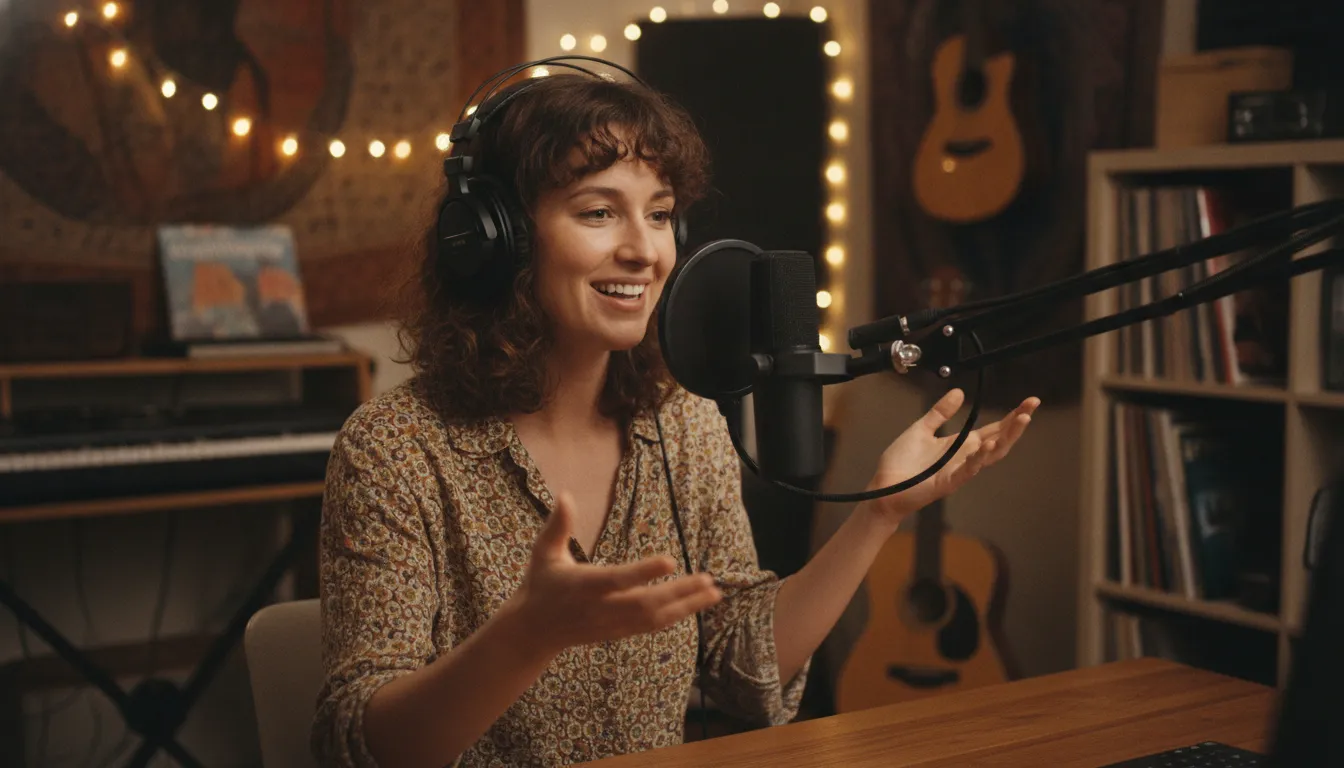
A song can introduce you to a listener, but a thoughtful conversation can give that listener a reason to stay. For independent artists, a podcast creates room to explain the choices behind a record. Share the realities of building a career, and invite fans into the community around the music.
Podcasting for musicians is a practical way to build an audience through consistent, personal content. Start with a clear subject your listeners care about, plan episodes around your artist identity. And use honest stories, useful conversations, and regular promotion to turn casual listeners into a loyal community.
You do not need a studio-sized budget or a fully developed brand to begin. The strongest first step is deciding what kind of show fits your music, your voice, and the people you want to reach.
Choosing the Right Podcast Format for Your Music Career
The best format is the one you can sustain while giving listeners a clear reason to return. Before choosing equipment or recording a trailer, decide what you want the show to do for your music career. You might use it to explain your creative process, build a closer community around your releases, introduce other artists, or explore the culture behind the music you love.
Solo monologue: your voice at the center
A solo show works well when you have a strong point of view and enjoy teaching, telling stories, or sharing regular updates. You control the pace, schedule, and subject matter, which makes this format practical for artists with changing workloads. A short episode could break down the idea behind a new song, document life on the road, or offer honest lessons from an independent music career. Prepare a simple outline so each episode has direction, even when the delivery feels conversational.
Co-hosted shows: conversation and chemistry
Choose a co-hosted format if your concept depends on friendly debate, shared discovery, or contrasting perspectives. Two hosts can make reviews, music news, and behind-the-scenes conversations feel lively and natural. The key is defining each person’s role before recording. Decide who leads the introduction, how you handle disagreements, and whether both hosts can commit to the same publishing rhythm. Chemistry matters more than trying to sound overly polished.
Interview shows: let artists tell their stories
Interviews are a natural fit for musicians who enjoy meeting people and asking thoughtful questions. Guests can bring fresh experiences, audiences, and creative viewpoints to the show. Avoid treating every conversation like a promotion-only appearance. Ask about turning points, influences, challenges, and the choices behind the work. Strong preparation helps you move beyond predictable questions while leaving room for an authentic exchange.
Narrative podcasts: build a musical world
A narrative format suits artists who want to combine voice, atmosphere, research, and carefully shaped storytelling. You might follow the making of an album, trace a local music scene, or tell a connected story across a season. This approach takes more planning and editing, but it can create an immersive experience that stands apart from a standard interview. If storytelling is central to your concept, explore storytelling in music podcasting for another perspective.
Start with the format that matches your strengths and available time. You can also combine formats, such as opening with a solo reflection before interviewing a guest. Consistency and sincerity will do more for your audience than choosing the most elaborate production style.
Essential Podcasting Equipment for Musicians on Any Budget
You do not need a broadcast studio to make a useful show. You do need a setup that captures clear, dependable sound and fits the way you plan to work. Before buying anything, map out the format, outline the conversation, choose a quiet recording location, and select a microphone that matches your budget. This pre-production work is as important as the gear itself, according to the Musicians Institute guide to podcast production.
Use the tiers below as a practical starting point. Starter gear can support a solo show, artist interview, or short music-industry conversation. Pro equipment becomes more valuable when you record multiple guests, travel regularly, or need a polished sound with less cleanup.
| Equipment | Starter tier | Pro tier | Best for |
|---|---|---|---|
| Microphone | USB dynamic microphone with a desk stand and basic pop filter | XLR dynamic or condenser microphone with a shock mount, pop filter, and boom arm | Clear voice capture, solo recording, or controlled interview spaces |
| Audio interface | None required for a USB microphone, or a simple one-input interface | Two- or four-input interface with clean preamps, headphone outputs, and direct monitoring | Multiple microphones, remote music guests in the same room, and room to expand |
| Headphones | Closed-back wired headphones you already trust | Comfortable closed-back studio headphones with accurate monitoring | Hearing background noise, distortion, plosives, and uneven levels while recording |
| Software | Free recording and editing software with basic cuts, fades, and noise control | Full digital audio workstation with multitrack editing, EQ, compression, and automation | Producing consistent episodes, interviews, music beds, and repeatable templates |
Choose the microphone before the accessories
The microphone has the greatest immediate effect on how your voice enters the recording. A dynamic microphone is often forgiving in an untreated room because it focuses more closely on the speaker and can reduce distracting room sound. A condenser microphone may capture more detail, but it also makes room reflections and background noise more apparent. Neither choice is automatically better. Match the microphone to your room, speaking distance, voice, and recording style.
Spend where listeners will notice
Quality audio is not a luxury in podcasting. It is a necessity if you want listeners to stay with the conversation and recognize the show as a professional production. That does not mean buying the most expensive equipment. A quiet room, consistent microphone technique, reliable headphones, and careful editing can outperform a costly setup used without preparation. Upgrade in order: microphone, room control, monitoring, then interface and software features.
For musicians, the goal is not to make the equipment the story. Build a setup you can operate confidently, leave enough budget for editing time, and keep the focus on the ideas, performances, and people your audience came to hear.
Recording and Editing Your Podcast: Audio Tips for Musicians
If you already understand signal flow, microphones, and mix decisions, podcast production gives you a familiar set of tools in a different context. The goal is not to make every voice sound like a lead vocal. It is to create speech that stays intelligible, comfortable, and consistent from the opening sentence to the final sign-off.
Use EQ to make conversation easy to follow
Start with corrective EQ rather than a dramatic voice preset. Listen for low-frequency rumble, room buildup, nasal mids, or excessive brightness, then make small cuts before reaching for boosts. The right adjustment depends on the speaker, microphone, and room. But the principle is consistent: EQ balances frequency ranges so a voice can sound warmer, clearer, and more pleasant to the listener. The Musicians Institute explains how EQ supports a polished podcast sound.
For interviews, compare voices in context instead of processing each track in isolation. A guest with a thin microphone recording may need different treatment from a host recorded close to a large-diaphragm mic. Keep breaths and natural pauses under control, but avoid removing every trace of personality. A conversational podcast should feel human, not over-processed.
Apply compression for dependable levels
Musicians already know compression can shape dynamics. In a podcast, its first job is practical: helping speech remain audible when a speaker moves away from the microphone or becomes more animated. Compression reduces portions of the signal that exceed a chosen threshold, which helps prevent sudden loud moments from startling listeners while keeping quieter passages audible.
Use moderate settings and listen for pumping, flattened emphasis, or exaggerated room noise. If several people are speaking, match their perceived level before the final mix rather than forcing one aggressive compressor to solve every difference. Short, careful automation can preserve a speaker’s natural energy where compression alone makes the performance feel lifeless.
Normalize after the mix is coherent
Normalization is a finishing step, not a substitute for editing or gain staging. Once dialogue, music beds, and transitions are balanced, normalize the completed episode to your chosen delivery target. Normalization adjusts overall volume so the episode plays at a consistent level and listeners do not need to keep reaching for the volume control. Check the rendered file from beginning to end, including the intro and outro, because a technically consistent file can still feel uneven if the arrangement changes sharply.
Export a clean master, listen on headphones and ordinary speakers, and inspect the start and end for clicks, clipped peaks, or accidental silence. Your existing production instincts are an advantage here: make decisions for the listener’s experience, then let the technical checks confirm the result.
How to Distribute and Grow Your Podcast Audience
Publishing an episode is only the beginning. A clear distribution system helps the right listeners find your show, while a repeatable promotion routine turns occasional attention into a growing community.
- Choose a podcast hosting platform. Use a dedicated host to store your audio files, create an RSS feed, and track basic listening data. Set up your show name, description, artwork, category, and author information carefully so the presentation matches your music and audience. Before launch, listen to a complete test episode on headphones and a phone speaker.
- Submit the RSS feed to major directories. Once your feed is working, submit it to Apple Podcasts and Spotify, then check that the title, episode descriptions, artwork, and links display correctly in each directory. Approval and listing steps can vary, so allow time for review. Keep your show details consistent across platforms, and avoid changing the podcast name or category casually after launch.
- Build a social promotion package for every episode. Turn each release into several useful posts: a short audiogram or video clip, a quote from the conversation, a behind-the-scenes image, and a direct invitation to listen. Tag guests and collaborators when appropriate, and make the post specific enough to earn attention without reproducing the entire episode. Link to the episode from your profile and mention where listeners can subscribe.
- Cross-promote with other podcasters. Look for shows that serve a related audience rather than an identical one. Exchange guest appearances, recommend each other’s episodes, or record a short trailer swap. A thoughtful collaboration gives both audiences a reason to listen and introduces your perspective in a trusted context.
- Publish on a schedule you can maintain. Consistency matters more than an ambitious release calendar you cannot sustain. Choose weekly, biweekly, or monthly publishing based on your production capacity, and plan several episodes ahead. Podcasts can reach millions and grow an audience through regular, valuable content, but that growth depends on giving listeners a reliable reason to return. Review downloads, completion patterns, and audience responses periodically, then refine future topics around what genuinely helps your listeners.
For musicians, rBeatz Podcasts is another place to explore artist-centered conversations and discover how independent voices are sharing their stories.
Interview Techniques and Storytelling for Music Podcasters
The strongest musician interviews feel less like a checklist and more like a guided conversation. Prepare enough to stay focused, but leave room for the guest to take an unexpected answer somewhere meaningful. Start by listening to the artist’s recent work, understanding the choices behind it, and identifying one or two moments in their career that deserve a deeper question.
Ask questions that reveal the person behind the music
Replace broad prompts such as “Tell us about your music” with questions that invite a specific memory or decision. Ask what changed between a first demo and the finished release, which risk felt most worthwhile, or what a difficult season taught them about their creative process. Follow-up questions should respond to the guest’s answer rather than simply move to the next item on your list.
Interviews with innovative musicians can give listeners practical career insights and advice, not just entertaining anecdotes. A music-oriented podcast can explore how an artist builds a team, handles rejection, develops a live show, or protects time for making music. Research on successful music podcasts highlights this value: conversations with innovative musicians can offer useful guidance for self-employed artists and other professionals in the field (Musician & Company).
Use personal stories to create emotional connection
Storytelling works best when it includes change. Help the guest move from a starting point to a challenge, decision, or discovery, then draw out what happened next. A question like “What did you believe before that experience. And what do you believe now?” can uncover a meaningful arc without asking the guest to perform a scripted confession.
Musicians can also share the ordinary details behind a song: a late-night writing session, a conversation that shaped a lyric, or the first reaction from someone they trust. Personal stories and the music-making journey help artists connect deeply with fans because listeners hear the human context behind the finished work. For a practical example of storytelling in music podcasting, study how the conversation builds meaning through the guest’s perspective instead of relying on promotion alone.
Make the guest feel heard
Before recording, explain the show’s audience, approximate length, and topics you plan to cover. During the interview, allow a short pause after an answer. Guests often add their most honest detail when they are not rushed to fill the silence. Edit for clarity and pace, but preserve the voice, humor, and vulnerability that made the conversation worth hearing.
Monetization and Music Licensing for Your Podcast
A musician-hosted podcast can support a career without turning every episode into a sales pitch. Shows that consistently deliver useful content can reach large audiences, while music-focused podcasts often build around recording, production, and the business side of the industry. Those themes create natural opportunities for sponsorships, affiliate recommendations, workshops, listener support, and relevant services.
Know what you can legally play
Owning a song does not always mean you control every right needed for a podcast. If you wrote, recorded, and released a track independently, review your agreements before using it. Co-writers, producers, publishers, labels, and sample licenses may each affect what you can authorize. A contract may permit release on streaming platforms but not synchronization or podcast use.
Using another artist’s recording requires permission. Unlike radio broadcasting, podcasters generally need a direct license to use copyrighted music in a podcast, according to Ari’s Take. That can include the sound recording and the underlying composition. Do not assume that a streaming subscription, a radio license, or a music library’s standard terms covers your show. Keep written permission, license terms, and any usage limits with your episode records.
Use your catalog strategically
Your own music can make an episode feel personal, but keep the listener experience in mind. A brief excerpt can introduce a discussion about the song’s production. While a full track may work better as a clearly labeled bonus or companion release when your rights allow it. Explain the creative decision, the collaborators involved, or the lesson behind the recording instead of dropping music into the episode without context. Personal stories help musicians connect more deeply with fans, and storytelling in music podcasting shows how conversation can carry the experience.
Build revenue around trust
Start with a format you can sustain. You might attract a sponsor whose audience overlaps with yours, recommend tools you genuinely use, offer paid consulting or educational sessions, or invite voluntary listener support. Disclose sponsored relationships and separate honest reviews from paid endorsements. Consistent episodes give potential partners evidence that you can serve an audience, but trust is the asset that keeps them listening.
For more ideas, explore how to promote your music through podcasting and connect your show to the wider independent music community.
How Podcasting for Musicians Creates Guest Opportunities on rBeatz
Starting a show is not the only way podcasting for musicians can create momentum. Independent artists can also appear on established programs, share the story behind their work. And introduce their music to listeners who value human connection. rBeatz offers that kind of artist-first environment through its podcast ecosystem. Where conversations can support discovery beyond a single song or release.
Build relationships before launching your own show
Shows such as #LocalMusicSomewhere and #OuiTalkRaw give musicians examples of how interviews, local scenes, creative process. And personal stories can become meaningful programming. rChatBot adds another community-facing touchpoint for connecting people with rBeatz content and artist discovery. Together, these formats show that a guest appearance does not need to feel like a commercial pitch. It can be a genuine conversation about influences, challenges, collaboration, and the work an artist is creating now.
Artists who want to appear on a program should research the show’s focus, prepare a concise introduction, and offer a clear reason their story fits its audience. The guide to get interviewed on music podcasts can help shape that outreach. A thoughtful request is more useful than a mass message, especially when a program is built around community and human curation.
Use free submission as an entry point
rBeatz keeps music submission free, and selections are reviewed on merit rather than guaranteed through payment. An artist may begin by exploring the rBeatz Podcast page, learning the range of available shows, and considering where their story or sound belongs. Podcast appearances are not promised, but submitting music and engaging respectfully with the platform can help an artist become familiar to its community.
Podcasting can also complement radio, video, and other forms of artist promotion. Read how to promote your music through podcasting while building a wider, more personal path to discovery. If an artist eventually launches a show, the same community can become an audience, a source of guests, and a place to share the work of fellow musicians.
Frequently Asked Questions
Should musicians start a podcast?
Yes, if you can commit to a clear topic and a consistent publishing rhythm. A podcast gives you space to share the stories, influences, creative decisions, and lessons behind your music. That personal context can help listeners connect with you as an artist, not only with individual songs.
How do musicians use podcasts to build a fanbase?
They create useful or entertaining episodes for a specific audience, then invite listeners into an ongoing conversation. You might explain your songwriting process, interview other artists, discuss local scenes, or document a release. Share each episode through your social channels, email list, website, and live appearances, and make it easy for listeners to follow the show.
How do I start a podcast as a musician?
Choose a focused format, define who you want to reach, outline your first several episodes, and record a short pilot before launching. Use a reliable microphone, edit out distracting noise, and create a simple workflow for recording, publishing, and promotion. Start with a schedule you can maintain rather than promising more episodes than your music career allows.
What are some good podcasts for musicians?
Look for shows that match your goals, including podcasts about songwriting, recording, production, artist careers, music business, and interviews. You can also discover music podcasts for artists to study different formats and storytelling approaches. Notice which introductions, questions, and episode structures keep you listening, then adapt those lessons to your own voice.
Ready to Explore rBeatz Podcasts?
Your podcast can give listeners a clearer sense of your sound, story, and creative direction. Explore rBeatz Podcasts to discover artist-focused conversations and learn how to get your music heard through a community-minded platform. When you are ready to take the next step, explore rBeatz Podcasts and find the right path for sharing your work.