
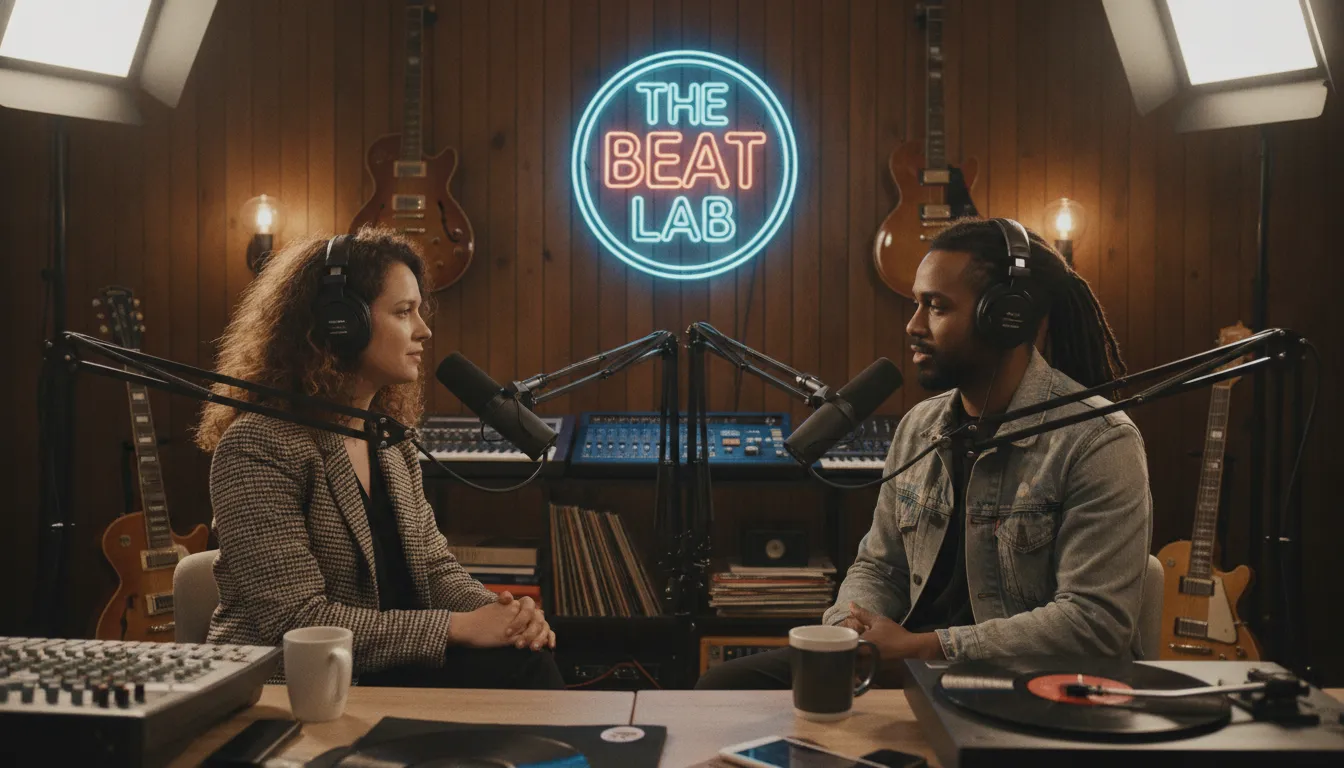
For independent music artists striving to carve out a sustainable niche in today’s saturated digital landscape. Securing organic media coverage remains one of the most effective ways to convert casual listeners into dedicated superfans. While algorithmic playlisting and social media campaigns offer fleeting spikes in engagement. A long-form podcast guest feature provides the narrative depth and personal connection required to build a lasting brand. However, breaking through the noise and catching the attention of busy show producers requires a strategic, professional approach rather than haphazard cold emailing.
Want to share your music journey with global listeners and get your tracks heard? Submit your music to rBeatz for free today and get reviewed for live radio airplay and featured artist promotions!
To learn how to get interviewed on a music podcast, artists must identify relevant shows, develop a unique story angle, compile a professional EPK, and deliver a personalized pitch. Focusing on the narrative value you bring to the host’s audience, rather than a generic sales pitch, is the key to securing features.
By treating podcast hosts as collaborative partners rather than promotional gateways, you can establish mutually beneficial relationships that amplify your reach. Let’s explore the essential steps to master this process, beginning with researching and identifying the perfect audio platforms for your specific sound.
How to Get Interviewed on a Music Podcast: Researching the Right Shows for Your Sound
To successfully pitch music podcasts, artists must target shows that align with their specific genre and career stage. Effective research involves analyzing past episodes, reviewing guest requirements, and assessing audience demographics to ensure a perfect stylistic fit before sending any outreach.
Entering the podcasting arena without a precise targeting strategy is a recipe for silent rejections. Rather than broadcasting generic pitches to every audio show in existence, your first priority is curation. You must locate broadcasting syndicates, digital radio networks, and independent shows that actively cater to your specific sub-genre and audience profile.
Find Your Music Niche
Focusing on highly specific sub-genres ensures that your story resonates with a receptive listener base. Music podcasts function as powerful on-demand broadcasting syndicates, serving as a primary driver for algorithmic playlist seeding and direct-to-fan discovery. Rather than targeting massive, general-interest music shows that cater to major label acts. Emerging talent should look for boutique operations that celebrate indie rock, underground hip-hop, deep house, or country-rap. Securing a guest spot on a niche-focused program allows you to share your creative process with an audience already primed to love your sound, maximizing post-interview conversion rates.
Use Podcast Lists and Search Tools
To streamline your outreach workflow, leverage specialized databases, streaming directories, and online curator indices. Utilizing verified lists to research music podcasts to pitch can save hours of manual searching. Platforms like Spotify, Apple Podcasts, and independent curator directories allow you to filter shows by genre, active status, and popularity. Always prioritize active shows that have released new episodes within the past thirty days, as inactive feeds will only waste your promotional resources.
Check Past Shows and Guest Rules
Before drafting your pitch, dedicate time to auditing several past episodes of your target shows. Understanding whether a host prefers deep-dive artist biographies, technical gear talk, or live acoustic performances will shape your eventual pitch. Pay close attention to the host’s interviewing style and guest requirements, some platforms focus on the future of the music industry and streaming economics, while others are purely conversational. At rBeatz, we encourage artists to explore our curated programs to get featured on music podcasts that emphasize authentic artist journeys, helping you benchmark your pitch against established industry standards.
Developing a Compelling Story Angle and Hook
To capture a podcast host’s interest, musicians must pitch a compelling narrative angle rather than a simple product promotion. Focus on unique life experiences, creative hurdles, or industry insights that provide genuine educational or entertainment value to the host’s audience.
Podcast hosts are inundated with hundreds of generic emails weekly. Most of which amount to little more than “listen to my new single.” To stand out, you must recognize that podcasters are storytellers first. When learning how to get interviewed on a music podcast, leading with a captivating, human-centered angle is your most powerful differentiator. Your story is the hook that convinces the host their audience will stay tuned from the first minute to the last.
Focus on Your Unique Artist Journey
Every creative path is paved with distinct struggles, breakthrough moments, and stylistic evolution. Your artistic journey is often far more engaging to a host than a standard track review. Discuss the pivotal events that shaped your sound, the cultural background that informs your lyrics, or the technical hurdles you overcame while building your home studio. Both emerging and established artists must thoroughly prepare for your music podcast interview by refining these narrative beats, transforming a standard Q&A into an inspiring masterclass for listeners.
Connect Your Story to Broader Trends
Hosts love guests who can speak intelligently about broader industry movements or regional music scenes. If you are an independent artist navigating the transition from traditional venues to virtual spaces. Or a pioneer combining unexpected genres like country and rap, use that as your angle. Showing that you understand your place within the larger music ecosystem proves to producers that you can deliver high-value insights to their subscriber base. Elevating the quality of the entire episode.
Preparing a Professional Electronic Press Kit (EPK)
A professional podcast media kit, or Electronic Press Kit (EPK), must contain a concise artist biography, high-resolution promotional photos, streaming links, social proof, and suggested interview talking points. This centralized resource allows hosts to quickly verify your credibility and prepare deep questions.
An Electronic Press Kit (EPK) is a non-negotiable asset for any serious musician seeking media features. Think of your EPK as a digital resume that communicates your professional brand to booking agents, journalists, and podcast producers at a single glance. When you prepare to prepare for your music podcast interview, having an organized, easily accessible press kit is essential to proving you are a professional guest who respects the host’s time.
Building a Strong Artist Biography
Your media kit biography should do more than list your discography; it must encapsulate your creative identity and narrative hook. A well-written bio gives hosts immediate context and provides them with the background information required to craft engaging, personalized questions. If you want to get featured on music podcasts that pride themselves on deep-dive interviews, your biography must highlight both your musical achievements and the personal stories that define your art.
Provide Seamless Asset Access
Hosts should never have to search the internet to find your music or promotional assets. Your EPK must include high-quality, downloadable promotional photographs (both landscape and portrait), links to your primary streaming profiles (Spotify, SoundCloud, Apple Music), and active social media handles. Providing clean, direct links, rather than bulky email attachments, ensures your pitch bypasses spam filters and is easy to review on any mobile device or desktop computer.
How to Write a Personalized Pitch Email to a Podcast Host
To write a successful podcast pitch, artists must draft a personalized, value-first email that names the host, references a specific past episode. Clearly states their unique story angle, and provides direct links to their music and Electronic Press Kit (EPK).
Securing a guest spot on a prominent show requires more than a simple cold email. To convince a host that you belong behind their microphone, your outreach must be highly personalized and focused entirely on the value you bring to their audience. A generic, copy-pasted email will be immediately discarded as spam, whereas a thoughtful, custom pitch instantly demonstrates professional respect and industry credibility.
Establish a Genuine Connection
Your opening sentences must prove that you are an active listener of the podcast, not just a marketer blasting emails. Begin by referencing a specific past episode, calling out a guest’s insight or a particular discussion topic that resonated with you. When you research music podcasts to pitch, taking detailed notes on their recent programming pays massive dividends. Showing that you understand their format and tone instantly separates you from ninety percent of the cold emails in their inbox.
Present Your Value Proposition
The core of your pitch must answer one crucial question for the producer: “Why does my audience care?” Rather than listing your technical gear or asking them to stream your album. Pitch two or three specific, high-interest discussion topics. Perhaps you can discuss how you navigated crowdfunding a vinyl release, or how your time touring in a retrofitted school bus shaped your acoustic songwriting. Show that you are ready to be an engaging, articulate guest who can educate, inspire, and entertain their subscribers.
The Perfect Music Podcast Pitch Template
Use the professional template below to structure your outreach. Be sure to replace the placeholder fields with genuine, deeply researched details about the show and your career:
Subject: Pitch: {Your Artist Name} - {Your Specific Story Angle / Hook}. Hi {Host Name},

I recently listened to your episode of {Podcast Name} featuring {Past Guest Name}. I was particularly inspired by your discussion on {Specific Topic/Insight from Episode}. I am {Your Artist Name}, an independent {Genre} artist based in {Your City}. I have spent the last {Number} years navigating {Brief, 1-Sentence High-Level Artistic achievements or Journey}. Given your focus on {Podcast Theme}, I would love to join you as a guest to share some valuable insights with your audience. Specifically, we could dive into:
- {Discussion Topic 1: e.g. How to crowdfund a physical vinyl release independently}.
- {Discussion Topic 2: e.g., Merging classical instrumentation with modern electronic production}. You can listen to my latest single, "{Track Title}," here: {Direct Streaming Link}. My complete Electronic Press Kit (EPK), which includes high-res promo photos and full bio, is available here: {Link to EPK}. Thank you for your time, and for continuing to champion independent music. Best regards,

{Your Name}.
{Your Website/Social Links}.
Five Steps to Execute an Elite Pitch Campaign
Follow this systematic process to organize and execute your podcast outreach.
- Audit and Analyze: Listen to at least one full episode of the target show to understand the host’s pacing, tone, and questioning style.
- Locate the Direct Contact: Find the host’s preferred submission method on their official website, prioritizing dedicated email addresses over generic contact forms.
- Draft with Precision: Personalize the subject line and intro paragraph, ensuring your unique story angle is front and center.
- Keep Links Frictionless: Include only two direct hyperlinks, one to your primary streaming track and one to your digital EPK.
- Follow Up Professionally: If you receive no response after seven business days, send a single, polite follow-up email to keep your pitch at the top of their inbox.
Preparing for the Interview: Best Practices for Musicians
To prepare for a music podcast interview, artists must test their audio equipment in a quiet space, use a dedicated microphone and closed-back headphones. Outline three to five core narrative talking points, and arrive at least five minutes early to establish rapport with the host.
Securing the booking is only half the battle; the true test lies in delivering an engaging, professional, and memorable performance. A great podcast guest makes the host’s job effortless, provides incredible content for the listeners, and leaves a lasting impression that drives post-show engagement. Achieving this requires a combination of technical readiness and narrative preparation.
Technical Setup and Audio Quality
In the digital broadcasting realm, poor audio quality can undermine even the most fascinating interview content. Before your scheduled session, take proactive steps to prepare for your music podcast interview by optimizing your physical and technical environment. Choose a carpeted, furnished room to minimize room echo, and avoid using built-in computer microphones. Professional guests utilize dedicated USB or XLR dynamic microphones, which are engineered to reject background noise. And wear closed-back headphones to prevent audio bleed and check their levels in real time.
A thorough pre-show technical check is an essential step for high-fidelity digital media. According to the Musicians Institute, maintaining consistent input levels and utilizing pop filters to mitigate plosive sounds ensures a broadcast-quality vocal capture. High-quality sound is the foundation of any professional digital broadcasting syndication, and hosts are far more likely to promote guests who deliver pristine audio tracks that require minimal post-production editing.
Mastering Your Core Talking Points
Rather than attempting to memorize a rigid script, prepare three to five flexible, high-value narrative talking points that align with your pitched story angle. These points should seamlessly weave together your personal anecdotes, creative philosophies, and promotional goals. This structured approach helps you stay on track, prevents rambling, and ensures you naturally mention your upcoming releases, tours, or digital storefronts without sounding overly promotional.
While preparation is key, authenticity is what ultimately captures a listener’s loyalty. Music enthusiasts want to connect with the real human behind the art. Don’t be afraid to show vulnerability, discuss your artistic failures, or pause to formulate a thoughtful answer. If you are authentic and professional, your interview will feel like a natural conversation between passionate music lovers, making it easier to get featured on music podcasts and grow a dedicated global fan base.
Interview Preparation and Performance Standards
To maximize the impact of your guest feature, use the checklist below to benchmark your technical and narrative preparation levels.
| Preparation Tier. | Technical/Audio Quality. | Narrative Execution. | Conversion Outcome. |
|---|---|---|---|
| Elite Tier. | Pristine vocal capture; dedicated dynamic microphone; zero background echo. | Highly engaging; smooth transitions; articulate talking points. | High list/stream conversion; audience seeks out artist’s catalog. |
| Standard Tier. | Clear audio with minor room resonance; standard headset or USB mic. | Clear delivery with occasional pauses or off-topic tangents. | Moderate audience interest; some social media follow-ups. |
| Substandard Tier. | Distracting echo, static, or dropouts; built-in laptop microphone. | Rambling narrative; lack of focus; overly promotional or robotic tone. | Low listener retention; host unlikely to recommend or air. |
Arriving at least five minutes early shows the host that you respect their time and are committed to a successful episode. Ensure you have sent all your high-res promo files and digital assets ahead of time so the production team has everything they need for the show notes. Clearing the path for a flawless, high-impact broadcast.
Maximizing Reach: Post-Interview Promotion Strategies
To maximize the reach of a podcast interview, artists must send a prompt thank-you note, actively promote the live episode across all social channels. Tag the host and show, embed the interview on their official website, and nurture a long-term relationship with the production team.
Your responsibilities as a guest do not conclude when the recording ends. In the modern music industry, securing a guest spot and learning how to get featured on music podcasts is merely the first phase of a successful public relations campaign. To extract maximum value from your appearance and build a sustainable brand, you must execute a comprehensive post-interview follow-up and promotion strategy. Professional follow-through turns a single broadcast into a permanent promotional engine.
Deliver Professional Follow-Up and Gratitude
Within twenty-four hours of the recording, send a concise, professional thank-you email to the host and production team. Express your gratitude for the opportunity and highlight a specific moment from the interview that you enjoyed. This simple gesture of professional courtesy instantly distinguishes you from transactional guests and solidifies your reputation as a high-value partner. Request the projected release date so you can align your promotional calendar. And ask if they require any additional assets, such as high-res graphics or track links, for the show notes.
Treating hosts with respect and gratitude is essential to building long-term alliances in the music industry. Many independent digital broadcasting channels are run by passionate curators who invest significant time into their platforms. A thoughtful, prompt follow-up turns a brief interview into a lasting industry connection. Often leading to future invitations, editorial features, or introductions to other influential curators across the podcasting network.
Co-Promote and Share the Broadcast with Your Fanbase
When the episode is officially published, treat the launch with the same enthusiasm as a new single release. Share the interview links across all active social media platforms, tagging the host, the show’s official accounts, and any sponsors. To maximize engagement, extract short, compelling audio or video snippets, often referred to as audiograms, to serve as high-impact social teasers. This proactive approach to sharing digital media not only drives traffic to the episode but also proves to the host that you are a valuable promotional partner who actively supports their platform.
Furthermore, embed the interview on your official website’s press or media page. This serves as powerful social proof for talent buyers, festival bookers, and record labels who audit your digital presence. Feature the episode in your next fan newsletter, sharing behind-the-scenes insights about the discussion to make your subscribers feel like part of your artistic journey. By actively co-promoting the episode, you help both yourself and the host expand your respective audiences.
Nurture the Relationship for Future Opportunities
Maintain consistent, low-pressure contact with the host long after the initial promotional window has passed. Support their platform by occasionally sharing their other episodes, commenting on their social media posts, or referring other talented independent artists who would make excellent guests. This positioning transforms you from a one-time guest into an active, valuable member of their professional network. As your career progresses and you release new music, these established relationships will provide a reliable, pre-warmed distribution channel for your future promotional campaigns.
Frequently Asked Questions About Music Podcast Interviews
Securing a spot on a music podcast is one of the fastest ways for independent artists to grow their reach. Below, we address the most common questions regarding research, preparation, and pitching to help you succeed.
Can I get on a music podcast if I am signed to a label?
Yes, artists signed to record labels can absolutely secure guest spots on music podcasts. In fact, many podcast hosts and independent curators look for authentic stories from all tiers of talent. Whether you are signed to a major label, a boutique indie label, or operate your own imprint. Industry data from Beatstorapon indicates that podcasters prioritize compelling narratives and unique perspectives over an artist’s legal or contractual status, making personal authenticity your greatest asset.
What information do I need for a music podcast application?
When applying for a music podcast interview or submitting your work to a digital station. You must provide a concise biography, high-resolution promotional imagery, direct streaming links, and a clear story angle. According to industry guides from CD Baby, providing a structured, easily accessible electronic press kit (EPK) ensures hosts can quickly evaluate your artistic brand and formulate deep. Engaging interview questions without having to hunt for your information online.
Can new artists get interviewed on music podcasts?
Yes, both emerging and established artists can qualify for high-impact podcast interviews if they present a compelling, unique story angle. Unlike traditional commercial radio which often requires high-budget promotional campaigns, on-demand podcasters prioritize deep, authentic conversations. According to insights from Beatstorapon, hosts actively seek out fresh, passionate voices who can share inspiring stories about their creative process, making the interview space highly accessible for rising indie talent.
Should I pay a third-party service to submit my music to podcasts?
You should avoid paying third-party submission services or pay-for-play networks to secure podcast interviews. Most legitimate hosts and digital stations prefer direct, personalized outreach through their official channels, which allows you to build genuine, long-term industry relationships. At rBeatz.com, we maintain an open-book policy and operate a completely free, merit-based music submission portal. Ensuring all artists have an equal, no-barrier opportunity to get their work reviewed and featured on our network.
Ready to Take Your Music Career to the Next Level?
Standing out in the modern music industry requires getting your voice and your music in front of active, engaged listeners. By partnering with rBeatz, you gain access to a boutique, global music-discovery platform that supports independent artists with live radio features, podcast interviews, and multi-channel promotion. Don’t let your music go unheard, take control of your career and start pitching today.
Ready to share your sound? Submit your music to rBeatz for free today and get reviewed for airplay on rBeatz Radio and our podcast network!