Boxyard RTP and North Carolina State Fair performances
Mayia Warren on community, purpose, and upcoming live dates
Mayia Warren
Key Takeaways
- Purpose can take an unexpected direction. Warren’s journey from physical therapy studies to music and advocacy shows how a person’s path can change as they gain clarity about their calling.
- Personal experiences can inform meaningful art. Her songwriting draws on the lessons, relationships, and challenges that have shaped her life.
- Musical identity grows through listening. Gospel, R&B, neo-soul, jazz, Christian rock, and country all contribute to Warren’s distinctive sound.
- Gratitude can change perspective. Her “Pass Me Not” experience and Thankful Thursday series highlight the value of noticing what remains meaningful during difficult seasons.
- Disability does not have one appearance. Warren encourages people to move beyond assumptions and recognize the diversity of disability experiences.
- Authenticity matters more than a perfect highlight reel. Sharing the process, not just the polished result, can help artists build deeper connections with audiences.
- Support systems make a difference. Mentors and family provide Warren with encouragement, accountability, and practical help.
- Impact can begin with one person. Warren’s approach to ministry and advocacy values personal connection as much as public performance.
Mayia Warren: More Than a Gospel Artist
When Terry Hudson welcomes an artist to Local Music Somewhere, the conversation goes beyond the songs. It’s an opportunity to pull back the curtain and discover the person, experiences, and purpose behind the music.
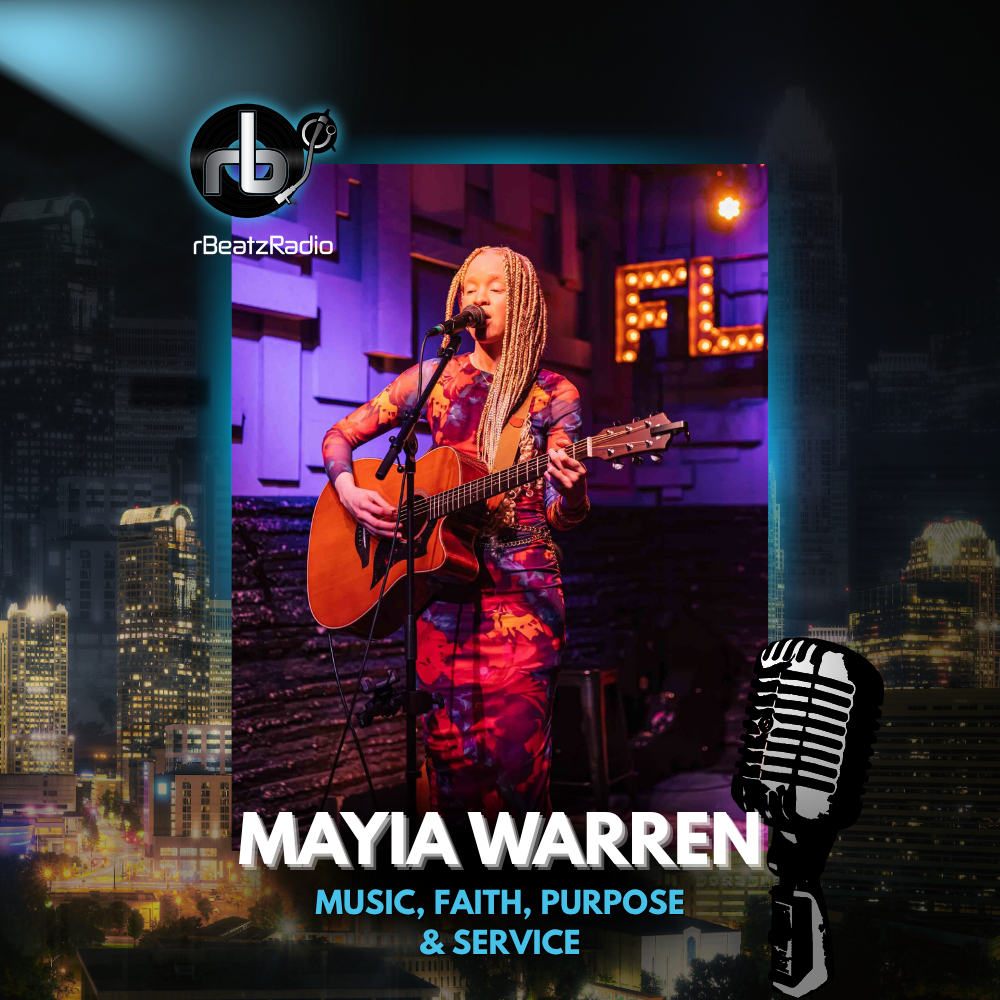
His conversation with Raleigh-area gospel artist and singer-songwriter Mayia Warren reveals an artist whose work reaches far beyond the stage. Warren is a musician, foster care advocate, disability advocate, trauma survivor advocate, keynote speaker, and community collaborator. Her music is one of several ways she works to encourage people and make a meaningful difference in their lives.
Living with legal blindness, multiple genetic conditions, and severe chronic pain, Warren brings personal experience to the stories she shares. Rather than separating her life from her artistry, she draws on what she has lived through to connect with others.
For Warren, music isn’t simply a creative outlet. It is part of a larger calling to serve people, share her story, and help others see their own lives differently.
From Studying Physical Therapy to Following a Musical Calling
Warren’s path into music wasn’t a straightforward journey toward a recording career. She was studying kinesiology and preparing for a future in physical therapy at the University of North Carolina at Greensboro. She had a genuine interest in the human body and sports medicine, but her health challenges and growing sense of direction led her to reconsider the path ahead.
As she navigated her final year of college, she struggled with significant symptoms and encountered resistance while pursuing graduate school. After seeking guidance from mentors and reflecting on her faith, she began to recognize that her future might look different from what she had originally planned.
Support from her mentors became especially important. Warren describes how their care helped her learn to accept assistance, trust others, and feel safe enough to process experiences from her past. Those lessons eventually found their way into her songwriting.
She had been writing songs since childhood, but the transition from writing privately to sharing her music with the world happened gradually. Her first project grew from personal experiences and lessons she was learning, and a fellow Christian hip-hop artist, Cut Right, gave her an early opportunity to perform in 2023.
A later crowdfunding campaign helped Warren recognize that music could become another meaningful way to serve others. She initially viewed the project as a relatively small undertaking, but the campaign reached its full goal—and more—in just three days.
That experience helped clarify the distinction between pursuing something simply because you want it and responding to something you believe you have been called to do.
The Musical Influences Behind Mayia Warren’s Sound
Warren’s music brings together gospel, R&B, neo-soul, jazz, Christian rock, and country influences. Her musical background reflects the variety of sounds she encountered growing up.
Her family introduced her to Southern gospel and contemporary Christian music, along with influential gospel groups and vocalists such as Commissioned, the Winans, Mahalia Jackson, and Vanessa Bell Armstrong. The Gaither Vocal Band and other traditional gospel artists also shaped her musical environment, while her aunt helped introduce her to R&B and neo-soul.
Rather than limiting herself to a single genre, Warren pays attention to the sounds around her. Even everyday noises can spark musical ideas, and she describes how being legally blind has made her listening especially attentive.
That awareness carries into her songwriting. She appreciates artists who tell their stories authentically and whose musical identities remain distinctive. Terry, drawing on his own experience in the music business and Christian music, connects her influences to a broader discussion about vocal individuality and the evolution of contemporary Christian music.
The result is an artist whose sound reflects a wide range of musical experiences rather than a formula designed to fit neatly into one category.
Music That Encourages People to Embrace Their Stories
When Terry asks what she hopes listeners experience through her music, Warren returns to a central theme: people don’t have to divide themselves into separate versions to fit different environments.
Her songs encourage listeners to bring their experiences, questions, struggles, and faith into the same story. She believes that what people have lived through can become part of how they connect with and serve others.
That message is especially meaningful for someone whose life includes disability, chronic pain, and the process of healing from trauma. Warren doesn’t present her story as a simple narrative in which every difficulty has already been resolved. Instead, her music reflects the ongoing process of learning, growing, and finding purpose along the way.
For listeners who have struggled to understand their own experiences, that honesty can offer a different perspective. Their stories do not have to be hidden or neatly packaged before they can have value.
“Pass Me Not” and the Power of Gratitude
One of the important moments in the conversation centers on Warren’s song “Pass Me Not.” The song had surpassed 200,000 streams, and Warren describes receiving messages from listeners about the ways it has affected them.
For her, those responses mean more than a streaming milestone. They provide a glimpse of how music can travel beyond the artist’s immediate circle and become part of another person’s life.
The response also helped inspire her Thankful Thursday content series. Each week, Warren looks for something new to appreciate and invites others to share what they are thankful for. The practice has influenced how she approaches everyday life, encouraging her to notice good things even when circumstances are difficult.
Terry relates to that idea through his own experiences with anxiety and gratitude. Their conversation emphasizes how intentionally recognizing what remains meaningful can change the way people view their circumstances.
Warren explains her perspective simply:
“Because if you’re always looking for something to be grateful for, you have a lot less room to complain.”
The message isn’t that hardship disappears when people practice gratitude. Rather, gratitude can create space to recognize more than the difficulties occupying their attention.
Understanding Disability Beyond Assumptions
Warren also uses the conversation to challenge common misconceptions about disability. She explains that people sometimes picture disability in a narrow way, overlooking the broad range of mobility, cognitive, and sensory experiences that affect individuals.
Her own experience with legal blindness and chronic health conditions informs her advocacy, but she also recognizes that disability can enter people’s lives in many different ways. Some individuals are born with disabilities; others experience changes through illness, accidents, aging, or other circumstances.
This part of the interview highlights why representation and understanding matter. Disability does not look just one way, and a person’s capabilities, ambitions, and contributions cannot be understood from a single assumption about their condition.
Warren’s life also illustrates that advocacy can take many forms. Through music, speaking engagements, community partnerships, and personal conversations, she looks for opportunities to connect people with encouragement and resources.
“Take Me Back”: Reimagining Hymns Through Neo-Soul
Another major topic is Warren’s project “Take Me Back,” which reimagines hymns through a neo-soul approach.
The project grew from an idea she developed into an artist-grant proposal. After receiving the grant, she began working on the music while dealing with additional health challenges that complicated her existing chronic conditions.
The production process brought its own obstacles, including costs that exceeded her initial expectations. Her family encouraged her to continue through periods of discouragement, helping her keep the larger purpose of the project in view.
Warren also designed the project’s cover herself, aiming for a simple but communicative presentation. Terry, whose own background includes working in Christian music, responds to the cover’s tactile quality and the connection it evokes with the hymnals he remembers from growing up as a preacher’s son.
The conversation captures how tradition and fresh interpretation can coexist. Warren’s approach honors the hymns that influenced her while allowing her to explore them through the sounds and musical instincts that are part of her own identity.
Building an Audience Without Losing Authenticity
Terry and Warren also discuss one of the ongoing challenges for independent artists: showing up consistently on social media without becoming consumed by the pressure to perform.
Warren admits that she has had a complicated relationship with social media. She has worked to become more consistent, share more of her personality, and document her journey through vlogging. Her approach has developed through conversations with mentors who encouraged her to let audiences see more than the finished product.
An analogy involving fishing helped her reconsider the purpose of posting content. Just as different lures and techniques can be used toward the same goal, an artist can experiment with different ways of reaching people. The outcome is not always within the artist’s control, but the effort to connect remains worthwhile.
For Warren, the goal isn’t simply to accumulate attention. It is to use available tools to reach people who might benefit from her music, story, or encouragement.
Terry reinforces the value of authenticity, observing that audiences often want to see the journey—not only a carefully polished highlight reel. His perspective connects with Warren’s growing willingness to share the difficult, ordinary, and humorous parts of her life alongside her music.
Together, they explore how consistency, experimentation, and a willingness to be seen can help artists build meaningful connections.
Continuing the Work Through Chronic Pain and Uncertainty
One of the most personal parts of the interview comes when Warren discusses the tension between her health and her sense of purpose.
She describes the challenges of continuing to serve others while experiencing significant pain and other health difficulties. There are days when rest is what her body seems to demand, yet she continues to wrestle with how to honor her responsibilities without losing sight of her physical limitations.
Her perspective has evolved from the perfectionism she experienced earlier in life. She is learning that she does not have to wait until everything is resolved or she feels completely ready before she can contribute.
That does not make the challenges disappear. Instead, she is learning to acknowledge what is happening in her body while remaining attentive to the people and opportunities in front of her.
Warren offers a distinction that captures how she understands her path:
“This was not my dream. This is a calling and an assignment.”
That statement helps explain why her work encompasses more than music. Her sense of purpose informs how she approaches advocacy, speaking, content creation, and the relationships she builds along the way.
The Importance of Mentors, Community, and One-on-One Connection
Throughout the interview, Warren acknowledges the people who have helped her continue moving forward. Her mentors and family have offered encouragement, practical support, accountability, and room to grow.
Their role is not limited to helping her pursue music. They also care about her well-being and whether her daily decisions align with the mission she believes she has been given.
Terry recognizes that kind of support as an important part of an artist’s journey. Talent matters, but so do relationships, encouragement, and the willingness to keep learning.
Warren also emphasizes the importance of making time for individual connections. She explains that even a small opportunity to share her story can matter because of the person who hears it and what that interaction may make possible.
That philosophy reflects the broader theme of the episode: impact is not measured only by the size of a stage, the number of listeners, or the visibility of a project. Sometimes it begins with one conversation.
A Conversation About Music, Faith, and the People Behind the Work
Terry Hudson’s conversation with Mayia Warren offers more than an introduction to a rising gospel artist. It reveals the connections between her music, her lived experiences, her faith, and her commitment to serving her community.
Warren’s journey is still unfolding. She continues to navigate health challenges, develop her artistry, share her story, and discover new ways to reach people. Her willingness to speak openly about that process is part of what makes the conversation compelling.
For listeners discovering her work for the first time, the invitation is to explore the music and the message behind it—and to remember that meaningful impact doesn’t always begin with a spotlight. Sometimes it starts with a story, a song, or the decision to make yourself available to another person.
More Artists and Show Episodes