Finding His Voice Through Honest Songwriting
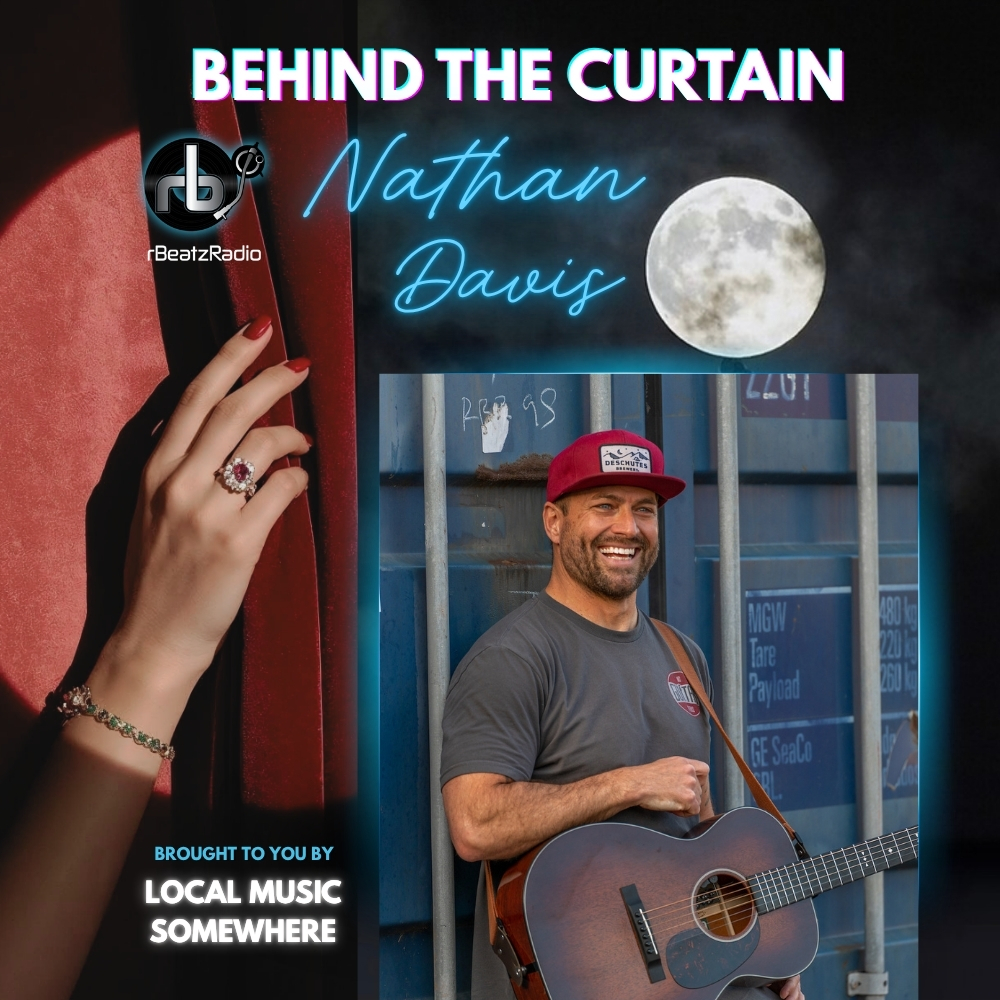
Singer-songwriter Nathan C. Davis joins Greazy Keyz on Behind The Curtain for a conversation about music, life, and the experiences that shape a songwriter. From growing up as an Army brat and finding his sound between coasts to blending West Coast ease with Southern soul, Nathan shares the stories behind his music, his album Healing in Hindsight, and the songs he’s ready to bring into the studio. The conversation also explores Charleston’s songwriter community, his series The Roundup, unexpected opportunities, and what comes next. Tune in for an intimate look at Nathan’s journey, his songwriting, and a live performance from an artist who believes in honest music, meaningful connection, and letting the story unfold.
Finding His Voice Through Honest Songwriting
Nathan Davis
Key Takeaways
- Build community, not just a gig list. Creating meaningful relationships with musicians, venues, and audiences can lead to opportunities that grow over time.
- Release music at a pace that works for you. Three-song EPs can help artists stay focused, finish projects, and share different creative chapters without waiting for a full album.
- Learn from other songwriters without losing your own voice. Structure, hooks, and collaboration can strengthen songwriting while keeping the stories authentic.
- Live music is about connection. The energy between a performer and an audience can create moments that are impossible to recreate.
- Collaboration can unlock creativity. Co-writing can bring new ideas, momentum, and unexpected directions to songs.
- Support your local music scene. Referrals, sharing opportunities, and celebrating other musicians help build a stronger community.
- Your attitude and professionalism matter. Talent is important, but how you treat people and show up consistently can make a lasting difference.
- Know when to say no. Loving music can make it easy to overbook yourself. Protecting your time and energy is part of sustaining a career.
- Music can help carry a legacy. Songs can give shape to grief, honor family, and keep memories alive.
- Keep moving through the changes. Sometimes life changes faster than we can process it. Writing and performing can help us find our way toward the next green light.
Nathan C. Davis on Songwriting, Community, Connection, and Finding His Way Forward
When Nathan C. Davis returns to the rBeatz studio, the conversation feels less like an interview and more like catching up with a fellow musician who has been out on the road, making connections, writing songs, and figuring out where the music takes him next. Host Greazy Keyz keeps things relaxed and music-focused, giving Nathan room to talk honestly about the evolution of his songwriting, the joy of performing live, the importance of community, and the life experiences that have found their way into his music.
Since his last visit nearly two years ago, when he was releasing Healing in Hindsight, Nathan has spent more time traveling throughout the Southeast, building relationships with musicians and venues, developing songwriter communities, collaborating with other artists, and finding new ways to bring his original music to audiences.
What emerges is a conversation about more than songwriting. It’s about learning to trust the process, finding balance in a life you love, and recognizing how personal experiences can become songs that connect with other people.
A Songwriter Building Connections Across the Southeast
Nathan has been steadily building a network of musicians and music communities across cities including Greenville, Charleston, Greensboro, and Virginia. Rather than simply traveling from gig to gig, he’s intentionally building relationships, curating shows, and finding opportunities to bring original music into different markets.
He’s been able to focus more on his own material, playing festivals, ticketed shows, and performances where he gets to share his songwriting with new audiences. That growth has given him something to be proud of—not just more gigs, but a broader community of people who know his music and want to bring him back.
For Nathan, being a musician is about more than getting booked. It’s about becoming part of a scene, connecting with other artists, and creating opportunities that can continue to grow.
Rainstorm: Turning the COVID Era Into Songwriting Inspiration
One of the songs Nathan performs during the session, Rainstorm, came out of the unusual period during COVID when routines changed and many people found themselves with more time to reflect.
Nathan spent time writing, reading, and walking outdoors. The song developed during those moments, with a little irony attached: whenever he worked on it, thunderstorms seemed to roll in. For a song called Rainstorm, Mother Nature apparently wanted to participate in the writing process.
The song has been part of his live performances for years, but it hadn’t yet been recorded. Now, as he works on new music, it’s finally making its way into the studio.
Greazy Keyz even joins Nathan on the song during the session, making the performance a spontaneous moment of connection rather than simply another recorded interview.
Why Nathan C. Davis Prefers Three-Song EPs Over Full Albums
Nathan has been thinking differently about releasing music. Instead of waiting until an entire full-length album is finished, he likes the idea of releasing three-song EPs—small collections that capture where he is creatively at a particular moment in his life.
He describes them as snapshots, little messages in a bottle.
The approach allows him to focus on a manageable group of songs, complete the recording and mastering process, and get music out to listeners without the lengthy process that can accompany a full album.
It’s a format that gives his music room to evolve while keeping the release process moving. Rather than trying to finish everything at once, he can work in smaller batches, giving each group of songs its own identity and story.
Nashville Songwriting Lessons Without Losing Authenticity
Nathan has also spent time writing with songwriters in Nashville, learning more about the craft and structure of songwriting. He recognizes that Nashville writers often have a strong instinct for structure, hooks, and getting to the point of a song.
But Nathan still wants the songs he writes to come from something real.
He gravitates toward experiences he’s lived, emotions he’s felt, or things he’s observed. He’s not particularly interested in writing another song just because it fits a familiar formula about tailgates and beer.
Instead, he’s interested in taking what he learns from other songwriters and combining it with his own perspective. He appreciates being around people who are better at certain aspects of the craft because you naturally absorb what they do.
The goal isn’t to abandon his voice. It’s to keep developing it.
The Magic of Live Music and Connecting With an Audience
When Greazy asks whether Nathan sees himself more as a songwriter or a live performer, Nathan has a hard time putting a ratio on it. But one thing is clear: he loves playing live.
For him, there’s something uniquely powerful about sharing a song with an audience in the same room. When the music, the audience, and the moment all line up, there’s a connection that can’t quite be replicated.
He compares that feeling to catching a wave for the first time. Originally from San Diego, Nathan knows the feeling of connecting with the ocean and borrowing its power for a few moments. Playing live music can create that same feeling—a moment where everything clicks, and you want to experience it again.
It’s that energy that keeps him wanting to perform.
The Roundup: Creating a Songwriters-in-the-Round Community in Charleston
One of the projects Nathan is especially excited about is The Roundup, a monthly songwriters-in-the-round event in Charleston that he co-created with artist Mason Batten.
The idea came from conversations about the Charleston music scene and the lack of a more frequent songwriter-round format similar to what artists experience in Nashville. They wanted to create something that gave songwriters more opportunities to perform, share their music, and connect with each other.
They found a home at Henry’s on the Market, a venue Nathan describes as a perfect fit.
Henry’s on the Market – Charleston, SC
Henry’s on the Market – The Dining Room
The event features three artists each month, typically on the first Tuesday, with Nathan hosting, running sound, and guiding the evening’s conversations. Rather than simply having each artist play songs back-to-back, Nathan asks specific questions between songs, allowing the audience to learn more about the artists, the stories behind their music, and their creative process.
The result is something that naturally becomes part performance, part conversation, and part podcast-like experience.
He also takes pride in the sound. Nathan believes sound should bring an audience closer to the artist—not create a barrier between them. When the artists feel comfortable and the room sounds good, the entire experience becomes better.
One of the most rewarding parts has been watching musicians jump in on each other’s songs, adding harmonies and creating unexpected moments of musical chemistry. The artists may not have performed together before, but the connections often feel like they’ve been there for years.
And every month, Nathan and Mason seem to finish the event thinking the latest one might have been their best yet.
Co-Writing, Collaboration, and Finding Creative Momentum
Nathan spent much of his earlier songwriting career writing alone. Over time, however, he began experimenting with co-writing, particularly after experiences at the Swannanoa gathering and connecting with other songwriters.
These days, he often prefers collaboration.
When two writers bring ideas to the table and find something they both get excited about, the creative process can move quickly. Nathan describes the energy of building a song together—finding a hook, developing a chorus, adding new pieces, and watching the song come together in a way neither writer might have reached independently.
Sometimes a co-writing session leaves them with a song that’s nearly finished by the time they walk out.
He enjoys the shared momentum, the bouncing of ideas back and forth, and the feeling of working toward a common goal. Collaboration has become a way to make songwriting more productive, more enjoyable, and often more surprising.
“Getting Good at Getting By” — Finding Humor and Relatability in Everyday Life
Nathan also talks about a song called Getting Good at Getting By, which came from a period when he was spending an unusually large amount of time on the road and in his car.
It started as a somewhat tongue-in-cheek idea, but it quickly developed into a song that he genuinely enjoys playing.
The simplicity of it is part of the appeal. It’s the kind of song people can relate to, bob their heads along with, and recognize something familiar in without needing an overly complicated arrangement or story.
It’s a reminder that songwriting doesn’t always have to begin with some grand revelation. Sometimes an idea that seems a little silly at first turns into something worth keeping.
Chasing Blue Skies: Letting the Fun Side of Songwriting Out
Nathan recognizes that a lot of his catalog leans toward introspective, nostalgic storytelling and love songs. While those songs are part of who he is, he also wanted to write something lighter and more upbeat.
That led to Chasing Blue Skies.
Inspired by his love of the beach, sunshine, lakes, and the ocean, the song gives him a chance to shift gears and bring a little more fun into his music. It isn’t an attempt to be somebody else. It’s simply another side of his personality that deserves to come through.
Greazy Keyz gets to hear that side firsthand during the performance, and the reaction is immediate: mission accomplished.
The Charlotte Music Scene: Growing, Evolving, and Supporting Each Other
Nathan sees Charlotte’s original music scene as being at an interesting point in its evolution. Artists who’ve stayed in the area have built a foundation, and there are signs of continued growth through musician-centered events, conferences, venues, and organizations working to elevate local arts.
While he feels Charlotte could offer more opportunities for independent original artists relative to the city’s size, he believes the quality of the venues and people involved is strong.
He also appreciates the way musicians in his circles support one another. Rather than treating every opportunity as competition, artists are often willing to recommend someone else when they’re unavailable for a gig.
If a venue calls and an artist is already booked, they’ll pass along the names of other musicians who are just as capable—or even better suited for the opportunity.
That kind of relationship-building benefits everybody. The venue finds an artist, the musician gets work, and the community becomes stronger.
Nathan believes attitude matters, too. How you treat people—whether it’s a booking agent, a venue manager, another musician, or someone you encounter in everyday life—can make a lasting impression. Being professional, prepared, and positive can open doors that talent alone might not.
The Unexpected Side of Being a Professional Musician: Learning to Say No
One of the most honest moments in the conversation comes when Greazy asks Nathan what he wishes someone had warned him about before becoming a professional musician.
Nathan’s answer isn’t about the difficulties of the business, the gear, or the road. It’s about how addictive playing music can become.
When you love what you’re doing, it’s easy to say yes to everything. Seven nights a week? Sure. Two gigs in one day? Let’s figure it out. Another out-of-town show followed by a local performance the next day? Why not?
The excitement, adrenaline, and sense of purpose can make it difficult to turn down opportunities—even when your calendar is already packed.
Both Nathan and Greazy understand that feeling. They talk about the rush of breaking down equipment, loading into the next venue, getting set up, grabbing food in between, and making it all work.
There’s pride in realizing you’re getting better at managing that life. But there’s also the recognition that learning when to say no is part of growing as a musician.
Timber: Writing a Song to Honor His Father
One of the most emotional parts of the episode comes when Nathan shares the story behind Timber, a song written about his father.
Nathan describes growing up in a close, loving family and speaks about his father as an extraordinary person—someone whose accomplishments, wisdom, and presence left a lasting impression on everyone who knew him.
His father passed away suddenly and unexpectedly nearly four years ago, and Nathan is still learning how to navigate life without him.
What makes the story especially moving is how Nathan realized that his father’s passing had quietly affected his creative life. While thinking about setting a goal to write with three new people each month, he looked back and realized the last time he’d been in a consistent co-writing rhythm was around the same time his father died.
He hadn’t made that connection before.
Eventually, he brought the idea of writing a song about his father into a co-writing session with his friend Drew Nathan. It was something he’d held back because he wanted the song to be meaningful and something he could truly be proud of.
The result was Timber.
The performance carries a weight that goes beyond the song itself. Greazy Keyz connects with Nathan’s story through his own experience of losing his father, making the moment deeply personal for both of them.
It’s a reminder that music can preserve pieces of people we love—their presence, their influence, their wisdom, and the things they leave behind.
A New Recording Process: Blending Studio Work With Remote Session Musicians
Nathan is approaching his next recording project a little differently this time.
He plans to record vocals and guitar with Tim Gowart in his home studio, while also using Musiversal, an online service that connects artists with professional session musicians.
The service allows Nathan to build a project, upload scratch tracks, select musicians for different parts of an arrangement, and book sessions with players in places like Nashville and Austin.
It’s a flexible approach that gives him access to professional musicians without having to coordinate everything in a traditional studio setting.
Nathan still values quality recording environments, particularly for vocals and drums, where capturing the details and nuances of a performance matters. He’s not abandoning the traditional studio process—he’s blending it with a newer approach to production.
For this project, it’s a combination of familiar studio work and a new tool that could help him move music from idea to finished recording more efficiently.
Green Light: Finding the Momentum to Move Forward Again
Nathan’s final song, Green Light, came from a period of major life change that coincided with COVID and the transition out of it.
As people began trying to return to normal, Nathan found that normal didn’t really feel the same anymore. The routines, expectations, and rhythms of life had changed. For musicians, some parts of the industry never quite returned to the way they were before.
At the same time, Nathan was dealing with significant personal changes and trying to find his footing in a different version of life.
He describes getting stuck in a loop, wanting to move forward but feeling like he couldn’t get out of first gear.
That’s where Green Light came from.
The song captures that feeling of wanting to move, wanting to go, wanting to find momentum again—but not quite being there yet.
It’s a fitting way to close the musical portion of the conversation: a songwriter continuing to work through life, finding new perspectives, and putting those experiences into songs.
A Conversation About Music, Life, and the People Who Shape Us
Nathan C. Davis brings a thoughtful, genuine, and quietly enthusiastic energy to the studio. He’s a songwriter who clearly loves the craft, but he also loves the community around it—the other musicians, the rooms where songs come alive, the collaborations that lead somewhere unexpected, and the audiences who make those moments matter.
Greazy Keyz gives the conversation space to breathe, moving naturally between music, stories, local scenes, and the realities of being a working musician. There are laughs, shared experiences, meaningful moments, and plenty of appreciation for the people who keep the music moving.
From Rainstorm and Chasing Blue Skies to the deeply personal Timber and Green Light, Nathan’s songs reflect different parts of his life and the experiences that continue to shape him.
It’s a reminder that songwriting isn’t always about having everything figured out. Sometimes it’s about catching a wave, finding a connection, creating something with another person, remembering someone you love, or simply getting good at getting by.
And sometimes, you just need a green light to keep going.
More Artists and Show Episodes