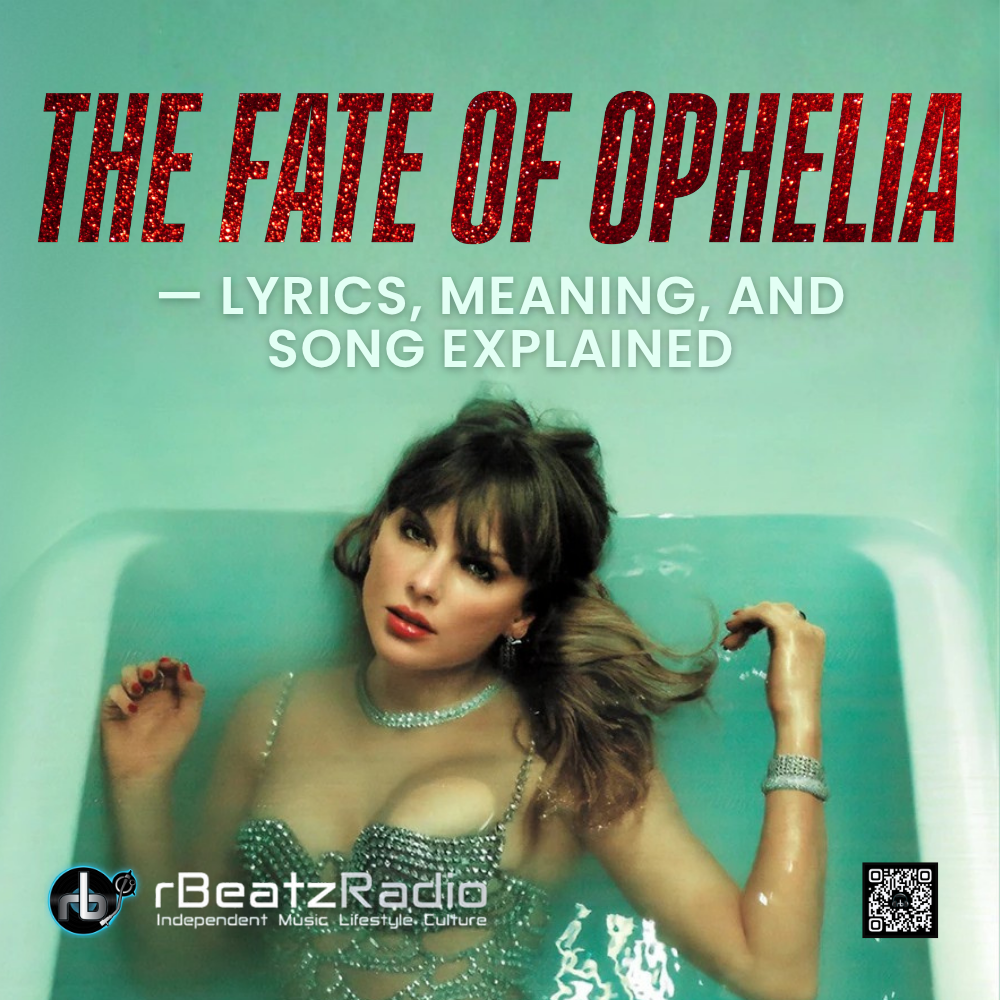
The Lyrics and Meaning of the Fate of Ophelia by Taylor Swift — Drowning, Rescue, and Control
Let’s analyze some of the most meaningful lyrics from “The Fate of Ophelia” by Taylor Swift. When this song is reviewed in detail, we can see why it makes such a profound impact:
Megaphone & Pyro
The opening part of this track is about public attention and emotional chaos. The imagery of a “megaphone” is used to signal the public spotlight, with Swift aware of being watched and called out in the cultural narrative. The line “pyro” also has a strong meaning, suggesting someone who creates drama but also gives energy.
“I heard you calling,
On the megaphone
You wanna see me all alone”
Drowned in the Melancholy
Emotional collapse in this song section is central to the meaning of Ophelia. Swift creates a modern version of the character’s drowning by speaking of depression, numbness, and sadness. The narrator recognizes she’s close to a tragic ending, before a positive relationship changes her emotional state and life trajectory.
“And if you’d never come for me,
I might’ve drowned in the melancholy”
Tower & Alone
With these two terms, Taylor Swift sings of isolation as a coping strategy. As she retreats and regains control, she also closes up and pushes people away. The word “tower” has a double meaning, echoing princess imagery from fairy tales while making links between safety and confinement.
“All that time
I sat alone in my tower
You were just honing your powers”
Dug Me Out of My Grave
This powerful line is about rescuing a dead version of yourself before it’s too late. The narrator presents feelings of grief, pressure, and exhaustion before going through an emotional rebirth. In this part of the song, Swift creates a contrast between Shakespeare’s Ophelia and her own transformative story.
“You dug me out of my grave and
Saved my heart from the fate of
Ophelia
Loyalty & Pledge
This part of the track is about reclaiming agency amidst chaos. During the chorus, Swift flips the script, from feelings of powerlessness to freedom of choice. More than hype, lines like “pledge allegiance” and “keep it one hundred” are about demanding honesty and certainty instead of focusing on ownership.
“Pledge allegiance to your hands
Your team, your vibes”
According to rumor, Swift’s relationship with Travis Kelce was the chief inspiration for this amazing song. And while many listeners attribute meaning to this relationship, in truth, the real interpretation runs much deeper. Overall, the song’s core message is “I could’ve become Ophelia, but I didn’t.” By invoking a well-known character and changing her fate, Swift found a unique way to transform classic high art into modern pop craft.
How This Song Fits Into Taylor Swift’s Storytelling Era
Taylor Swift has enjoyed a hugely successful few years, creating some of her best work and touring around the world to hoards of adoring fans. “The Fate of Ophelia” is an important part of her creative pattern, which often involves rewriting tragic stories. This isn’t the first time Swift has used literary references, and it’s not the only time she’s turned personal experience into symbolic narratives. The evolution can be seen clearly in her album releases.
Let’s look at the most important Taylor Swift albums in order:
Taylor Swift’s early work was somewhat naive, dealing almost solely with relationships and heartbreak. She moved from country to pure pop with the album 1989 in 2014, and started singing about public scrutiny on Reputation in 2017. Her fictional storytelling period didn’t begin until 2020, however, when both Folklore and Evermore were released. Swift started to utilize novel characters and third-person perspectives, using real and imagined mythology to explore themes of love and loss.
Taylor Swift started her modern period in 2022 with the release of Midnights, a conceptual album exploring “sleepless nights” and self-reflection. Taylor’s Versions (2021-2023) saw the artist rerecord her early catalog, rewriting her narrative for the sake of artistic autonomy. The Tortured Poets Department from 2024 brought more diary-like songwriting, as the artist explored the darker sides of fame and public perception. Just like some of the Madonna songs that changed music forever, tracks from this period are among the best 30 easy karaoke songs for women.
The Life of a Showgirl broadens the narrative with deep emotional concepts, revealing the inner world of Taylor Swift. On “The Life of Ophelia” and other songs, Swift contrasts her glamorous public persona with a complex private life. “Opalite” and “The Life of a Showgirl” (feat. Sabrina Carpenter) are also great examples, with Swift performing with joy despite growing self-awareness and constant pressure. This album deals with glitzy themes of celebrity and performance, but it keeps things real by speaking about the emotional costs of fame.
Why “The Fate of Ophelia” Hits So Hard for Listeners
“The Fate of Ophelia” by Taylor Swift utilizes simple storytelling and clever lyrics to connect with listeners. While you don’t have to read Shakespeare to enjoy it, the story of Hamlet helps Swift to invoke strong — and timeless — emotions. This isn’t bubblegum pop based on short-lived trends, but something deeper based on universal values. “The Fate of Ophelia” pushes real emotional buttons, helping listeners feel connected with something heartfelt and tangible.
Among other things, Taylor Swift sings about the fear of losing yourself in a relationship, which often leads to confusion and emotional burnout. Unlike the fate of Hamlet’s would-be lover, however, “The Fate of Ophelia” doesn’t end lifeless at the bottom of a pond. Instead, Swift delivers her coda as an uplifting rescue, giving listeners an alternate ending and allowing them to write their own story. “The Fate of Ophelia” is another chapter in Swift’s artistic journey, as she shifts her focus from personal stories to universal themes of power.
If you’re looking for great emotional songs like this Taylor Swift single, please review our 30 best songs about family and love. Many of the greatest dance party songs are also full of emotion, and some of the best running songs can also kick-start your heart.