Distortion is one of the most recognizable audio effects in modern music. It can turn a clean guitar into a roaring wall of sound, make a vocal feel gritty and intimate, or give a synthesizer the aggressive edge characteristic of electronic tracks. Although the term originally referred to unwanted signal degradation, musicians and producers have spent decades turning distortion into a creative tool.
At its simplest, distortion occurs when an audio signal is pushed beyond its clean operating range. The waveform changes shape, and new harmonics are created. Those extra harmonics alter the tone so it sounds richer, heavier, warmer, or even more aggressive.
So, if you’ve ever asked, “What is distortion in music?” this guide will answer that question. We’ll cover the definition of distortion in music, explain how distortion in music works, look at the main types of distortion, and compare it with overdrive and saturation so you can “hear” the differences more clearly.
What Is Distortion in Music?
What is distortion in music? Distortion is the intentional alteration of an audio signal that occurs when it exceeds its clean operating range. It causes the waveform to change shape and generates additional harmonics. In modern production, distortion is often used creatively to add character, warmth, aggression, sustain, or texture.
If you’re a beginner, think of a clean sound as a smooth wave. When that wave is pushed too hard, its peaks are reshaped. The result is a tone that feels fuller and more energetic.
Distortion can be created with guitar amplifiers, pedals, analog hardware, software plugins, and digital signal processing tools. The source does not matter as much as the effect on the waveform and harmonics.
Note that not all distortion is undesirable. Engineers work hard to avoid accidental clipping. However, they often add controlled distortion later because it helps sounds feel more alive and present.
In practice, distortion usually adds:
- More harmonics: Additional frequencies appear above the original note, making the sound richer.
- Increased perceived loudness: The sound often seems louder even when the meter does not rise dramatically.
- Thicker tone: Instruments gain body and density.
- More sustain: Notes hold their energy for longer.
- Additional texture: The sound becomes smoother, grittier, buzzier, or more complex depending on the type of distortion.
How Does Distortion Work?
So, how does distortion work?
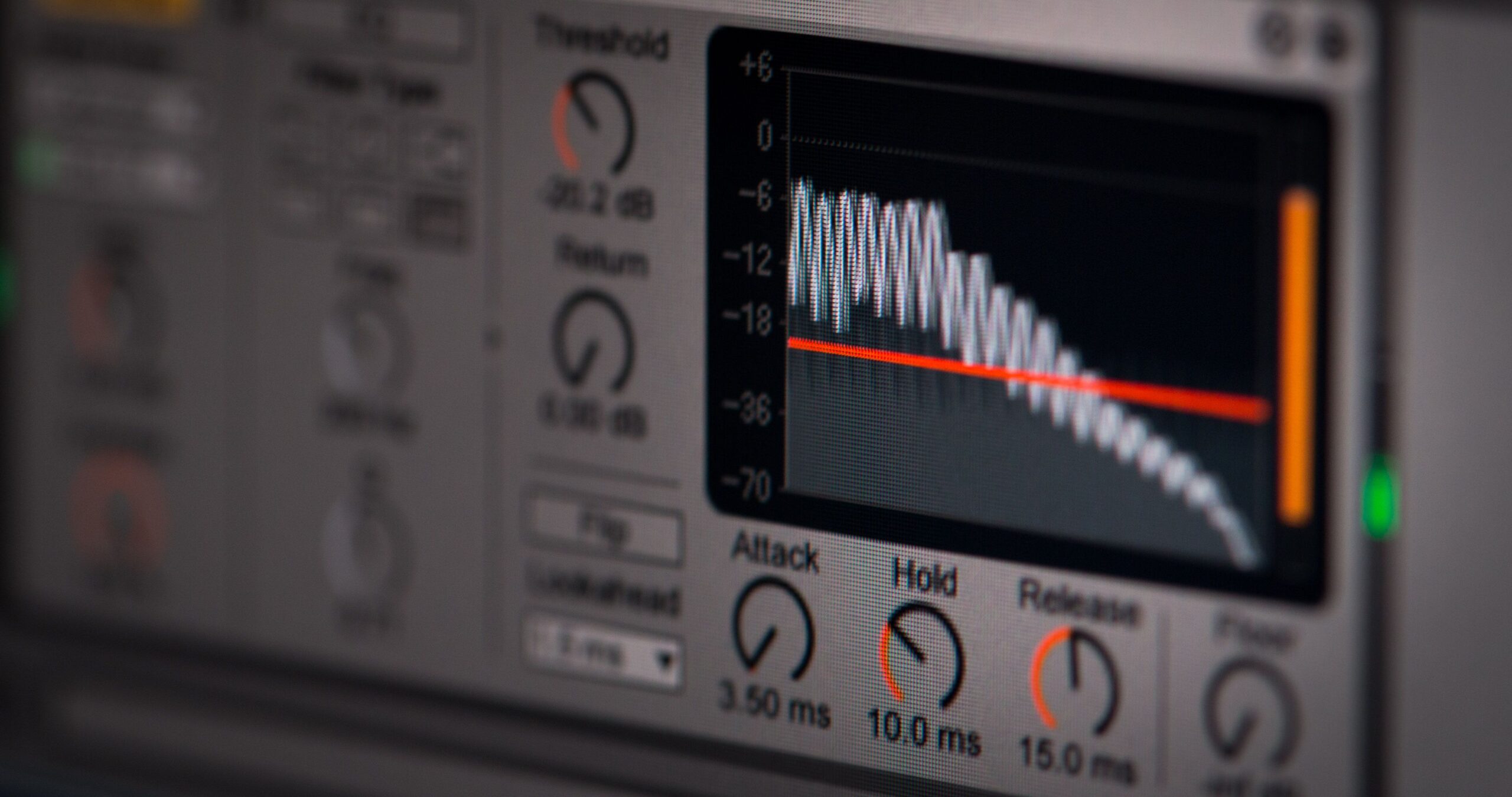
To understand the mechanics, start with a basic audio waveform. A waveform is a visual representation of sound pressure changing over time. In a clean recording, the peaks and valleys of the wave stay intact.
When the signal becomes too loud for a device to handle cleanly, the waveform’s peaks are distorted. This process is called clipping. Instead of rising smoothly, the top of the wave is bent or flattened.
Imagine a wave made of soft rubber. Push it gently, and it bends. Push it hard enough, and the top becomes squashed flat. That flattening creates new harmonic frequencies not present in the original sound.
Those harmonics are the reason distortion sounds different from a simple volume increase. Our ears interpret the added harmonics as extra richness, brightness, grit, or aggression depending on the shape of the clipping.
There are two common clipping styles:
- Soft clipping: The waveform bends gradually near the peaks. This produces a smoother, warmer sound. It’s common in tube amplifiers and many overdrive circuits.
- Hard clipping: The waveform is cut off more abruptly. This creates a sharper, more aggressive tone with stronger harmonic content.
Different devices shape the waveform differently. A vintage tube amp, a fuzz pedal, and a digital plugin may all create distortion, but each produces its own tonal fingerprint.
What does distortion do? It reshapes the waveform, adds harmonics, changes dynamics, and alters the way we perceive loudness, sustain, and texture.
Types of Distortion in Music
Distortion is not a single sound. It’s a family of related effects that range from subtle warmth to extreme sonic destruction.
Overdrive
Overdrive mimics the behavior of a tube amplifier pushed slightly beyond its clean limit. The clipping is relatively gentle, so the result is warm and responsive.
One reason players love overdrive is that it reacts to performance dynamics. Pick lightly, and the sound stays cleaner. Dig in harder, and more distortion appears.
This makes overdrive popular in blues, classic rock, indie, and many forms of alternative music.
Distortion
In the narrower guitar-effect sense, distortion usually means stronger clipping than overdrive. The tone becomes thicker, more compressed, and more aggressive.
This style provides substantial sustain, allowing notes and chords to ring out with consistent intensity. It is widely used in hard rock, metal, and modern heavy music.
For many listeners, this is the classic sound that comes to mind when they hear the word distortion.
Fuzz
Fuzz takes waveform clipping much further. The signal becomes thick, buzzy, and sometimes almost square-shaped.
The result is a dense, saturated sound with a strong vintage character. Classic rock recordings from the 1960s and 1970s made fuzz famous, and it still is a favorite in psychedelic rock, garage rock, and experimental music.
Bitcrushing and Digital Distortion
Not all distortion comes from analog circuits. Bitcrushing reduces bit depth or sample rate, intentionally lowering digital audio resolution.
This creates a gritty, lo-fi texture filled with digital artifacts. Producers often use it in electronic music, experimental production, and some forms of hyperpop to create a deliberately artificial sound.
Tape and Tube Saturation
Saturation is technically a mild form of distortion. Instead of dramatically clipping the signal, tape machines and tube circuits introduce subtle harmonic changes.
These harmonics can make a recording feel warmer, smoother, and more cohesive. Many producers use saturation on vocals, drums, bass, and full mixes to add an analog feel without obvious distortion.
In other words, much professional music contains controlled distortion. But to listeners or the untrained ear, it would never be described as distorted.
Why Do Musicians and Producers Use Distortion?
People frequently associate distortion with heavy guitars, but its role is much broader. Producers use distortion for the following reasons:
- It makes instruments sound larger. Added harmonics fill out the frequency spectrum, which gives guitars, basses, and synthesizers more apparent size.
- It helps sounds cut through a mix or dense arrangement. A slightly distorted bass or vocal may be audible even when many other instruments are playing.
- It increases perceived loudness. Because distortion adds harmonic content and compression-like behavior, a sound can feel louder and more forward without a huge increase in level.
- It creates emotional intensity. Aggressive distortion can create tension, anger, excitement, or urgency. Softer distortion can add intimacy, warmth, or nostalgia.
- It adds warmth. Mild distortion introduces gentle harmonics that make instruments and vocals sound fuller and more natural.
- It creates vintage character. Tape and tube distortion recreates the tonal qualities associated with classic recordings and older analog equipment.
- It enhances sustain. Distortion helps notes ring out longer by reducing the difference between their loudest and quietest parts.
- It introduces movement and texture. Distortion adds harmonic detail that makes a sound feel richer, more layered, and more engaging.
Different instruments benefit from it in different ways:
- Electric guitars: sustain, thickness, and aggression
- Bass: presence and clarity on smaller speakers
- Vocals: grit, attitude, and emotional intensity
- Synthesizers: movement, texture, and harmonic richness
- Drums: punch, excitement, and perceived energy
- Electronic music: character and density that help tracks feel larger than life
Many artists who produce electronic music rely on carefully layered distortion rather than a single heavy effect. Small amounts across several elements can create a powerful overall sound.
Where Is Distortion Used in Music?
Distortion appears in far more genres than many listeners realize. Some styles use it subtly, while others treat it as a defining sonic element.
- Rock, metal, grunge, and punk rock bands often rely on heavy distortion for power, sustain, and aggression.
- EDM music, techno, and dubstep use distortion to make basses, leads, and drums sound larger and more intense.
- Industrial music frequently pushes distortion to extremes, creating harsh textures and mechanical energy.
- Hip-hop producers may distort drums, 808 basses, or vocals to add impact and attitude.
- Pop music (including hyperpop music) often uses subtle distortion on vocals, synths, and drums so elements feel more present without sounding obviously distorted.
- Lo-fi production embraces tape-like distortion and saturation to create warmth and nostalgia.
- Alternative music moves freely between clean passages and heavy distortion for dynamic contrast.
Because of this range, distortion in music is best understood as a versatile color rather than a genre-specific effect.
Distortion vs. Overdrive vs. Saturation
These terms are often confused with one another because all three alter an audio signal. The easiest way to think about them is to consider them as points along a spectrum of increasing intensity.
Effect | Amount of Harmonics | Sound Character | Common Use |
Saturation | Low | Warm, subtle | Mixing, mastering |
Overdrive | Medium | Smooth, dynamic | Blues, classic rock |
Distortion | High | Aggressive, powerful | Rock, metal, EDM |
Fuzz | Very high | Thick, buzzy | Psychedelic, vintage rock |
In practice, the boundaries are not rigid. A heavily driven saturation plugin may behave like overdrive, and a strong overdrive can approach full distortion.
Rather than treating them as completely separate categories, many engineers view them as different amounts and flavors of harmonic coloration.
Can Distortion Be Bad?
Yes. Distortion is not always desirable.
The key distinction is between intentional artistic distortion and unwanted technical distortion. Producers deliberately add the first. They work hard to avoid the second.
Common forms of unwanted distortion include:
- Recording clipping: The input level is too high, which permanently damages the recorded waveform.
- Digital clipping: The signal exceeds the maximum level a digital system can represent.
- Speaker distortion: A speaker is pushed beyond its physical limits.
- Poor-quality recordings: Cheap equipment or overloaded circuits introduce harsh artifacts.
Modern production usually leaves plenty of headroom during recording. Engineers capture a clean signal first, then add controlled distortion later during mixing or sound design. This approach preserves flexibility and avoids irreversible damage.
So, when people ask “What is distortion?” the best answer is that context matters. The same process that ruins a recording can also create a legendary guitar tone when used intentionally.
Achieve Your Musical Goals with Distortion
Distortion is the intentional reshaping of an audio signal that creates additional harmonics and changes the character of a sound. It can add warmth, thickness, sustain, texture, loudness, or outright aggression depending on how it is applied.
Musicians use distortion across rock, metal, hip-hop, pop, electronic, and experimental music. They choose from overdrive, fuzz, saturation, digital processing, and many other forms of distortion to achieve specific emotional and sonic goals.
From subtle analog warmth to massive walls of sound, distortion is one of the most influential tools in modern music production. Few effects have shaped the sound of recorded music more profoundly.