Behind the Keys at Ball Arena
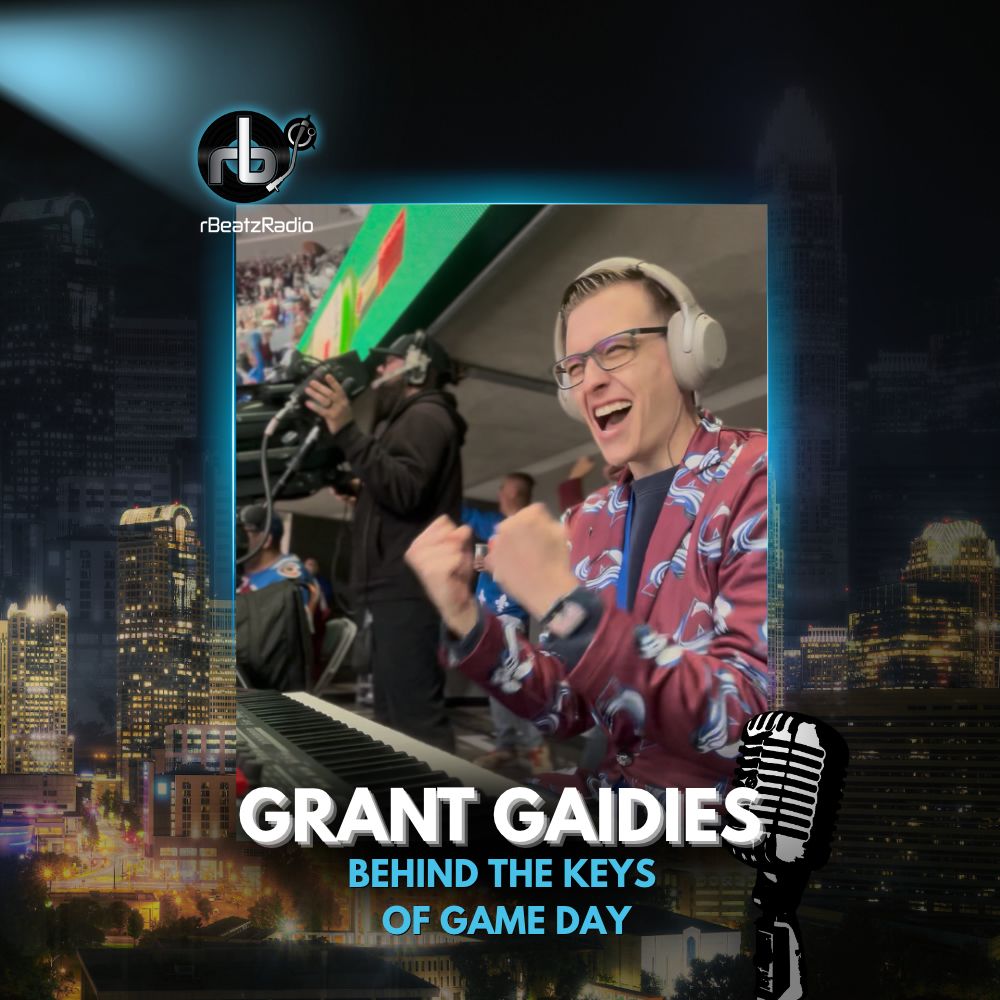
Grant Gaidies, live arena organist for the Colorado Avalanche, joins Greazy Keyz on Local Music Somewhere. Now in his fifth season at Ball Arena, Grant helps hype the crowd with everything from classic rock to modern pop. Away from game day, he runs a private music teaching studio in Castle Rock, Colorado, and says he lives to teach. They talk about the arena organist gig, the energy of game day, and the teaching work Grant cares so much about. Find Grant on Instagram at @sportsorganist and at GrantsPianoLessons.com.
From Arena Organist to Music Teacher
Grant Gaidies
Grant Gaidies is the live arena organist for the Colorado Avalanche, currently in his fifth season hyping up the crowd at Ball Arena with everything from classic rock to modern pop. When he’s not behind the keys on game day, he runs a private music teaching studio in Castle Rock Colorado.
Key Takeaways
- Passion can come back at any stage: Grant stepped away from piano as a kid but rediscovered his love for music later in life.
- Preparation creates confidence: His dedication to practice allows him to perform in high-pressure situations without feeling overwhelmed.
- Live performance requires awareness: Playing in an arena is about timing, reading the crowd, and responding to the game—not just playing songs.
- Adaptability matters: Grant continues to expand his repertoire, experiment with sounds, and develop new techniques.
- Music can inspire others: His presence at Avalanche games has encouraged young fans to start learning piano themselves.
- Teaching is about the student: He adapts lessons to fit each student’s interests, goals, and personality.
- Consistency beats procrastination: Scheduling practice and building habits help musicians make meaningful progress.
- You have to love the work: A career in music requires time and dedication, but loving the process makes the commitment worthwhile.
- Don’t let technology take over: Making time for music, creativity, and real-world experiences can be more rewarding than endlessly scrolling.
- Community matters: The sports organist community is supportive, welcoming, and connected by a shared love of music.
From the Hockey Arena to the Music Studio: Grant Gaidies and the Art of Playing for the Crowd
What does it take to entertain thousands of people in a hockey arena while keeping your musical skills sharp enough to teach the next generation? For Grant Gaidies, it means dedication, preparation, instinct, and a whole lot of time behind the keys.
On this episode of rBeatz.com’s Oui Talk Raw, Greazy Keyz sits down with Grant, the live arena organist for the Colorado Avalanche, to talk about his journey into sports music, his approach to performing, his passion for teaching, and the work that goes into making music look effortless.
The conversation is relaxed and musician-to-musician, with Greazy bringing his own experiences as a stadium organist into the discussion. The two connect over the unique demands of performing live in a sports environment, the importance of reading a crowd, and the satisfaction of being part of a team experience that goes beyond the music.
Finding His Way Back to Music
Grant’s musical journey wasn’t exactly a straight line. He played piano during elementary school but admits he didn’t enjoy it at the time. Practice and lessons weren’t something he was particularly excited about, and eventually, he stepped away from playing.
Later, while studying business management, he took a music theory class that completely changed his perspective. What started as fulfilling a school requirement turned into a renewed passion. He became interested in music production and realized he needed to develop his instrumental skills to create the music he wanted to make.
That spark brought him back to piano, and he began taking lessons again around 2020. Even when lessons moved online during COVID, Grant embraced the change and kept pushing forward.
His dedication is impressive. He describes practicing for six to eight hours a day, not because he feels forced to, but because music is where he feels most comfortable. It is his way of unwinding, recharging, and staying connected to something he genuinely loves.
Landing the Colorado Avalanche Organist Gig
Grant is now in his fifth season as the live organist for the Colorado Avalanche at Ball Arena, a job that came about through a connection with his piano teacher, who was the previous organist.
When the opportunity opened, Grant was encouraged to prepare and audition alongside other candidates. The audition itself was memorable for an unexpected reason—his keyboard was missing a foot, leaving it wobbling as he sat down to perform.
Despite that little mishap, he made the most of the experience. He was asked to play in the actual arena rather than a smaller audition room, giving him a chance to hear his music in the environment where it would ultimately be performed.
His audition included Van Halen, “Jump,” “I’ll Wait,” “Seven Nation Army,” jazz tunes, and an extended jam session. For Grant, being able to experience the arena in that moment was something special.
Building the Sound of Game Night
Being a sports organist isn’t simply about playing traditional organ music. Grant enjoys branching out into synthesizer sounds and creating customized tones that fit the arena environment.
He has spent extensive time tweaking sounds on his Yamaha keyboard, sometimes making dozens of small adjustments to get a tone just right. What sounds good at home doesn’t necessarily translate to the arena, especially when it comes to low-end frequencies and the way sound fills a large space.
Songs like “Jump,” “Thriller,” “The Final Countdown,” and “Take On Me” are part of his repertoire. He also works with the DJ, sometimes playing musical lines over instrumental tracks to build even more energy in the arena.
Greazy and Grant discuss the difference between simply playing a recognizable song and adding something live to the experience. The goal isn’t just to fill silence. It’s to create moments that make fans feel connected to what’s happening.
Reading the Crowd and Knowing When to Play
One of the biggest challenges of being a live arena organist is knowing what to play and when to play it.
Grant doesn’t approach every game with a rigid playlist. Instead, he keeps a rotating list of songs and adapts to the action on the ice, the crowd’s energy, and the timing of the game. He may have around 100 songs available during a game, but he has to be ready to pull the right one out in a matter of seconds.
Sometimes the moment calls for a classic arena anthem. Other times, a specific play or situation inspires a quick musical response. An icing might lead to “Freeze Frame,” “Ice Ice Baby,” or “Hold the Line.”
He also tries to avoid repeating songs too frequently, giving fans—especially those attending their first game—a chance to hear those familiar arena favorites.
The conversation highlights just how much awareness and timing the job requires. Grant isn’t just playing music; he’s paying attention to the game, the fans around him, the production team, and everything happening in real time.
The Pressure, the Fans, and the Unforgettable Moments
Grant’s position in the arena puts him close to fans, which creates opportunities for interaction, photos, requests, and plenty of memorable experiences. Most of those interactions are positive, and he enjoys being accessible to the people who come to watch him perform.
Of course, being close to the crowd also means occasionally dealing with heckling from opposing fans. Grant takes it in stride, recognizing that not every interaction will be perfect.
One of his most memorable moments came during the Avalanche playoffs, when the team defeated Minnesota in an incredibly exciting series. The energy inside Ball Arena was unforgettable, and Grant remembers being caught up in the excitement himself.
There’s a special feeling when you’re not only performing for a team but also experiencing the moment as a fan. Sometimes the best moments are when he gets to put the keyboard aside, watch the game, and appreciate the incredible talent on the ice.
Learning to Play for the Moment Instead of Playing More
An interesting part of Grant’s story is how his mindset has changed since he started the job.
Early on, he was eager to play as much as possible. Every whistle was an opportunity to jump in, try something new, or add another musical moment. Over time, he learned that the job isn’t about maximizing the number of times he plays.
It’s about being prepared for the moments when the game presentation team needs him.
Grant has developed some impressive skills to help make that happen, including playing drum parts, bass lines, and melodies simultaneously on his keyboard. Using different fingers on his left hand, he can create drum patterns and bass lines while his right hand plays the melody or chords.
It’s a skill that took time to develop and is largely specific to the demands of his Avalanche gig.
The Passion for Teaching and Making Music Accessible
Away from the arena, Grant operates a piano teaching studio in Castle Rock, Colorado. Teaching is another part of his musical life that he genuinely enjoys.
His experience performing in front of thousands of people has helped create a different perspective for his students. He can show them that music isn’t limited to classical lessons or traditional repertoire. They can learn pop songs, modern music, improvisation, and the styles they enjoy listening to.
He loves when young fans approach him at games and tell him they started learning piano because they saw him play. Those moments are particularly rewarding because they remind him that performing can inspire someone who might never have considered playing an instrument.
Grant also takes a flexible approach to teaching. Not every student wants to become a concert pianist, and he recognizes that music can serve different purposes for different people. Some students need an outlet, some want to learn songs they love, and others are interested in improvising and simply enjoying the instrument.
Rather than forcing everyone into the same mold, he works to tailor lessons to the student’s personality, interests, and goals.
Practice, Preparation, and the Pursuit of Getting It Right
Grant is a self-described perfectionist when it comes to learning music. He doesn’t just want to get through a song. He wants to play it well enough that it becomes natural.
As he explains:
“don’t jam it until you can get it right jam it until you can’t get it wrong”
That mindset carries over into his professional work, his teaching, and the way he approaches learning new music. He wants songs to become second nature so he can focus on communicating the music rather than struggling through the mechanics.
He also believes in scheduling practice. Grant plans his time carefully and sets specific practice sessions rather than leaving it to chance. He has seen the difference that consistent, structured practice can make—not only in his own playing but also in the progress of his students.
Making a Living Doing What You Love
Grant is candid about the reality of pursuing music as a career. Loving music is important, but it also requires commitment, discipline, and a willingness to put in the hours.
He jokes that he didn’t want a nine-to-five job, only to find himself working a “nine to nine.” But he doesn’t say it with regret. He genuinely loves teaching, practicing, and performing, and he appreciates having the opportunity to build a career around those things.
When asked what advice he would give someone hoping to make music their career, he emphasizes that you really have to love it. The commitment is substantial, and if you’re only focused on the money or aren’t willing to dedicate the time, it can be difficult to sustain.
For Grant, the reward is in doing the work itself.
A Musician Who Appreciates the Details
Grant’s love for music extends beyond arena rock and pop. He is also deeply interested in classical piano, particularly Chopin, whose compositions continue to challenge and inspire him.
He talks about the intricacies of Chopin’s writing, the way melodies and harmonies flow, and the dedication required to perform more complex pieces. He enjoys learning music that pushes him technically and musically.
He also has a background in electronic music and future bass, having written and shared his own compositions in the past. Although teaching and arena performance currently occupy much of his time, his creative background continues to influence the way he approaches music.
That curiosity and willingness to keep learning are part of what makes Grant such an interesting musician. He isn’t content to simply stay within one style or one role.
Finding Balance in a World Full of Distractions
Another topic that comes up naturally is technology and the constant pull of phones and social media.
Grant admits he doesn’t enjoy being on his phone much and believes people could benefit from stepping away from scrolling and spending more time playing an instrument or experiencing the world around them.
Greazy appreciates that perspective, especially given Grant’s age and the fact that he grew up in a world where phones and digital distractions were already part of everyday life.
It’s a refreshing reminder that even in a modern, connected world, some of the most meaningful experiences still come from being present, practicing a skill, and connecting with people in real life.
A Supportive Community of Sports Organists
The conversation also touches on the community of sports organists, a group that Grant clearly appreciates.
He shares stories about meeting other organists, visiting other arenas, and connecting with musicians who share the same unique profession. There’s a sense of camaraderie among them, regardless of the team, league, or city they represent.
Greazy understands that feeling firsthand and talks about how supportive the community has been throughout his own career. The conversation closes with mutual respect, encouragement, and appreciation for the people who keep this tradition alive in sports.