Inside the Vision Behind Samaritan’s Feet and World Shoe
How One Pair of Shoes Became a Lifetime Mission
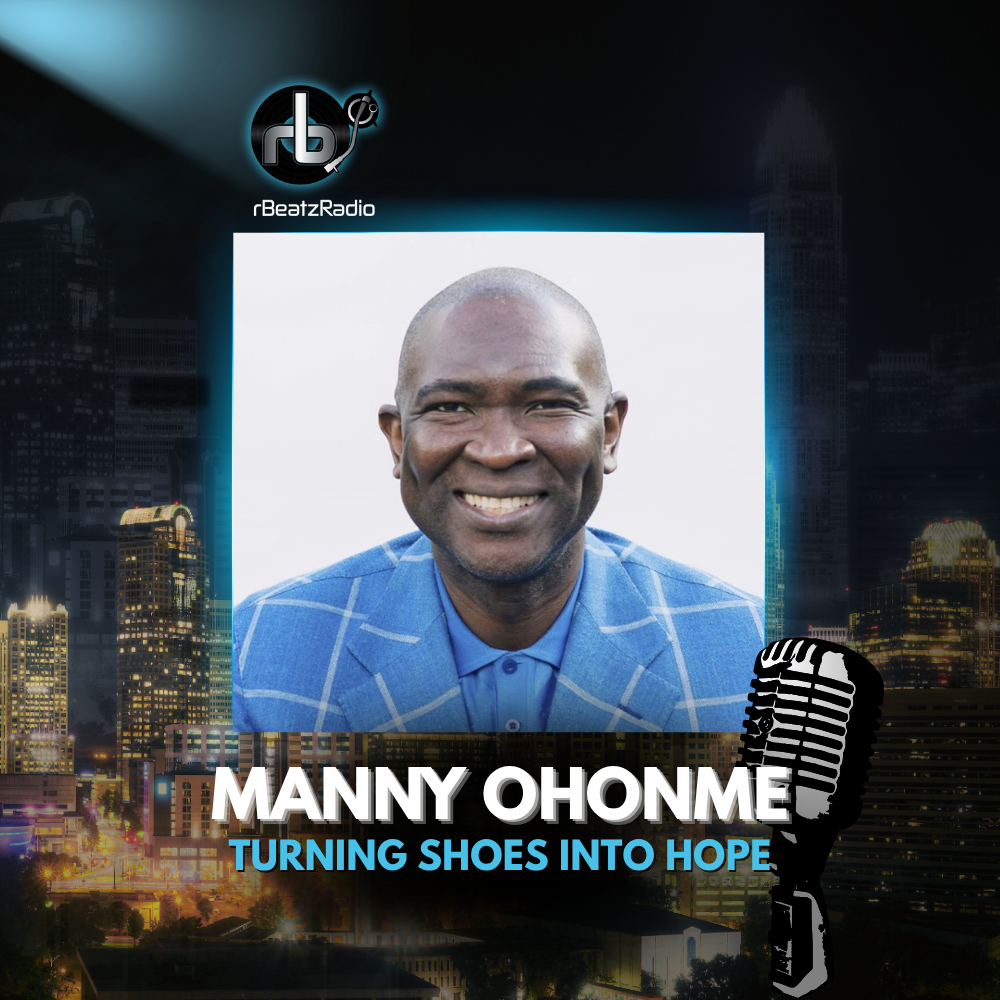
Manny Ohonme
Key Takeaways
- One small opportunity can completely change the direction of a life.
- Don’t let someone else’s assessment of you become your identity.
- Dream beyond your current circumstances.
- Courage sometimes means being willing to look foolish long enough to discover what’s possible.
- The journey may not make sense while you’re living it.
- A big vision creates room for other people to participate.
- Success is built through teams, partnerships, volunteers and community.
- Faith and perseverance are tested most when the destination isn’t visible.
- A product can become a vehicle for health, education, employment and economic opportunity.
- Don’t walk past a problem simply because it’s inconvenient.
- Use whatever gifts, resources and influence you have to serve others.
- Sometimes the next step is simply picking up the ball and seeing where it leads.
Manny Ohonme on Big Dreams, Faith, and the Power of One Pair of Shoes
What if one pair of shoes could change the entire direction of a life?
That is the story at the heart of this episode of Oui Talk Raw, where host Terry Hudson sits down with Manny Ohonme, founder of Samaritan’s Feet and the visionary behind World Shoe. Manny’s journey begins as a nine-year-old boy selling water and soft drinks on the streets of Lagos, Nigeria, and eventually leads to a basketball scholarship in America, a successful career in technology, and a calling to help millions of people around the world.
Terry immediately frames the conversation around something bigger than Manny’s accomplishments. As a connector, Terry sees Manny’s story as an example of what can happen when someone is willing to stretch their vision beyond what other people say is possible. Manny’s story delivers that lesson repeatedly: sometimes the biggest opportunities begin with something that looks incredibly small.
Manny Ohonme’s First Pair of Shoes Changed His Life
Manny grew up in Nigeria in circumstances where simply having enough food for the day could be uncertain. At nine years old, he was helping his mother by selling water and soft drinks when he encountered a group of American missionaries playing basketball.
He had never played basketball before, but when a ball rolled toward him, Manny made a decision. Instead of simply throwing it back, he stepped onto the court.
That bold choice led to a free-throw contest, and the prize was a pair of shoes.
Manny won.
For a child growing up in poverty, those shoes represented far more than footwear. They represented possibility. The missionary who gave him the shoes also gave Manny a message that stayed with him: poverty did not mean that God had forgotten him, and he should continue dreaming big.
That moment became one of the defining experiences of Manny’s life.
The Power of Someone Believing in You
Manny also credits his mother as one of the foundational voices behind his ability to dream. When he questioned why his family was poor, she encouraged him to look toward the sky and understand that there was always room to dream beyond his circumstances.
Her message was simple: a difficult day did not have to determine what tomorrow would look like.
That philosophy followed Manny into basketball.
When his high school coach told him he wasn’t big enough, fast enough, or good enough to earn an American scholarship, Manny didn’t stop. Instead, the coach recognized something else in him — courage — and gave him names of American schools to contact.
Manny wrote the letters.
Eventually, five scholarship offers came back.
From Nigeria to North Dakota: The Journey Was Just Beginning
Manny chose the University of North Dakota, despite knowing very little about America. His reasoning was hilarious and perfectly fits the conversational personality of the episode: he picked the school based largely on its basketball success.
Then he arrived in North Dakota.
Coming from Nigeria, the cold was an entirely different challenge.
But what could have looked like a strange detour became another essential part of Manny’s story. He met his future wife, Tracie, earned his degrees, and began building the experiences that would eventually prepare him for a much larger calling.
His arrival in America wasn’t exactly smooth, either. Manny was initially denied a student visa, leaving him devastated. But his family helped him pursue another opportunity, and eventually the visa was approved.
Then came another obstacle: he didn’t have enough money to easily get from Chicago to North Dakota.
Manny spent his limited travel money carefully, eventually taking the very Greyhound bus he had initially sworn he would never ride. He even spent his first night sleeping at an airport before eventually being helped by a local family who welcomed him into their home.
It is one of the many moments where Terry and Manny uncover the same theme: the path rarely looks like the destination when you’re walking it.
Samaritan’s Feet: Turning One Pair of Shoes Into a Global Mission
After building a career in technology, Manny returned to Nigeria and saw children facing many of the same struggles he had experienced growing up. He learned about the enormous number of children living without shoes and began asking a simple question: if one pair of shoes had changed his life, could shoes become a catalyst for changing other lives?
That question became Samaritan’s Feet.
The organization wasn’t simply about handing someone a pair of shoes. Manny wanted the experience to communicate dignity, hope, encouragement and possibility. Volunteers would wash people’s feet, provide shoes, ask about their dreams and encourage them to pursue those dreams.
The original goal was 10 million people.
In 2023, Samaritan’s Feet reached that milestone.
But Manny’s vision didn’t stop there.
World Shoe: Moving From Charity to Sustainable Change
One of the most compelling parts of the conversation is Manny’s explanation of how the mission evolved from giving away shoes to developing a sustainable social enterprise.
Through World Shoe, the goal became much bigger than distributing footwear. Manny describes creating shoes designed around health, environmental responsibility and economic opportunity while also creating jobs where they are needed most.
The vision includes manufacturing, employment, health, education and poverty disruption — all connected through something as simple as a shoe.
Manny discusses research involving children receiving World Shoe footwear and improvements involving school attendance, infections and educational outcomes. He describes the broader goal as creating an ecosystem where a product can generate economic opportunity while also helping fund the humanitarian mission.
And Terry recognizes the significance of that shift: Manny isn’t simply thinking about how many shoes can be donated. He’s asking how the entire system can be built to keep creating impact.
Dream Bigger Than What You Can Accomplish Alone
Throughout the conversation, Terry keeps circling back to one of Manny’s biggest lessons: don’t make your vision so small that you can accomplish it by yourself.
Manny explains that his original goal sounded audacious even to him. He eventually realized that a vision should be large enough that other people can find a place inside it.
“make sure your dream is big enough. that it creates room for others to join you.”
That idea becomes one of the central messages of the episode. A big vision isn’t necessarily about personal achievement. It can become an invitation for other people to contribute their skills, resources, experience and passion.
Manny also rejects the idea of the “self-made” success story. He points to his board, staff, volunteers and partners as essential pieces of the work.
“Success is never a solo venture, right?”
For Manny, impact is ultimately about building something that other people can help carry forward.
Faith, Perseverance and the Moments That Almost Break You
The conversation also goes deep into the less glamorous side of Manny’s journey.
Leaving the technology world to pursue Samaritan’s Feet wasn’t easy. Manny describes a period when he believed his savings would support his family for years, only to watch unexpected medical expenses, accidents and other circumstances quickly drain those resources.
At one point, his wife was short by roughly 40 cents at the grocery store.
That moment became symbolic of how far their circumstances had shifted.
Manny describes eventually recognizing that he couldn’t control everything himself. His faith became less about having all the answers and more about continuing to move forward when he couldn’t see how the story would unfold.
That becomes one of the strongest lessons of the episode: the difficult middle doesn’t necessarily mean you’ve taken the wrong path.
Manny describes vision as seeing the future while standing in the present. The space between those two points is where perseverance, faith and grit are tested.
What It Means to Be a Samaritan
Near the end of the conversation, Manny explains why the organization carries the name Samaritan’s Feet.
He connects it to the biblical story of the Good Samaritan — the person who saw someone in need and chose not to walk past.
That becomes a larger philosophy for Manny: don’t walk past problems simply because they aren’t convenient.
He describes the idea of becoming an “interruptible” leader — someone willing to leave room in their schedule, plans and comfort zone to respond when a need appears.
The goal isn’t simply to possess gifts, resources or influence. It is to use those things when the opportunity to serve arrives.
And perhaps that’s the most fitting conclusion to Manny’s story.
A nine-year-old boy saw a basketball.
He stepped onto a court where he wasn’t supposed to be.
He won a pair of shoes.
Decades later, that same boy is helping create opportunities for millions of other people to take their own next step.
Manny Ohonme and the Bigger Lesson Behind the Shoes
Terry and Manny’s conversation ultimately isn’t just about shoes.
It’s about vision, courage, faith, service and the willingness to take the next step before you know where the entire road leads.
More Artists and Show Episodes